AI电芯

Search documents
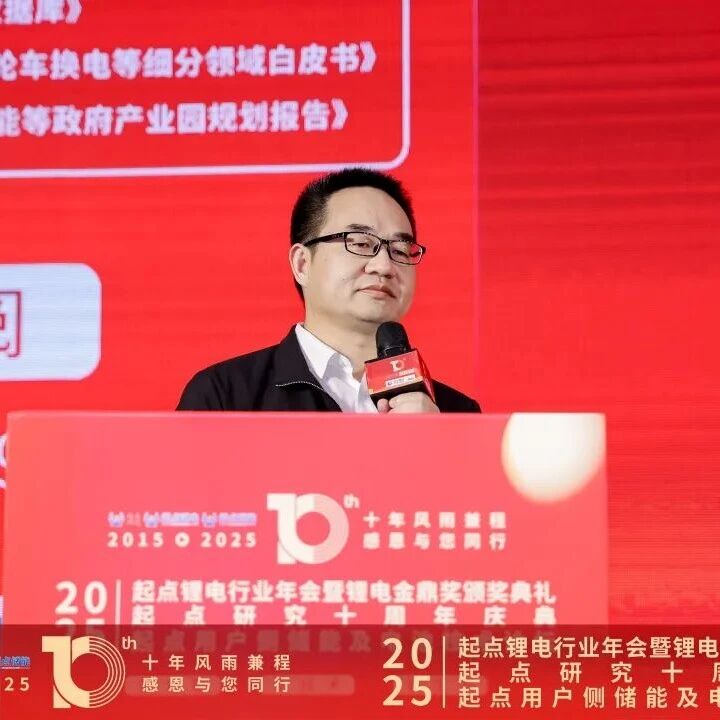
德赛电池 系统和算法总监 闫垚锋:主动安全-重新定义能源安全范式-基于实时感知与智能响应的下一代技术方案
起点锂电· 2025-12-20 07:04
Core Viewpoint - The article emphasizes the importance of proactive safety measures in the energy storage industry, highlighting the limitations of traditional passive safety approaches and introducing a comprehensive proactive safety technology system developed by Desay Battery [2][3][6]. Group 1: Importance of Proactive Safety - The current industry safety measures, such as the "seven layers of protection," are largely reactive, addressing issues only after they arise, which is inadequate for the hidden risks in energy storage [2][3]. - Proactive safety technology aims to shift the focus from reactive to preventive measures, allowing for early detection and intervention of potential risks [3][6]. Group 2: Development of Proactive Safety Technology - The proactive safety technology system is developed in three phases: identifying monitoring needs from accident cases, integrating AI and EMS modules for initial solutions, and optimizing for large-scale production [9][10]. - The system is designed to provide a "7+1" full-chain proactive safety framework, enhancing traditional safety measures with additional capabilities for early warning and intelligent response [11]. Group 3: Key Features of the Technology - The technology includes AI cells that monitor internal pressure and temperature, allowing for real-time detection of internal degradation and potential risks [13]. - The system integrates various data points, including internal gas pressure and temperature, to create a comprehensive monitoring network that enhances safety management [15]. Group 4: Value to Customers - The proactive safety system offers several benefits, including early warnings, precise maintenance suggestions, and a shift from passive to active safety management, significantly improving overall safety and reliability [19][21]. - The technology is backed by over 80 domestic and 10 international patents, ensuring a robust intellectual property barrier and compliance with high industry standards [22]. Group 5: Future Collaboration and Industry Impact - The company advocates for open collaboration to drive industry progress, offering customizable solutions that can adapt to various energy storage applications [24]. - The goal is to build a shared energy storage safety database to enhance safety standards and foster innovation within the industry [24].


高工锂电年会直击⑤:AI不是魔法,电池产业“工程师革命”已经开始
高工锂电· 2025-11-24 09:41
Core Viewpoint - The battery industry is entering an "intelligent transformation era" at an unprecedented speed, driven by AI technology that is fundamentally reshaping research and development, manufacturing processes, and safety standards in the sector [5][9]. Group 1: AI-Driven Transformation - AI is no longer just a buzzword; it is deeply integrated into every aspect of the battery industry, from energy management to intelligent manufacturing [4][5]. - The traditional battery R&D process, which relies on "first principles," is being revolutionized by AI, allowing for the discovery of complex mathematical patterns from experimental data, thus enhancing efficiency [6][8]. - SES AI's "smart box" integrates supercomputing and multiple modules to cover the entire R&D process, significantly reducing resource consumption and accelerating production capacity [8][9]. Group 2: Industry Trends and Challenges - The energy bottleneck for AI-driven products has shifted from "insufficient capacity" to an overall upgrade in structure, materials, and battery management [9][11]. - The industry is moving towards maximizing the value of individual battery cells, focusing on increasing energy density while ensuring safety [11][12]. - The trend in the battery industry is towards "active safety" at the cell level, moving from passive monitoring to proactive measures that can detect potential risks early [17][18]. Group 3: Innovations and Applications - Companies like Penghui Energy are integrating AI into battery lifecycle management, utilizing advanced algorithms for predictive maintenance and operational efficiency [14][15]. - Yigan Technology is proposing a Battery Design Automation (BDA) approach to overcome the complexities in battery R&D, aiming to enhance precision and efficiency through a combination of physical simulation and AI [20][21]. - Dayun Technology emphasizes the importance of X-ray detection in ensuring battery safety, leveraging AI to enhance defect identification and quality assurance processes [26][27]. Group 4: Future Directions - The future of the battery industry will depend on the successful integration of digital quality, AI platformization, and private deployment to create a stable and iterative infrastructure [23][24]. - The industry is urged to build a data-sharing ecosystem to address data silos, which will enhance the application of AI technologies in quality control and other areas [27][28].