
AL137

Search documents
Alector (NasdaqGS:ALEC) FY Conference Transcript
2026-03-03 21:12
Summary of Alector, Inc. Conference Call Company Overview - **Company**: Alector, Inc. - **Event**: 46th Annual TD Cowen Healthcare Conference - **Focus**: Presentation on the ABC platform and its applications in drug development, particularly for neurological diseases Key Points ABC Platform and Technology - Alector has developed an Antibody-Based Carrier (ABC) platform over the past seven years, focusing on blood-brain barrier (BBB) technology to enhance drug delivery to the brain [2][3] - The platform utilizes transferrin receptor (TFR) as a target for delivering various therapeutic cargos, including antibodies, enzymes, and siRNAs [3][4] - Alector has successfully applied ABC technology to 13 different cargos, demonstrating its versatility in drug delivery [4][5] Lead Programs - **Lead Antibody Candidate**: An anti-amyloid antibody enabled by ABC technology, designed to enhance brain uptake while minimizing safety liabilities [13][14] - **GCase Enzyme Program**: Targeting GBA-related Parkinson's disease, Alector has engineered a GCase enzyme that is 50 times more active than the wild-type enzyme, with improved stability [22][23][24] - **siRNA Platform**: Alector is also developing siRNA therapeutics using the ABC platform, targeting diseases like tauopathies and alpha-synucleinopathies [29][30] Efficacy and Safety Data - The anti-amyloid antibody demonstrated a 30-32 fold increase in brain uptake compared to naked antibodies, with significant safety improvements observed in non-human primate studies [19][20][21] - The GCase enzyme showed a 100% increase in enzymatic activity in wild-type mice, with sustained reduction of toxic substrates observed over four weeks [25][26][27] - siRNA therapeutics showed strong brain accumulation and effective knockdown of target mRNA, with no adverse events reported even at high doses [36] Clinical Development Plans - Alector plans to submit an Investigational New Drug (IND) application by the end of 2023 or early 2024, with initial studies in healthy volunteers and patients with early Alzheimer's disease [42][43] - The clinical trial will focus on demonstrating amyloid clearance using amyloid PET imaging, with a goal of enrolling 10 to 15 patients for initial readouts [43][44] Interim Analysis for AL101 - An interim futility analysis for the AL101 candidate is scheduled for the first half of the year, with results expected to guide the continuation or cessation of the study [45][46] Additional Insights - Alector emphasizes the importance of maintaining fully active effector functions in their antibody designs to ensure therapeutic efficacy [14][15] - The company is focused on achieving subcutaneous administration for all its programs, which would enhance patient convenience and compliance [38][39] - Alector's approach to drug development is characterized by a commitment to safety, as evidenced by the lack of adverse events in their studies [29][36]

Alector Reports Fourth Quarter and Full Year 2025 Financial Results and Provides Business Update
Globenewswire· 2026-02-25 21:05
Core Insights - Alector is advancing its Alector Brain Carrier (ABC) platform across various therapeutic modalities, including antibodies, enzymes, and siRNA, with significant progress in treatments for Alzheimer's and Parkinson's diseases [1][4][16] - The company reported a cash position of $256.0 million as of December 31, 2025, which is expected to fund operations at least through 2027 [2][18] - Alector's CEO emphasized the unique capabilities of the ABC platform and its potential to translate scientific innovation into clinical assets [3] Financial Performance - Collaboration revenue for Q4 2025 was $6.2 million, a decrease from $54.2 million in Q4 2024, with total annual collaboration revenue dropping to $21.0 million from $100.6 million [13] - Research and development expenses for Q4 2025 were $32.5 million, down from $46.5 million in Q4 2024, with total R&D expenses for the year at $123.1 million compared to $185.9 million in 2024 [14] - General and administrative expenses for Q4 2025 were $13.3 million, a slight decrease from $15.0 million in Q4 2024, with annual G&A expenses at $54.0 million compared to $59.6 million in 2024 [15] Pipeline and Program Updates - Alector is advancing AL137, an ABC-enabled anti-amyloid antibody for Alzheimer's, with an IND application expected in Q4 2026 or Q1 2027 [8] - AL050, an ABC-enabled GCase enzyme replacement therapy for Parkinson's disease, is in preclinical development with an IND application targeted for 2027 [9] - The company is also progressing its ABC-enabled siRNA platform, with AL064 selected as the lead candidate for tau-related therapies [16] Clinical Trials - The PROGRESS-AD Phase 2 trial of nivisnebart (AL101) in early Alzheimer's disease is ongoing, with an independent interim futility analysis expected in the first half of 2026 [1][16]

“脑科学”的新淘金热
3 6 Ke· 2026-02-06 13:37
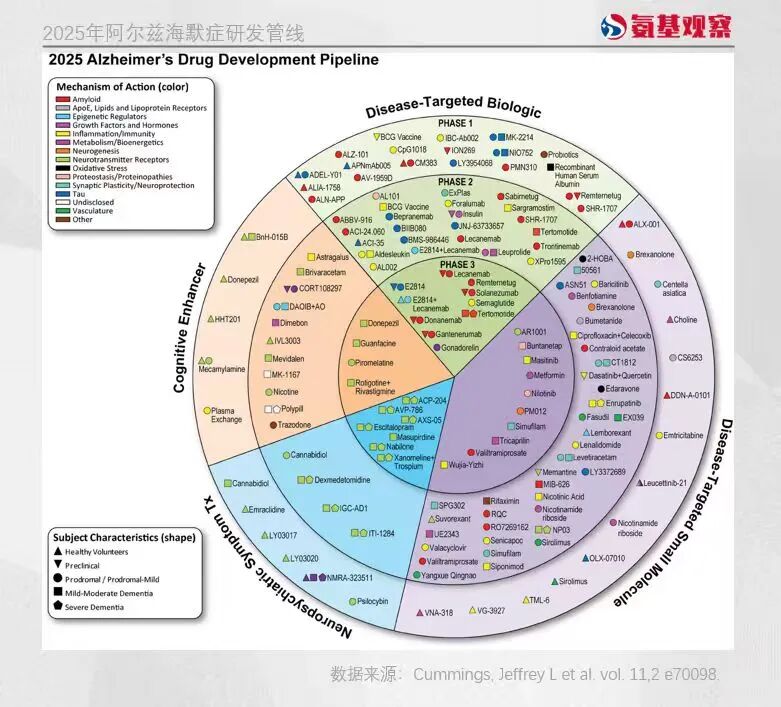
Core Insights - Neuroscience has historically been viewed as a high-risk area in pharmaceutical R&D, particularly for conditions like Alzheimer's disease and schizophrenia, due to complex pathophysiological mechanisms leading to high failure rates [1] - Recently, there has been a notable shift as the neuroscience sector is gaining momentum, driven by commercial success in Alzheimer's treatments and advancements in technologies such as small molecules, RNAi, cell therapy, and AI [1][6] - The combination of technological breakthroughs and market confidence is prompting multinational corporations (MNCs) to engage in mergers, acquisitions, and collaborations, signaling a potential "gold rush" in neuroscience [1] Industry Trends - The number of clinical trials and transactions in the neuroscience field is increasing, with 138 new drugs currently undergoing 182 clinical trials for Alzheimer's disease, marking a 9% increase from 2024 [2] - Over the past five years, more than 200 new clinical trials have been initiated for Alzheimer's disease, depression, and Parkinson's disease, indicating a growing interest in these areas [5] Market Developments - Confidence in the sector is rising, particularly due to breakthroughs in Alzheimer's treatments, such as Biogen's Leqembi, which achieved sales of $214 million in 2024 and $121 million in Q3 2025, reflecting an 82% year-over-year increase [6] - The approval of diagnostic methods, such as the Elecsys® pTau181 blood test by Roche and Eli Lilly, is enhancing the efficiency of Alzheimer's diagnosis and treatment [7] Technological Innovations - Emerging technologies like brain-computer interfaces and brain stimulation devices are becoming part of the investment narrative in neuroscience, with companies like Neuralink and Synchron conducting human clinical trials [8] - Advances in biomarkers and imaging agents are improving patient stratification in drug development, enhancing predictability of treatment efficacy [8] Policy Support - Significant government investments in brain science initiatives, such as the U.S. "Brain Initiative" with over $4 billion funding from 2014 to 2023, and China's brain plan with a budget exceeding 5 billion yuan, are fostering growth in the sector [8] Treatment Paradigms - The treatment landscape for Alzheimer's is evolving, with new therapies targeting Tau proteins gaining prominence over traditional Aβ-targeting approaches [9] - Innovations in drug delivery methods, such as brain-penetrating antibodies and RNAi technologies, are redefining treatment boundaries in neuroscience [11][12] Conclusion - After decades of exploration, the neuroscience field is experiencing unprecedented research intensity and commercialization, marking the onset of a new "gold rush" in the industry [13]


Alector (NasdaqGS:ALEC) 2025 Conference Transcript
2025-12-08 20:27
Summary of Alector Therapeutics Conference Call Company Overview - Alector is focused on neurodegeneration, developing therapeutics for Alzheimer's disease, Parkinson's disease, and other neurodegenerative disorders [5][6][24] - The company has five drugs in clinical trials and multiple preclinical programs utilizing proprietary blood-brain barrier technology [5][6] Clinical Programs and Pipeline - **Progranulin-elevating drug**: In collaboration with GSK, targeting Alzheimer's disease with an interim analysis expected in the first half of next year [5][6] - **Anti-amyloid beta antibody**: Expected to enter the clinic next year, leveraging blood-brain barrier technology for enhanced delivery [6][10] - **GCase enzyme replacement therapy**: Targeting Parkinson's disease and Lewy body dementia, with over 10% of Parkinson's patients linked to loss of function mutations in this enzyme [6][36] - **siRNA programs**: Targeting Tau, alpha-synuclein, and NLRP3, aiming for safer and more effective delivery to the brain [6][7][45] Blood-Brain Barrier Technology - Alector's technology allows for the delivery of large molecules to the brain at 10- to 50-fold higher concentrations, enhancing efficacy and safety [9][10] - The use of transferrin technology as a "Trojan horse" to transport drugs across the blood-brain barrier is a key differentiator [12][13] - Alector claims to achieve 10-12 fold higher concentrations of drugs in the brain compared to competitors, potentially allowing for lower doses and subcutaneous delivery [14][24] Competitive Landscape - Current anti-amyloid beta drugs (e.g., lecanemab, aducanumab) show modest clinical benefits (25%-30% slowdown in cognitive decline) but have significant adverse effects [22][23] - Alector's anti-amyloid beta drug aims to reduce adverse effects like ARIA (e.g., meningoencephalitis) and improve patient compliance through subcutaneous delivery [24][25] AL137 and AL101 Programs - **AL137**: Lead antibody with brain penetration 4-12 times higher than competitors, targeting subcutaneous delivery [28][29] - **AL101**: In partnership with GSK, focusing on amyloid beta removal and minimal ARIA, with interim analysis expected in the first half of 2026 [49][50] Financial Position - Alector has approximately $300 million in cash, providing a runway through 2027 to support multiple clinical programs and advance the ABC platform [54][58] Key Takeaways - Alector is positioned to potentially revolutionize treatment for neurodegenerative diseases through innovative drug delivery technologies and a robust pipeline of therapeutics [10][24] - The company is focused on addressing the limitations of existing therapies, particularly in terms of safety and delivery methods, which could enhance patient compliance and treatment outcomes [25][45]
Alector Reports Third Quarter 2025 Financial Results and Provides Business Update
Globenewswire· 2025-11-06 21:05
Core Insights - Alector, Inc. is advancing its innovative drug candidates targeting neurodegenerative diseases, focusing on its Alector Brain Carrier (ABC) platform for enhanced delivery of therapeutics to the brain [2][3] Financial Overview - As of September 30, 2025, Alector reported cash, cash equivalents, and investments totaling $291.1 million, which is expected to fund operations through 2027 [15] - Collaboration revenue for Q3 2025 was $3.3 million, a significant decrease from $15.3 million in Q3 2024, primarily due to the completion of performance obligations related to previous programs [9] - Total research and development expenses for Q3 2025 were $29.4 million, down from $48.0 million in Q3 2024, attributed to reduced spending on specific programs and workforce reductions [10] - General and administrative expenses for Q3 2025 were $11.5 million, compared to $15.8 million in Q3 2024, reflecting cost-saving measures [13] - A net loss of $34.7 million was reported for Q3 2025, an improvement from a net loss of $42.2 million in Q3 2024 [14] Drug Development Pipeline - Alector has selected AL137 as the lead candidate for its ABC-enabled anti-amyloid beta antibody in Alzheimer's disease, with an IND filing targeted for 2026 [4] - The company is also advancing AL050, an ABC-enabled GCase enzyme replacement therapy for Parkinson's disease, with an IND submission planned for 2027 [11] - The ABC platform is designed to facilitate the delivery of antibodies, enzymes, and siRNA to the brain, demonstrating robust brain penetration and favorable safety profiles [2][3] Clinical Trials and Collaborations - The PROGRESS-AD Phase 2 clinical trial for nivisnebart (AL101) in early Alzheimer's disease is ongoing, with an independent interim analysis planned for the first half of 2026 [12] - Alector and GSK are collaborating on the development of nivisnebart, which aims to elevate progranulin concentrations in the brain [12][6] - The INFRONT-3 Phase 3 trial for latozinemab did not show clinical benefit, leading to the discontinuation of further studies for this candidate [7] Strategic Focus - Alector has implemented a workforce reduction of approximately 47% to concentrate resources on high-priority programs and extend its cash runway [8] - The company continues to anticipate collaboration revenue between $13 million and $18 million for the year, with total R&D expenses projected between $130 million and $140 million [16]
Alector (NasdaqGS:ALEC) Update / Briefing Transcript
2025-09-22 17:02
Summary of Elektor's Conference Call Company Overview - **Company**: Elektor - **Focus**: Development of disease-modifying therapies for neurodegenerative diseases, including Alzheimer's and frontotemporal dementia (FTD) [6][7] Key Industry Insights - **Neurodegenerative Diseases**: Elektor is addressing urgent unmet needs in neurodegenerative diseases through an integrated biotech approach combining genetics, immunology, and neuroscience [6] - **Progranulin Elevating Franchise**: The company is developing therapies targeting progranulin levels to treat FTD caused by granulin mutations and Alzheimer's disease [9][10] Core Points and Arguments - **Pipeline Overview**: Elektor has a multistage pipeline with late-stage programs, including: - **Latazimumab**: For FTD GRN, received breakthrough therapy and orphan drug designations, with phase three data expected by mid-Q4 2025 [7][22] - **Nivisibart (formerly AL101)**: For Alzheimer's disease, fully enrolled in a phase two trial [8][25] - **ABC Technology**: The proprietary electro brain carrier (ABC) technology enhances drug delivery across the blood-brain barrier, improving therapeutic efficacy [7][27] - **Clinical Data**: In the INFRANT2 phase two study, Latazimumab demonstrated a 48% slowing of clinical progression in symptomatic FTD GRN patients compared to matched historical controls [22] - **Economic Burden**: The economic burden per patient for FTD is nearly double that of Alzheimer's, highlighting the urgency for effective therapies [11] Additional Important Content - **Genetic Testing**: Increased uptake of genetic testing is anticipated as disease-specific treatments become available, which could shift the diagnostic landscape for FTD GRN [12] - **Partnership with GSK**: The collaboration includes significant financial commitments, with $700 million in upfront payments and potential milestones totaling $1.5 billion [26] - **Future Programs**: Elektor is developing additional therapies, including: - **Anti-amyloid beta antibodies**: Targeting Alzheimer's disease with two candidates, AL037 and AL137, showing promising preclinical results [46][45] - **Enzyme replacement therapy for Parkinson's disease**: Targeting GBA mutations with engineered GK's enzyme [47][50] - **siRNA programs**: Targeting tau, alpha-synuclein, and NLRP for various neurodegenerative diseases [76][77] Financial Position - **Cash Resources**: Elektor has over $300 million in demand to support ongoing and future programs [82] Conclusion - Elektor is positioned to make significant advancements in the treatment of neurodegenerative diseases through its innovative therapies and technologies, with multiple catalysts expected in the near future [82]