siRNA疗法

Search documents
新股首日 | 瑞博生物-B(06938)首挂上市 早盘高开29.38% 公司为小核酸制药领域领军企业
智通财经网· 2026-01-09 01:31
Core Viewpoint - Rebio Biotech-B (06938) has successfully listed its shares at a price of HKD 57.97, raising approximately HKD 1.702 billion through the issuance of 31.6104 million shares, with a notable initial increase of 29.38% to HKD 75 per share [1] Company Overview - Rebio Biotech is a biopharmaceutical company focused on the research and development of small nucleic acid drugs, particularly specializing in siRNA therapies [1] - The company has a core product, RBD4059, which targets FXI for the treatment of thrombotic diseases [1] - Rebio's pipeline includes seven self-developed drug assets currently in clinical trials, addressing cardiovascular, metabolic, renal, and liver diseases, with four of these in Phase 2 clinical trials [1] Clinical Development - In addition to the core product RBD4059, the company is advancing other clinical-stage products, including RBD5044 and RBD1016 [1] - RBD5044 is the second siRNA drug globally to enter clinical development targeting APOC3, a protein involved in lipid metabolism [1] - RBD1016 aims for functional cure of chronic hepatitis B (CHB) through its action on HBsAg and is also a differentiated siRNA candidate for coronary heart disease (CHD) [1] - Beyond the clinical pipeline, the company has over 20 preclinical projects planned for advancement into clinical development [1]
新股消息 | 靖因药业拟港股上市 中国证监会要求补充说明搭建离岸架构及返程并购的合规性等
Zhi Tong Cai Jing· 2026-01-05 13:08
Core Viewpoint - Jiangyin Pharmaceutical is seeking to go public on the Hong Kong Stock Exchange, but the China Securities Regulatory Commission (CSRC) has requested additional compliance information regarding its offshore structure and reverse mergers [1][2]. Group 1: Regulatory Compliance - The CSRC has asked Jiangyin Pharmaceutical to provide detailed explanations regarding the compliance of its offshore structure and reverse investment, including adherence to foreign exchange management, overseas investment, foreign investment, and tax management regulations [2]. - The company must clarify the legality of its domestic operating entity established in Shanghai and its historical equity changes [2]. Group 2: Financial Data and Business Operations - Jiangyin Pharmaceutical is required to disclose the proportion of its financial statements that is attributed to its domestic operating entity, and whether unpaid registered capital could negatively impact its business operations and debt repayment capabilities [2]. - The company must provide a conclusive opinion on whether its business scope and actual operations involve sectors that are restricted or prohibited for foreign investment [2]. Group 3: Company Overview - Jiangyin Pharmaceutical is a global clinical-stage biotechnology company focused on maximizing the clinical and commercial value of siRNA therapies [2]. - The company aims to innovate the current treatment standards for chronic diseases through the development of first-in-class and best-in-class siRNA therapies, supported by a proprietary siRNA technology platform and a global collaboration network [2].
港股迎来siRNA领军企业 瑞博生物启动招股
BambooWorks· 2026-01-04 08:22
Core Viewpoint - The article highlights the significant potential of Ribobio, a company specializing in siRNA drug development, particularly with its innovative therapies targeting thrombotic diseases and hypertriglyceridemia, as it prepares for its IPO in Hong Kong and aims to capture a leading position in the growing small nucleic acid drug market [2][3][10]. Group 1: Company Overview - Ribobio has focused on small nucleic acid drugs, especially siRNA therapies, for 18 years and has established one of the largest siRNA drug pipelines globally [3][5]. - The company plans to issue approximately 27.5 million shares at a price of HKD 57.97, aiming to raise around HKD 1.59 billion (approximately USD 205 million) during its IPO scheduled for December 31, 2025 [3][5]. Group 2: Product Pipeline - Ribobio's core product, RBD4059, is the world's first siRNA drug for treating thrombotic diseases, currently in Phase 2a clinical trials, with plans to start Phase 2b trials in 2026 [6]. - RBD5044, another product targeting APOC3 for treating hypertriglyceridemia, is in Phase 2 clinical trials and has the potential to capture a share of the over USD 100 billion lipid-lowering drug market [7][8]. Group 3: International Strategy - Ribobio has established research centers in Beijing and Suzhou, China, and a subsidiary in Sweden to facilitate international clinical trials, enhancing its presence in the lucrative European pharmaceutical market [9]. - The company has formed strategic partnerships, including a collaboration with Qilu Pharmaceutical for the development of RBD7022 and with Boehringer Ingelheim for innovative therapies targeting NASH/MASH, with a combined value of USD 2 billion [9]. Group 4: Financial Performance - Ribobio has completed nine rounds of financing, with a valuation reaching CNY 5.02 billion after the latest round in June 2025, indicating strong growth potential [10]. - The company's revenue is projected to grow from nearly zero in 2023 to CNY 143 million in 2024, with a reduction in losses from CNY 142 million in the previous year to CNY 97.8 million in the first half of 2025 [10].

一图看懂瑞博生物-B(6938.HK)IPO
Ge Long Hui· 2025-12-31 01:58
Group 1 - Rebio Biopharma-B (6938.HK) has officially launched its IPO, planning to globally offer 27.4874 million H-shares at a price of HKD 57.97 per share, with the subscription period from December 31, 2025, to January 6, 2026, and expected trading to commence on January 9, 2026 [1][5][6] - The company, founded in 2007, focuses on the research and development of small nucleic acid drugs, particularly siRNA therapies, with a core product RBD4059 targeting FXI for thrombotic diseases [7][10][21] - Rebio has a robust pipeline with seven self-developed drug assets in clinical trials, addressing cardiovascular, metabolic, renal, and liver diseases [9][10] Group 2 - The global small nucleic acid drug market is projected to grow significantly, with a compound annual growth rate (CAGR) of 21.6% from 2019 to 2024, and 29.4% from 2024 to 2029 [14] - The company utilizes its proprietary RiboGalSTAR™ platform for liver-targeted drug development, which enhances delivery efficiency and specificity [15][20] - Rebio has received five IND/CTA approvals from regulatory authorities in 2024, including four for Phase II clinical trials, indicating strong progress in its clinical development [16] Group 3 - RBD4059 is the first siRNA drug in clinical stages for treating thrombotic diseases, showing significant efficacy in reducing FXI activity by up to 91.6% in clinical trials [26] - The drug's long-acting formulation allows for administration every 3-6 months, potentially improving patient compliance compared to traditional anticoagulants [28] - RBD5044, targeting high triglycerides, is the second siRNA drug in clinical development, demonstrating strong triglyceride-lowering effects and good safety profiles [30][34] Group 4 - The company has established a global R&D center in Sweden, Ribocure AB, which includes a clinical trial unit (CTU) for conducting independent clinical trials [40] - Rebio has formed strategic partnerships with major pharmaceutical companies, including Boehringer Ingelheim, to enhance its growth prospects and leverage its siRNA technology [41]

瑞博生物-B(06938.HK)拟全球发售2748.74万股H股 引入华夏基金等多家基石
Ge Long Hui· 2025-12-30 23:49
Core Viewpoint - The company, Rebio Biotech-B (06938.HK), is planning a global offering of 27.4874 million H-shares, with a proposed price of HKD 57.97 per share, aiming to raise approximately HKD 1.4736 billion for various research and development initiatives [1][3]. Group 1: Offering Details - The company intends to issue 27.4874 million H-shares, with 2.7488 million shares available in Hong Kong and 24.7386 million shares for international offering, subject to adjustments [1]. - The subscription period for the shares is set from December 31, 2025, to January 6, 2026, with trading expected to commence on January 9, 2026 [1]. - The shares will be sold at a price of HKD 57.97 each, with a trading unit of 200 shares [1]. Group 2: Investment Agreements - The company has entered into cornerstone investment agreements, with investors agreeing to purchase shares totaling approximately USD 100 million (around HKD 778 million) at the offering price [2]. - The cornerstone investors include various entities such as Arc Avenue Asset Management, Bright Stone Holdings, and several funds and investment firms [2]. Group 3: Use of Proceeds - The estimated net proceeds of approximately HKD 1.4736 billion will be allocated as follows: - About 37.4% for the development of the core product RBD4059 - Approximately 19.6% for RBD5044 - Around 15.9% for RBD1016 - About 10.1% for funding preclinical trial stage assets - Approximately 8.9% for advancing preclinical assets not yet in trials - About 8.1% for working capital and general corporate purposes [3].
瑞博生物-B于12月31日至1月6日招股,获基石投资认购约1亿美元
Zhi Tong Cai Jing· 2025-12-30 23:19
Core Viewpoint - The company, Ribocure AB, is set to launch an IPO with a global offering of 27.4874 million H-shares at a price of HKD 57.97 per share, aiming to raise approximately HKD 1.474 billion for its drug development pipeline, particularly focusing on siRNA therapies for various diseases [1][3]. Group 1: IPO Details - The IPO will take place from December 31, 2025, to January 6, 2026, with 10% of the shares allocated for the Hong Kong offering and 90% for international investors, including an overallotment option of 15% [1]. - The shares are expected to commence trading on the Hong Kong Stock Exchange on January 9, 2026 [1]. Group 2: Product Pipeline - Ribocure AB specializes in small nucleic acid drug research and development, particularly focusing on siRNA therapies, with a core product, RBD4059, targeting FXI for thrombotic disease treatment [1]. - The company has seven self-developed drug assets in clinical trials, addressing cardiovascular, metabolic, renal, and liver diseases, with four products currently in Phase 2 clinical trials [1]. - In addition to RBD4059, the company is advancing other clinical-stage products, including RBD5044, the second siRNA drug targeting APOC3 in clinical development globally, and RBD1016, aimed at achieving functional cure for chronic hepatitis B [1]. Group 3: Use of Proceeds - The estimated net proceeds of approximately HKD 1.474 billion from the global offering will be allocated as follows: 37.4% for RBD4059 development, 19.6% for RBD5044, 15.9% for RBD1016, 10.1% for preclinical assets, 8.9% for advancing preclinical projects, and 8.1% for working capital and general corporate purposes [3]. Group 4: Cornerstone Investors - The company has entered into cornerstone investment agreements with several investors, including Arc Avenue and Bright Stone, who have committed to subscribe for shares amounting to approximately USD 100 million, reflecting confidence in the company's business prospects [2].
海外小核酸行业动态跟踪Alnylam:业绩增长势头强劲,研发管线布局丰富
Ping An Securities· 2025-12-11 06:28
Investment Rating - The industry investment rating is "Outperform" compared to the market, indicating an expected performance greater than the CSI 300 index by more than 5% over the next six months [49]. Core Insights - Alnylam has shown strong revenue growth, with total revenue reaching $1.249 billion in Q3 2025, a year-over-year increase of 149%. Net product revenue was $851 million, up 103%, and revenue from collaborations and royalties surged by 393% to $398 million [2][7]. - The TTR product line is experiencing rapid growth, with Q3 2025 revenue of $724 million, a 135% increase year-over-year. The company has raised its full-year revenue guidance for TTR products to between $2.475 billion and $2.525 billion [16][29]. - Alnylam's research pipeline is robust, with seven drugs in Phase 3 clinical trials, including Nucresiran, which is expected to offer a better dosing regimen. The company is also exploring siRNA therapies in chronic disease areas [38][40]. Summary by Sections 1. Q3 2025 Performance Overview - In Q3 2025, Alnylam's total revenue was $1.249 billion, reflecting a 149% increase from the previous year. The net product revenue was $851 million, up 103%, while collaboration and royalty revenues reached $398 million, a 393% increase [2][7]. 2. Rapid Growth of TTR Products - The TTR product revenue for Q3 2025 was $724 million, marking a 135% year-over-year increase. The company has adjusted its full-year revenue guidance for TTR products to $2.475 billion to $2.525 billion, up from the previous estimate of $2.175 billion to $2.275 billion [16][29]. 3. Rich R&D Pipeline - Alnylam has a diverse R&D pipeline with seven drugs in Phase 3 trials. Nucresiran, a new generation TTR product, is expected to provide a more effective dosing schedule. The company is also advancing siRNA therapies in chronic disease management [38][40].
Alector (NasdaqGS:ALEC) 2025 Conference Transcript
2025-12-08 20:27
Summary of Alector Therapeutics Conference Call Company Overview - Alector is focused on neurodegeneration, developing therapeutics for Alzheimer's disease, Parkinson's disease, and other neurodegenerative disorders [5][6][24] - The company has five drugs in clinical trials and multiple preclinical programs utilizing proprietary blood-brain barrier technology [5][6] Clinical Programs and Pipeline - **Progranulin-elevating drug**: In collaboration with GSK, targeting Alzheimer's disease with an interim analysis expected in the first half of next year [5][6] - **Anti-amyloid beta antibody**: Expected to enter the clinic next year, leveraging blood-brain barrier technology for enhanced delivery [6][10] - **GCase enzyme replacement therapy**: Targeting Parkinson's disease and Lewy body dementia, with over 10% of Parkinson's patients linked to loss of function mutations in this enzyme [6][36] - **siRNA programs**: Targeting Tau, alpha-synuclein, and NLRP3, aiming for safer and more effective delivery to the brain [6][7][45] Blood-Brain Barrier Technology - Alector's technology allows for the delivery of large molecules to the brain at 10- to 50-fold higher concentrations, enhancing efficacy and safety [9][10] - The use of transferrin technology as a "Trojan horse" to transport drugs across the blood-brain barrier is a key differentiator [12][13] - Alector claims to achieve 10-12 fold higher concentrations of drugs in the brain compared to competitors, potentially allowing for lower doses and subcutaneous delivery [14][24] Competitive Landscape - Current anti-amyloid beta drugs (e.g., lecanemab, aducanumab) show modest clinical benefits (25%-30% slowdown in cognitive decline) but have significant adverse effects [22][23] - Alector's anti-amyloid beta drug aims to reduce adverse effects like ARIA (e.g., meningoencephalitis) and improve patient compliance through subcutaneous delivery [24][25] AL137 and AL101 Programs - **AL137**: Lead antibody with brain penetration 4-12 times higher than competitors, targeting subcutaneous delivery [28][29] - **AL101**: In partnership with GSK, focusing on amyloid beta removal and minimal ARIA, with interim analysis expected in the first half of 2026 [49][50] Financial Position - Alector has approximately $300 million in cash, providing a runway through 2027 to support multiple clinical programs and advance the ABC platform [54][58] Key Takeaways - Alector is positioned to potentially revolutionize treatment for neurodegenerative diseases through innovative drug delivery technologies and a robust pipeline of therapeutics [10][24] - The company is focused on addressing the limitations of existing therapies, particularly in terms of safety and delivery methods, which could enhance patient compliance and treatment outcomes [25][45]

靖因药业IPO:32项重大专利未获授权 靠非经常损益扭亏只是昙花一现 ?
Xin Lang Zheng Quan· 2025-11-14 05:38
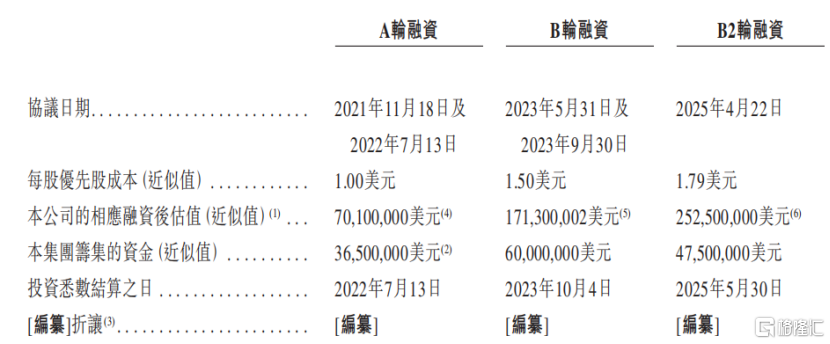
Core Viewpoint - Sirius Therapeutics has submitted its listing application to the Hong Kong Stock Exchange, with a valuation of approximately $253 million after its Series B funding round in April 2025, backed by prominent investors [1][2]. Group 1: Company Overview - Sirius Therapeutics was established in 2021 and focuses on developing siRNA therapies [1]. - The company is co-founded by top healthcare investment firms OrbiMed Entities and Creacion Ventures, holding over 40% of shares, with Tencent's investment arm holding 8.14% and Hancan Capital holding over 13% [1]. - The company reported a net loss of 309 million yuan and 342 million yuan for 2023 and 2024, respectively, totaling 651 million yuan in losses [3]. Group 2: Financial Performance - In the first half of 2025, Sirius Therapeutics achieved a net profit of 34.46 million yuan, marking its first profitable period, primarily driven by non-recurring income [3][4]. - The company generated 144 million yuan in other income, a significant increase from 4.51 million yuan in the same period last year, largely due to a strategic partnership with CRISPR Therapeutics [3][4]. Group 3: Product Pipeline and Challenges - The core product, SRSD107, is in Phase II clinical trials for venous thromboembolism, while two key products, SRSD216 and SRSD384, are also in various stages of development [5][6]. - The company faces significant competition in the FXI/FXIa inhibitor space, with several competitors already in Phase III trials, including drugs from Novartis, Bayer, and Johnson & Johnson [7][8]. - Sirius Therapeutics has 65 patents and applications, but only one has been granted, with 32 critical patents pending, posing potential risks in a competitive biopharmaceutical landscape [9].

靖因药业冲击IPO,聚焦小核酸创新药领域,尚未有产品获批
Ge Long Hui· 2025-11-05 09:24
Group 1: Industry Overview - The small RNA drug sector has gained significant attention in recent years, with Alnylam (ALNY) seeing a stock price increase of over 60 times since its IPO, reaching a market capitalization of $55.9 billion [1] - Major pharmaceutical companies like Novartis and Roche are increasing their investments in this field [1] - Several domestic companies in China, including Yuyuan Pharmaceutical, Hengrui Medicine, and others, are also developing small RNA drugs [1] Group 2: Company Profile - Sirius Therapeutics - Sirius Therapeutics, founded in 2021, is a global clinical-stage biotechnology company focused on siRNA therapies for chronic diseases, with a dual headquarters in San Diego and Shanghai [3][8] - The company has completed three rounds of financing, raising approximately $144 million, with major investors including OrbiMed Entities and Creacion Ventures [3] - As of April 2025, the company's post-investment valuation is approximately $253 million [4] Group 3: Product Pipeline - The core product, SRSD107, is a siRNA drug targeting coagulation factor XI, currently in Phase II clinical trials in Europe, with plans for additional trials in China and Australia/New Zealand [16][19] - SRSD216, another key product, targets Lp(a) to lower its levels, addressing a significant unmet need in cardiovascular disease management [22][23] - SRSD384 is a candidate drug targeting obesity, currently advancing towards IND application [17] Group 4: Financial Performance - Sirius Therapeutics has not generated any revenue from product sales, with other income primarily from bank interest and investment returns [24] - The company reported losses of approximately 616 million yuan over two and a half years, mainly due to R&D expenditures [25] - As of June 2025, the company had cash and cash equivalents of 618 million yuan, estimated to sustain operations for 30 months [27] Group 5: Market Potential - The global siRNA therapy market is projected to reach $2.4 billion in 2024, with an expected growth to $50.3 billion by 2040, reflecting a compound annual growth rate of 20.9% [13] - Since the approval of the first siRNA drug, Onpattro, in 2018, significant clinical and commercial validation has been achieved, with seven siRNA products currently approved in major markets [12]