
ASC

Search documents
激进的4A广告巨头:用AI杀死自己
凤凰网财经· 2026-03-04 13:16
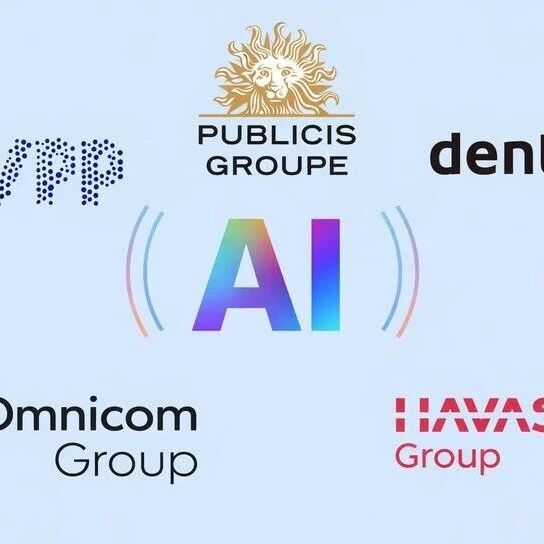
Core Insights - The article discusses the intense competition among traditional advertising giants (4A companies) in the face of the AI revolution, highlighting that AI is no longer just a tool for efficiency but a core strategic element for their future business models [2][3]. - The 4A companies are undergoing a transformation by integrating AI into their operations, which raises questions about their unique value proposition as AI can potentially replace many traditional roles [3]. Group 1: AI Investment and Strategy - Major 4A companies are making significant investments in AI, with WPP planning to invest approximately £250 million in 2024 and increasing it to £300 million in 2025 [4]. - Publicis Groupe has invested around €12 billion in data, technology, and AI over the past decade, while Omnicom aims to double its cost-saving target from AI to $1.5 billion [4]. - Dentsu plans to invest ¥45 billion in AI infrastructure from 2025 to 2027, and Havas is set to invest €400 million in data and AI by 2027 [4]. Group 2: AI Integration and Platform Development - 4A companies are creating centralized AI platforms to streamline operations, such as WPP's WPP Open and Publicis's CoreAI, which aim to consolidate various marketing functions into a cohesive system [5][7]. - The introduction of AI is seen as a necessary evolution to overcome the inefficiencies of traditional human-dependent workflows, allowing for better data utilization and operational efficiency [5][8]. Group 3: Data as a Competitive Advantage - Data is identified as a critical differentiator among 4A companies, with proprietary first-party data and long-term marketing insights being more valuable than publicly available data [20][25]. - WPP's Choreograph platform processes billions of data points to create proprietary AI models, while Publicis's CoreAI leverages trillions of data points for enhanced marketing effectiveness [25][26]. Group 4: Ecosystem and Capital Capabilities - The competition among 4A companies is not just about technology but also about capital and ecosystem capabilities, as they need to maintain access to rapidly evolving technologies [27]. - The ability to integrate new technologies and maintain strategic partnerships with leading AI firms is crucial for sustaining competitive advantages in the advertising landscape [27]. Group 5: Real-World Application and Client Engagement - The successful implementation of AI in real business scenarios is essential for building trust with clients, as demonstrated by WPP's integration of AI into daily workflows for major brands [28][30]. - 4A companies are focusing on delivering measurable results through AI, which helps reduce marketing costs and improve efficiency, making AI a default feature rather than an optional add-on [30][31]. Group 6: The Role of 4A Companies in the AI Era - Despite the rise of internal AI systems among major brands, 4A companies continue to play a vital role in managing complex marketing executions across different markets and channels [32][33]. - The value of 4A companies lies in their ability to leverage AI to simplify processes and enhance the predictability of marketing outcomes without increasing client burdens [33].


国七标准渐进,尾气后处理环节或将迎来新一轮迭代周期 | 投研报告
Zhong Guo Neng Yuan Wang· 2025-08-15 03:08
Core Insights - The report highlights the significant contribution of vehicle emissions to air pollution, with motor vehicle NOx emissions accounting for over 34% of the national total, and heavy-duty trucks responsible for 80% of motor vehicle NOx emissions [1][2] - Major cities like Beijing, Shenzhen, and Chengdu see motor vehicle emissions contributing over 40% to PM2.5 pollution, indicating a severe situation for vehicle exhaust management [1][2] Emission Standards and Regulations - The European Commission proposed the Euro 7 emission standards in November 2022, set to replace Euro 6, with implementation timelines for light and heavy vehicles outlined [3] - The transition from Euro 6 to Euro 7 provides a forward-looking guide for the development of China's National 7 (国七) standards, with stricter limits on heavy vehicle emissions and new requirements for non-exhaust pollutants [3] Market Opportunities - The National 7 standards are expected to create a market space exceeding 200 billion yuan in the automotive after-treatment sector from 2027 to 2030, driven by the need for new components and system upgrades [4][5] - Key areas of focus for new components under the National 7 standards include cold start emissions reduction, nitrogen oxide reduction, and monitoring system upgrades [4] - The projected incremental market space for automotive after-treatment is estimated at 244.2 billion yuan in 2027, increasing to 733.1 billion yuan by 2030 [5] Recommended Companies - Companies with strong technological capabilities and broad product layouts in the after-treatment sector are recommended for investment, including Yunyi Electric, Aikelan, Zhongzi Technology, and Weifu High-Tech [5]
华源证券:国七标准渐进 尾气后处理环节或将迎来新一轮迭代周期
智通财经网· 2025-08-14 07:36
Group 1 - The core viewpoint of the report emphasizes the importance of vehicle exhaust emission control as motor vehicle emissions have become a major source of air pollution, with NOx emissions from vehicles accounting for over 34% of the national total, and heavy-duty trucks contributing 80% of vehicle NOx emissions [1] - The report highlights that in major cities like Beijing, Shenzhen, and Chengdu, vehicle emissions contribute to over 40% of PM2.5 pollution, indicating a severe situation for vehicle exhaust management [1] - The report suggests that the implementation of the National VII standard will significantly expand the automotive after-treatment market, recommending attention to high-quality companies with strong technical capabilities and broad product layouts in the after-treatment sector [1] Group 2 - The European Union's Euro VII standard, which will replace Euro VI, is set to take effect in May 2024, providing a forward-looking reference for the formulation of the National VII standard [2] - Key changes from Euro VI to Euro VII include stricter limits on heavy-duty vehicle emissions, new requirements for non-exhaust pollutants, and upgraded monitoring systems for vehicle durability and battery performance [2] Group 3 - The National VII standard is progressing, with significant market opportunities expected in the automotive after-treatment sector, potentially exceeding 200 billion yuan from 2027 to 2030 [3] - The report anticipates that new components under the National VII standard will focus on cold start emissions reduction, nitrogen oxide reduction, and monitoring system upgrades, with specific new parts expected for both gasoline and diesel engines [3] - Based on predictions for component prices and vehicle production, the incremental market space for automotive after-treatment is projected to be 244.2 billion yuan in 2027, increasing to 733.1 billion yuan by 2030, totaling over 2 trillion yuan [3]