Amazon EC2 Trainium 3 UltraServers

Search documents
数十亿AI员工上岗倒计时,云计算一哥“没有魔法,只有真能解决问题的Agent”
3 6 Ke· 2025-12-04 01:41
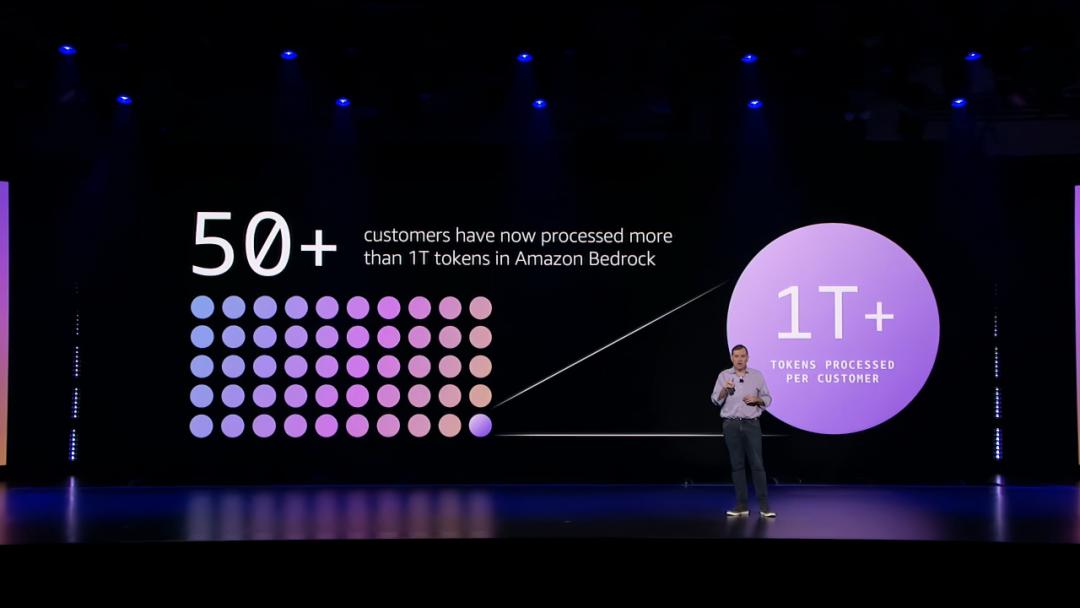
Core Insights - The AI industry is experiencing a silent differentiation, shifting from "model capability demonstration" to "Agent actual deployment" as the path to realizing AI value [1][24] - Amazon Web Services (AWS) CEO Matt Garman emphasized that the emergence of Agents marks a transition from a technological marvel era to a time of actual value realization [1][24] Group 1: AI Infrastructure Revolution - AWS introduced the Amazon EC2 Trainium 3 UltraServers, powered by self-developed 3nm chips, showcasing a significant leap in computing power with 362 PFLOPS and over 700 TB/s bandwidth [5][6] - The new Trainium 3 servers offer 4.4 times the computing performance and 3.9 times the memory bandwidth compared to the previous generation [6] - AWS plans to launch the next-generation Trainium 4, promising 6 times the FP4 performance and 4 times the memory bandwidth, addressing the needs of large model training [8] Group 2: Diverse Model Ecosystem - AWS adopts a diversified model strategy, rejecting the notion of a single "universal model" and instead promoting multiple excellent models [9] - The number of models available on the Amazon Bedrock platform has doubled, with 18 new managed open-source models, including four top Chinese models [9][12] - The newly launched Amazon Nova 2 series models cater to various needs, outperforming existing lightweight models in several areas [10][12] Group 3: Data and Model Integration - AWS introduced the Amazon Nova Forge service, allowing businesses to mix proprietary data with AWS training datasets to create customized models [14][16] - This service addresses the limitations of traditional data-model integration methods, enabling models to retain core reasoning abilities while learning new domain knowledge [13][16] - Sony is an early adopter of this service, successfully creating a customized model that significantly improves compliance review efficiency [16] Group 4: Advanced Agent Deployment - AWS unveiled three types of "frontier Agents" that demonstrate a significant leap in AI capabilities, showcasing their potential to transform software development and operations [17][19] - The Kiro autonomous agent can autonomously handle complex tasks, drastically reducing the time and manpower required for software projects [17][19] - The Amazon Security Agent and Amazon DevOps Agent enhance security and operational response mechanisms, ensuring continuous validation and efficient troubleshooting [19][20] Group 5: Comprehensive Agent Ecosystem - AWS's AgentCore features provide real-time control and evaluation of Agent interactions with enterprise tools and data, addressing core concerns in Agent deployment [20][22] - The introduction of new instances and services across various domains supports the infrastructure needed for effective Agent deployment [23] - The overall strategy positions AWS as a leader in the Agent era, emphasizing a full-stack capability to convert AI investments into tangible business returns [24]


数十亿AI员工上岗倒计时!云计算一哥“没有魔法,只有真能解决问题的Agent”
Xin Lang Cai Jing· 2025-12-03 13:24
Core Insights - The core perspective of the article emphasizes the shift in AI value realization from "model capability demonstration" to "Agent actual deployment" as highlighted by Amazon Web Services (AWS) CEO Matt Garman during the 2025 re:Invent keynote [2][26][27] Group 1: AI Infrastructure Redefinition - AWS has introduced the Amazon EC2 Trainium 3 UltraServers, powered by self-developed 3nm chips, showcasing a significant leap in computing performance with 362 PFLOPS (FP8) and over 700 TB/s bandwidth [6][30][31] - The new Trainium 3 servers offer 4.4 times the computing performance and 3.9 times the memory bandwidth compared to the previous generation [7][31] - AWS also launched Amazon AI Factories, allowing enterprises to deploy dedicated AI infrastructure in their data centers while maintaining data sovereignty and compliance [8][32] Group 2: Diverse Model Ecosystem - AWS adopts a diversified model strategy, rejecting the notion of a single "universal model," with the Amazon Bedrock platform doubling its model offerings over the past year, including four top Chinese models [9][33] - The newly introduced Amazon Nova 2 series models cater to various needs, outperforming existing models in multiple areas, particularly in agent scenarios [10][34][37] - The Amazon Nova 2 Pro model has shown impressive performance in agent capability benchmarks, addressing enterprise concerns about the reliability of generative AI in practical business scenarios [13][37] Group 3: Data and Model Integration - AWS introduces the Amazon Nova Forge service, allowing businesses to create customized models by blending proprietary data with AWS training datasets, overcoming limitations of traditional retrieval-augmented generation (RAG) techniques [14][38][41] - This service enables companies to develop agents that truly understand their business logic and processes, rather than relying solely on generic AI tools [41] Group 4: Deployment of Advanced Agents - The introduction of three types of "frontier agents" at the 2025 re:Invent showcases a significant enhancement in AI capabilities, emphasizing autonomy and scalability [18][42] - The Kiro autonomous agent can autonomously handle complex tasks, significantly reducing the time and resources needed for software development projects [18][42] - The Amazon Security Agent and Amazon DevOps Agent redefine security practices and operational response mechanisms, ensuring continuous validation and efficiency in global business operations [19][43] Conclusion: The Era of AI Agents - The 2025 re:Invent event illustrates AWS's comprehensive strategy for the Agent era, highlighting the importance of a full-stack capability in transforming AI investments into tangible business returns [25][47][48]