Anitocabtagene autoleucel

Search documents
2026年最值得期待的十款创新疗法
Xin Lang Cai Jing· 2026-01-26 07:13
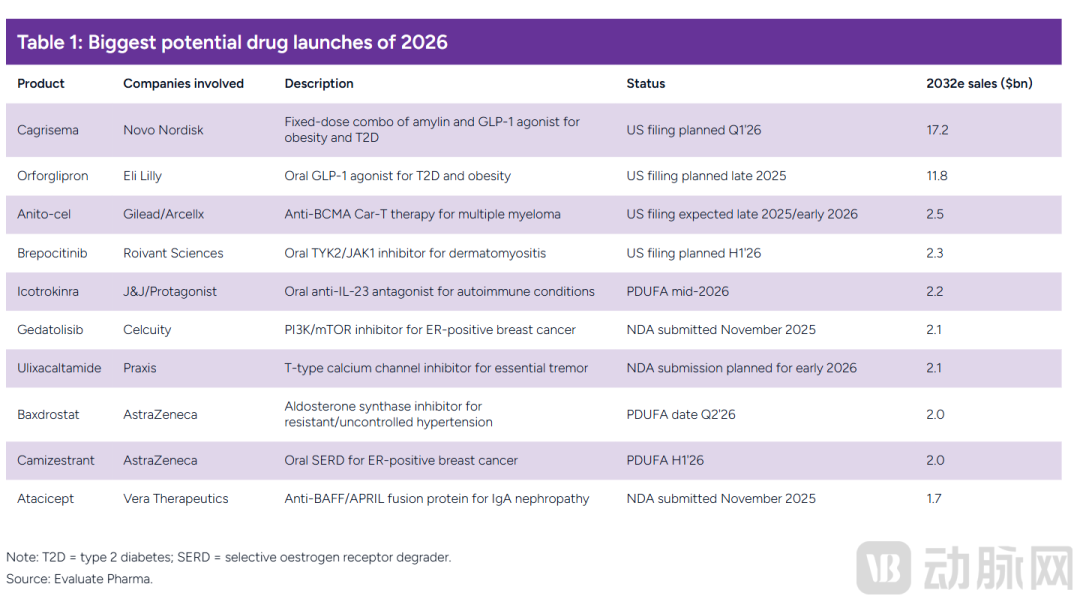
Core Insights - Evaluate's latest report indicates that ten innovative therapies are expected to receive FDA approval in 2026, covering various fields such as metabolic diseases, oncology, and autoimmune conditions, signaling a shift in treatment paradigms for the coming years [1] Metabolic Diseases - The competition between Novo Nordisk and Eli Lilly in the obesity treatment market is intensifying with the upcoming submissions of CagriSema and Orforglipron, which may reshape the treatment landscape for obesity [5] - CagriSema is a fixed-dose combination therapy of cagrilintide and semaglutide, designed for weekly subcutaneous injection, aiming to effectively regulate metabolism and achieve weight loss through multiple mechanisms [5][6] - Orforglipron is an oral GLP-1 receptor agonist that can be taken at any time of the day, enhancing patient compliance due to its convenient dosing regimen [6] - Clinical trials show that CagriSema achieved a weight loss of 20.4% at week 68 compared to 3.0% in the placebo group, while Orforglipron also demonstrated significant weight loss and improvements in metabolic risk factors [7][8] - Both drugs represent trends in obesity treatment: combination therapy and oral GLP-1 agonists, potentially leading to a more competitive market and increased R&D investments in metabolic disease therapies [9] Cell Therapy - Anitocabtagene autoleucel (anito-cel), a CAR-T therapy targeting BCMA, is expected to provide breakthroughs in treating multiple myeloma, addressing challenges in expanding CAR-T therapy to solid tumors [10] - The innovative D-Domain design of anito-cel improves CAR expression stability and reduces immune-related adverse effects, enhancing its therapeutic efficacy [11] - Clinical data shows a total response rate of 96% and a 24-month overall survival rate of 83% for patients treated with anito-cel, indicating its potential as a durable treatment option [12] Autoimmune Diseases - Brepocitinib and Icotrokinra are poised to optimize precision treatment strategies in autoimmune diseases, moving from broad-spectrum immunosuppression to targeted mechanisms [14] - Brepocitinib is a selective TYK2/JAK1 inhibitor that effectively blocks pathogenic signaling pathways without broadly suppressing normal immune function, showing significant clinical improvement in dermatomyositis patients [15] - Icotrokinra is a first-in-class oral therapy targeting IL-23R, demonstrating significant efficacy in treating moderate to severe plaque psoriasis [16][17] - Both therapies utilize oral administration, enhancing patient compliance and potentially transforming treatment paradigms in autoimmune diseases [19] Breast Cancer Treatment - Gedatolisib, a multi-target PAM inhibitor, aims to address resistance issues in HR+/HER2- advanced breast cancer by fully blocking the PAM pathway [20] - Clinical trials indicate that gedatolisib significantly improves progression-free survival (PFS) in patients with HR-positive, HER2-negative advanced breast cancer [21][22] - Camizestrant, a new oral selective estrogen receptor degrader (SERD), shows promise in treating patients with ESR1 mutations, enhancing treatment efficacy [23][24] - The combination of gedatolisib and camizestrant represents a shift towards multi-pathway combination therapies, providing new treatment avenues for resistant breast cancer patients [26][27] Rare Diseases - Baxdrostat, Ulixacaltamide, and Atacicept are innovative therapies targeting unmet needs in hypertension, essential tremor, and IgA nephropathy, respectively, showcasing the industry's focus on rare diseases [28][35] - Baxdrostat is a selective oral aldosterone synthase inhibitor that has shown significant efficacy in treating resistant hypertension [29][30] - Ulixacaltamide is a selective T-type calcium channel inhibitor that has demonstrated efficacy in treating essential tremor [31][32] - Atacicept targets B-cell activation factors, showing promise in reducing proteinuria in IgA nephropathy patients [33][34] Conclusion - The ten therapies highlighted reflect a shift towards precision medicine, optimized delivery strategies, and improved clinical response rates, marking a transition in biopharmaceutical development towards patient-centered and data-driven decision-making [36]