
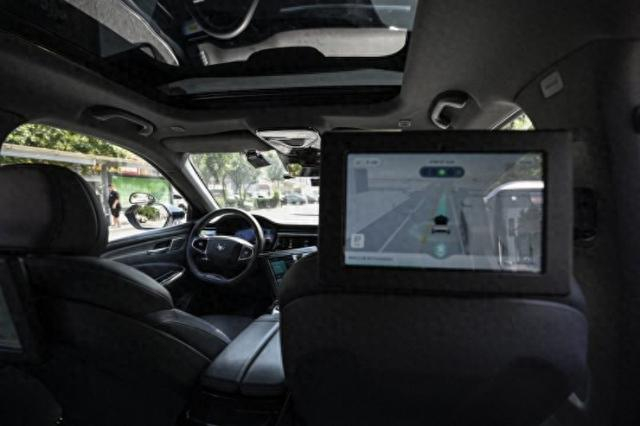
Apollo Go RT6车辆

Search documents
两家美国网约车公司在英国与百度展开合作
Guan Cha Zhe Wang· 2025-12-23 08:12
Group 1 - Uber and Lyft are collaborating with Baidu to launch autonomous taxi trials in the UK, indicating a competitive push for autonomous taxi services globally [1][3] - Uber plans to initiate a pilot project with Baidu's Apollo Go in London in the first half of 2026, following their initial partnership announcement in July [3] - Lyft's CEO announced plans to test dozens of Apollo Go RT6 vehicles in London next year, pending regulatory approval, as part of their collaboration with Baidu [3] Group 2 - The shift towards partnering with Chinese autonomous driving companies, such as Baidu, may be influenced by recent operational issues faced by Waymo's autonomous vehicles in the US [4] - Global ride-hailing platforms are increasingly choosing to collaborate with Chinese autonomous driving firms, expanding their services to various regions [4] - Southeast Asian ride-hailing company Grab is partnering with Momenta and WeRide to extend autonomous taxi services in Southeast Asia, while other companies are testing autonomous shuttle services in Singapore [5]



Uber、Lyft 与百度合作,明年在英国试运行机器人出租车
Xin Lang Cai Jing· 2025-12-22 14:17
Group 1 - Uber and Lyft are partnering with Chinese tech giant Baidu to launch autonomous taxi trials in the UK next year, reinforcing the UK's position as a leading testing ground for robotaxi commercialization in Europe [1][4] - Baidu's Apollo Go RT6 vehicles are set to join London's taxi platform network by 2026, marking the first direct competition between Chinese and American autonomous driving giants in the European capital [1][4] - The Automated Vehicles Act 2024 provides a legal framework for liability, shifting legal responsibility from individuals in the vehicle to "authorized automated driving entities," a framework currently lacking in the more fragmented EU [1][4] Group 2 - The autonomous taxi sector promises safer, more environmentally friendly, and cost-effective ride services, but profitability remains uncertain, with companies like Pony.ai and WeRide still operating at a loss [2][5] - Analysts warn that the high costs associated with autonomous fleets may pressure the profit margins of platforms like Uber and Lyft [2][5] - A hybrid network combining robotaxis with human drivers may be the most viable model for managing peak demand and pricing [2][5] Group 3 - For Lyft, the UK trial is a cornerstone of its international expansion following the $200 million acquisition of European ride-hailing app FreeNow earlier this year [3][5]
