Artificial Intelligence technology

Search documents
Tech Stocks Have Lost Over $1 Trillion in Value This Year. Is It Time to Panic -- or Buy?
Yahoo Finance· 2026-03-26 21:35
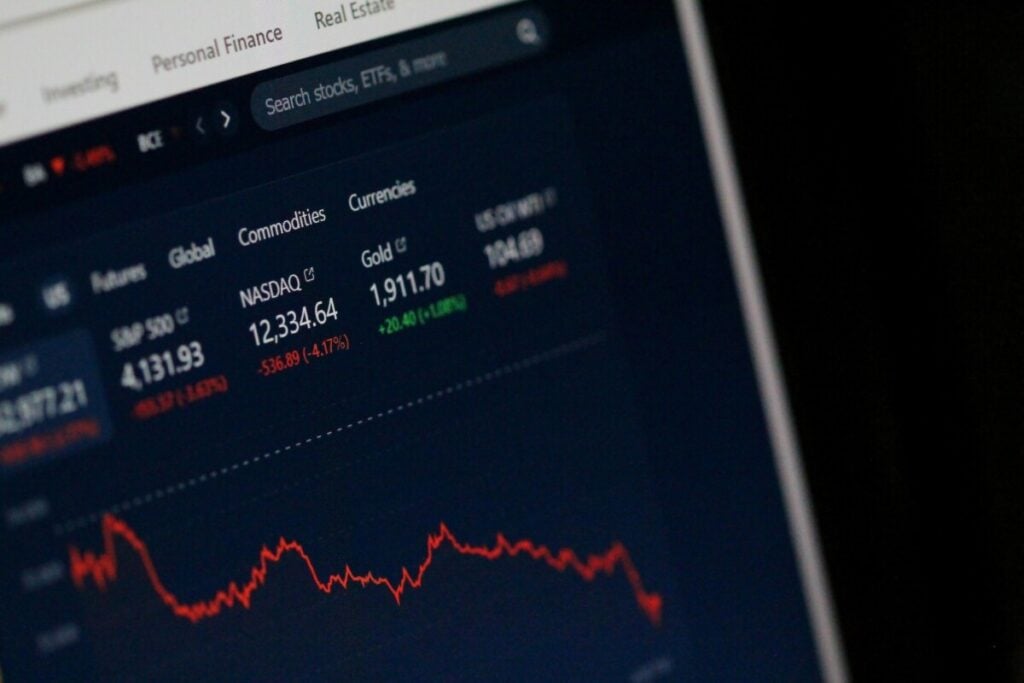
Core Viewpoint - The current decline in technology stocks in 2026 is significant but not as severe as historical downturns, suggesting potential investment opportunities for those willing to take risks [1][5][7]. Historical Context - The dot-com bubble over 25 years ago saw the Nasdaq-100 lose 80% of its value over two years, driven by inflated valuations of internet companies [2][3][4]. - The internet, once a revolutionary technology, has since become integral to daily life, illustrating the potential for transformative technologies [2][3]. Current Market Analysis - The Roundhill Magnificent Seven ETF, which tracks leading tech stocks, has seen a decline of about 10% in less than three months, but has not yet entered bear-market territory, which requires a 20% drop [5][7]. - The current dollar value of the tech pullback is substantial, yet the percentage decline remains modest compared to historical standards [7]. Investment Perspectives - Aggressive investors may view the current pullback as a correction, presenting a temporary buying opportunity before a potential recovery in tech stock valuations [8].
The Stock Market Sounds an Alarm as Investors Get Bad News About President Trump's Economy. History Says This Will Happen Next.
Yahoo Finance· 2026-03-09 08:32
Economic Overview - The U.S. stock market has experienced a decline in 2026, with the S&P 500 falling over 3% despite better-than-expected earnings from most companies in Q4 [1] - Economic growth in 2025 was reported at 2.2%, marking the slowest growth since the COVID-19 recession in 2020, and the worst year for the U.S. economy since 2016 when excluding the pandemic [4] - The U.S. economy added only 181,000 jobs in 2025, a significant drop from 1.5 million in the previous year, indicating the weakest job growth since 2009 when excluding the pandemic [5] Impact of Tariffs - President Trump's tariffs, initially promoted as an "economic miracle," are now viewed as an economic headwind, contradicting earlier predictions by experts [3] - Businesses have responded to the uncertainty created by tariffs by reducing hiring, contributing to the sluggish job market [5] - Economic growth may remain sluggish due to the combined effects of tariffs and rising gasoline prices [7] Gas Prices and Inflation - Gasoline prices have reached levels not seen since the summer of 2024, with Brent crude oil prices increasing approximately 25% in the past week [6] - The rise in gas prices is contributing to inflationary pressures on consumers, impacting overall economic sentiment [6] AI Sector Insights - A report highlights a lesser-known company described as an "Indispensable Monopoly" that provides critical technology needed by major players like Nvidia and Intel, suggesting potential investment opportunities in the AI sector [2]
Experts Expect Muted S&P 500 Returns In 2026 - NVIDIA (NASDAQ:NVDA)
Benzinga· 2026-01-05 18:06
Core Viewpoint - The S&P 500 has experienced significant growth over the past three years, but 2026 may present challenges as the market faces uncertainties related to AI and tariffs [1][4]. Group 1: S&P 500 Performance - The S&P 500 index recorded a growth of 16% in 2025, following gains of 23% in 2024 and 24% in 2023 [1]. - Historically, the S&P 500 has only achieved three consecutive years of double-digit growth in the post-war era, indicating the rarity of such performance [2]. Group 2: Market Predictions - Analysts at Bank of America predict the S&P 500 will reach 7,100 by the end of 2026, a 3.72% increase, while Deutsche Bank forecasts a more optimistic target of 8,000, representing a 16.87% gain [5]. - Other analysts, including those from Barclays, JPMorgan Chase, and HSBC, expect the index to fall between 7,400 and 7,500 points, while firms like Goldman Sachs and Citigroup suggest a range of 7,600 to 7,800 [6]. Group 3: Economic Factors and Uncertainty - Analysts at Vanguard warn that high AI stock valuations and tariff uncertainties could lead to a potential 10% decline in the S&P 500, although a more likely outcome is a 6% increase amid slowing economic growth [7]. - The adaptability of Wall Street was demonstrated in 2025, as markets quickly recovered from a steep crash due to tariff announcements, suggesting resilience in the face of geopolitical challenges [8]. Group 4: AI Sector Valuations - The AI boom has raised concerns about inflated valuations, with approximately 30% of the S&P 500 concentrated in AI companies, which could lead to a sharper market correction [10]. - Nvidia, a leading AI performer, has seen its stock price increase by over 1,300% in five years, with a trailing P/E ratio of around 46, indicating speculative behavior among tech leaders [11]. Group 5: Future Outlook - Despite concerns about a potential market correction, many analysts believe the AI boom will not result in a bust, although investors may face disappointing returns in 2026 [13]. - Diversifying portfolios away from AI could provide stability as analysts express caution regarding the S&P 500's growth prospects moving forward [13].


Experts Expect Muted S&P 500 Returns In 2026
Benzinga· 2026-01-05 18:06
Core Viewpoint - The S&P 500 has experienced significant growth over the past three years, but 2026 may present challenges as uncertainties around AI and tariffs loom [1][4]. Performance Overview - The S&P 500 index recorded a growth of 16% in 2025, following gains of 24% in 2023 and 23% in 2024 [1]. - Historically, the S&P 500 has only achieved three consecutive years of double-digit growth three times since the post-war era [2]. Market Sentiment and Predictions - Analysts from Bank of America predict the S&P 500 will reach 7,100 by the end of 2026, a 3.72% increase, while Deutsche Bank forecasts a more optimistic target of 8,000, representing a 16.87% gain [5]. - Other analysts, including those from Barclays and JPMorgan Chase, expect the index to fall between 7,400 and 7,500 points, while firms like Goldman Sachs and Citigroup suggest a range of 7,600 to 7,800 [6]. Economic Factors - Analysts at Vanguard warn that high AI stock valuations and potential tariff issues could lead to a 10% decline in the S&P 500, although a more likely scenario is a 6% increase amid slowing economic growth projected at 2.8% [7]. - The adaptability of Wall Street was demonstrated in 2025, as markets quickly recovered from a steep crash due to tariff announcements [8]. Valuation Concerns - The AI sector's valuations are drawing comparisons to the dotcom bubble, with approximately 30% of the S&P 500 concentrated in AI companies, raising concerns about a potential market correction [9][10]. - Nvidia has seen a remarkable increase of over 1,300% in five years, with a trailing P/E ratio of around 46, indicating speculative behavior among tech leaders [11]. Future Outlook - Despite the speculative nature of the current market, many analysts believe the AI boom will not lead to a bust, but investors may face disappointing returns in 2026 [12][13]. - Diversification away from AI could provide more stability in investment portfolios as analysts express caution regarding the S&P 500's growth prospects [13].

Wall Street Skips Tech and Goes Old School for Growth in 2026
Yahoo Finance· 2025-12-13 14:00
Group 1 - Wall Street strategists are advising clients to focus on less popular sectors such as health care, industrials, and energy for 2026, moving away from the Magnificent Seven tech giants like Nvidia and Amazon [2] - There is growing skepticism about the sustainability of Big Tech's valuations, which have surged approximately 300% since the bull market began three years ago, especially after disappointing earnings from AI leaders Oracle and Broadcom [3][4] - Investors are beginning to shift their focus from high-flying tech stocks to undervalued cyclicals and small-cap stocks, anticipating economic growth in the upcoming year [6] Group 2 - The small-cap Russell 2000 Index has increased by 11% since US stocks hit a near-term low on November 20, while the Magnificent Seven companies have only gained half of that [7] - The S&P 500 Equal Weight Index has been outperforming its cap-weighted counterpart, indicating a shift in investor preference towards a broader market approach [7] - Strategas Asset Management and Morgan Stanley predict a significant sector rotation into underperforming areas like financials and consumer discretionary stocks in 2026 [8]
Seeking AI Exposure? Check Out This Tool
ZACKS· 2025-12-05 02:51
Core Insights - The article highlights the significant growth and potential of Palantir (PLTR) within the Artificial Intelligence (AI) sector, showcasing its strong financial performance and increasing customer base [4][6]. Company Performance - Palantir reported quarterly sales of $1.2 billion, marking a 63% increase year-over-year [4]. - The company achieved a record Total Contract Value (TCV) of $2.8 billion, which is a 340% increase compared to the same period last year [5]. - Customer count grew by 45% year-over-year, indicating strong momentum and demand for its services [6]. Revenue Breakdown - US commercial revenue surged by 121% year-over-year, while US government revenue increased by 52% [4]. - Palantir closed over 200 deals worth at least $1 million, with 91 deals worth at least $5 million, and 53 deals worth at least $10 million [5]. Future Outlook - The company provided its highest sequential quarterly revenue growth guidance in its history for Q4, expecting a 61% growth [6]. - Palantir also raised its guidance for current year sales, adjusted operating income, and adjusted free cash flow [6].


Global Markets Navigate AI-Driven Optimism, Cautious Fed Stance, and China Trade Nuances
Stock Market News· 2025-11-03 04:38
Group 1: Asian Markets and AI Optimism - Asian stock markets surged, reaching new highs driven by optimism surrounding artificial intelligence (AI) technology, following record highs on Wall Street for the S&P 500 and Nasdaq [2][3] - The tech sector's earnings growth estimates climbed to 20.9% for the upcoming reporting season, up from 15.9% in June, with 81% of tech stocks, including Nvidia and Apple, showing increased estimates [2] Group 2: Japan and Taiwan Market Performance - Japan's Nikkei index rose by 1.5% to 1.14%, approaching all-time highs, while Taiwan's stock market climbed 1.2% to a new record [3] - MSCI's broadest index of Asia-Pacific shares outside Japan increased between 0.16% and 0.3% [3] Group 3: China Market Reaction to Trump-Xi Deal - Despite positive remarks from U.S. President Trump regarding trade negotiations with China, the Chinese market reacted cautiously, with the Shanghai Composite Index falling by 0.73% and the Shenzhen Component losing 1.16% [4][5] - The AI sector index in China decreased nearly 2%, as investors locked in profits and expressed caution about the deal's long-term durability [5] Group 4: Gold Market Stability - Gold prices stabilized around $3,980 per ounce after a volatile session, following a Federal Reserve interest rate cut to a range of 3.75%-4.00% [6][7] - The U.S. dollar remained firm, contributing to gold's stability, as lower interest rates typically enhance gold's appeal, but fading prospects for additional rate cuts limited its upside potential [7]