
Aura Edition AI PC

Search documents
史上最大规模Tech World,联想开启“混合式AI新纪元”
Tai Mei Ti A P P· 2026-01-09 06:16
Core Insights - Lenovo hosted the largest Tech World event at CES 2026, emphasizing the importance of hybrid AI in personal and enterprise applications [2] - The company aims to enhance AI capabilities through strategic partnerships with NVIDIA and AMD, focusing on AI infrastructure and deployment efficiency [3][5] - Lenovo's hybrid AI strategy integrates personal and enterprise AI, with the launch of Lenovo Qira, a personal super-intelligent agent, and Lenovo Lexiang, an enterprise super-intelligent agent [15][18] Group 1: Event Highlights - Lenovo rented the Sphere venue in Las Vegas, accommodating 15,000 attendees for Tech World, featuring discussions on AI with industry leaders [2] - CEO Yang Yuanqing highlighted that hybrid AI will enhance human capabilities and transform enterprises into self-learning entities [2] Group 2: Strategic Partnerships - Lenovo and NVIDIA announced the "Lenovo AI Cloud Super Factory" to reduce AI deployment time and scale up to 100,000 GPUs [5] - The collaboration aims to eliminate uncertainties in AI deployment, making it more predictable and manageable [5] - Lenovo will also be among the first to adopt AMD's Helios AI architecture for enterprise applications [5] Group 3: Product Innovations - Lenovo introduced the Aura Edition AI PC in collaboration with Intel, featuring the latest Core Ultra 300 processors [8] - The new AI PCs will include Smart Modes for automatic system optimization and Smart Share for enhanced sharing capabilities [9] - Lenovo's AI-driven products, including the ThinkPad Rollable XD and AI Glasses, showcase innovative designs and functionalities for various user scenarios [10][11] Group 4: AI Ecosystem Development - Lenovo's hybrid AI strategy includes the integration of personal and enterprise AI needs, with a focus on intelligent model orchestration and multi-agent collaboration [15][16] - The Lenovo Qira personal super-intelligent agent will operate seamlessly across devices, enhancing user experience [16] - Lenovo Lexiang serves as a unified interface for customer interactions, improving operational efficiency across various business functions [18] Group 5: Upcoming Opportunities - Lenovo's AI initiatives will be tested during the 2026 FIFA World Cup, where the company will apply its AI technologies to enhance the event experience [20] - The World Cup, expected to attract over 6 billion viewers, will serve as a platform to showcase Lenovo's AI capabilities in a high-stakes environment [20]




一次集齐四大芯片巨头CEO,联想成了“最大公约数”
Di Yi Cai Jing· 2026-01-07 06:48
Core Insights - The gathering of the four major chip giants—NVIDIA, Intel, AMD, and Qualcomm—at the Lenovo Tech World during CES 2026 highlights the evolving dynamics of the semiconductor industry, where collaboration and competition coexist in the AI narrative [1] - The focus is shifting from individual chip manufacturers to system-level players that can integrate diverse computing power and facilitate the deployment of intelligent hardware solutions [1] Group 1: Industry Transformation - Jensen Huang, CEO of NVIDIA, emphasized the significance of AI as a foundational architecture akin to operating systems, marking a new platform shift in computing [4] - The IT industry has invested approximately $10 to $15 trillion over the past thirty years, necessitating a complete overhaul to adapt to AI applications [5] - Huang and Lenovo's CEO, Yang Yuanqing, announced a new collaboration plan to create a "Lenovo AI Cloud Super Factory," aiming to standardize AI infrastructure and transition from highly customized deployments to industrialized solutions [5][7] Group 2: Competitive Landscape - AMD's CEO, Lisa Su, introduced the Helios rack-level AI platform, positioning it as a direct challenge to NVIDIA's GPU-centric approach, highlighting the need for robust system-level infrastructure to support larger models and higher throughput [8] - Intel's new CEO, Pat Gelsinger, showcased the Aura Edition AI PC, which integrates the latest Intel processors, indicating a shift from traditional PCs to data centers and cloud computing [9][10] - Qualcomm's focus on AI-native endpoints, particularly in wearable devices, reflects a broader trend towards personal intelligent companions that require low power consumption and continuous connectivity [10] Group 3: Collaborative Ecosystem - The collaboration among the four chip giants illustrates a new industry consensus that the true value of AI lies not in possessing the most powerful chip but in transforming computing power into usable capabilities for enterprises and users [11] - Lenovo's role as a "system integrator" and "scene amplifier" is crucial in this collaborative ecosystem, as it bridges the various offerings from NVIDIA, AMD, Intel, and Qualcomm [11] - The wearable device market is projected to exceed one billion units, showcasing the potential for growth in AI-driven consumer technology [11]
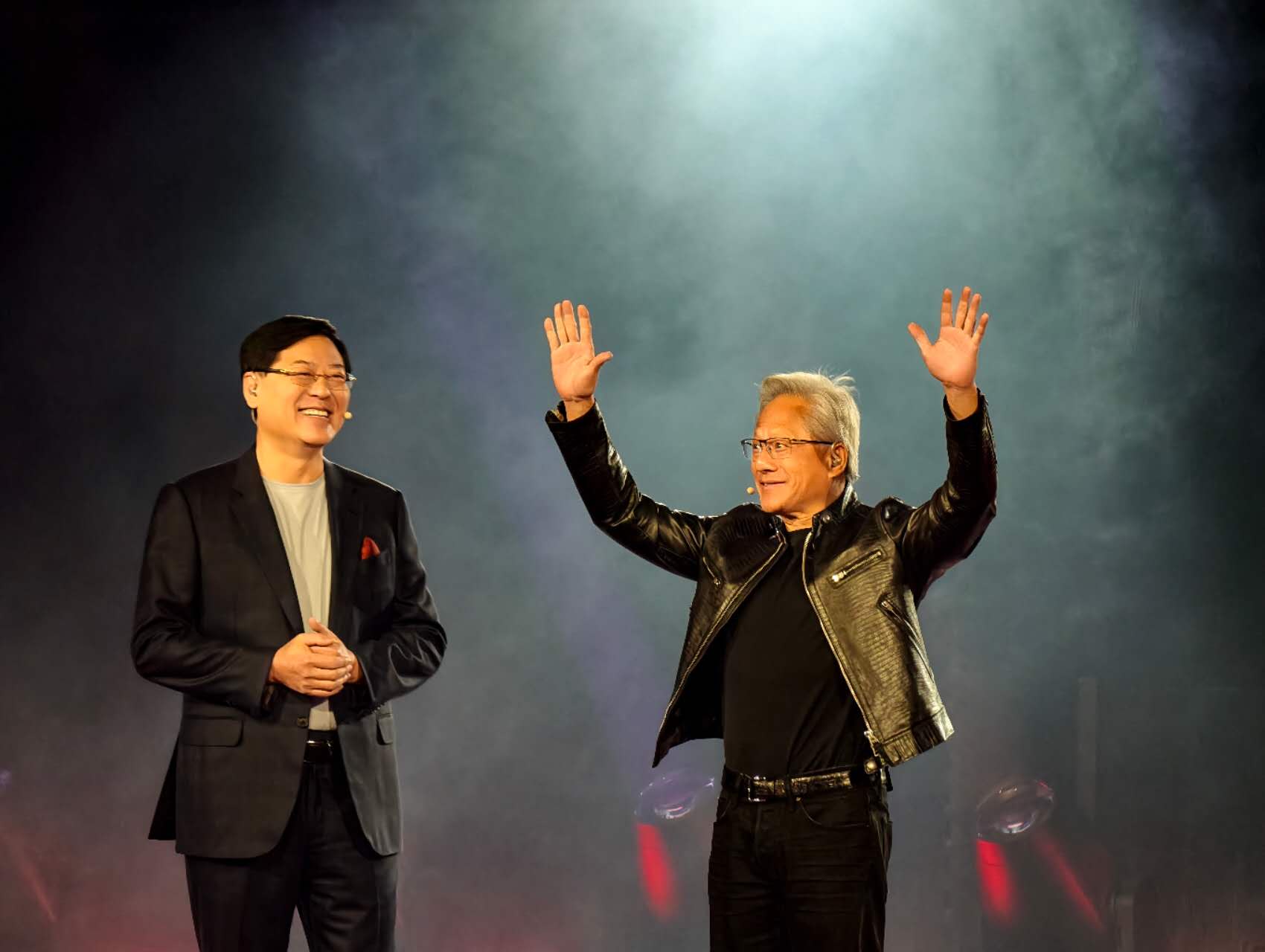
联想发布,一系列AI大动作!
Zhong Guo Zheng Quan Bao· 2026-01-07 04:41
Core Insights - Lenovo's Chairman and CEO, Yang Yuanqing, introduced the concept of "hybrid AI" during the 2026 CES, emphasizing the need for collaboration among tech companies [1] Group 1: Hybrid AI Concept - The hybrid AI integrates personal, enterprise, and public intelligence to create a personalized and diverse AI experience, which is seen as the ultimate path for AI accessibility [2] - Lenovo unveiled three core technologies: Intelligent Model Orchestration, Agent Core, and Multi-agent Collaboration, which form the technical foundation of hybrid AI [2] - The personal AI superintelligence, Lenovo Qira, was launched to connect and coordinate multiple smart devices seamlessly [2] Group 2: AI in Enterprise Applications - Yang highlighted that the new wave of computing power will stem from the explosion of AI inference, which will be crucial for enterprise competitiveness [4] - Lenovo announced a collaboration with AMD to launch the AI inference server ThinkSystem SR675i, aimed at enhancing AI deployment efficiency and reducing operational costs [4][5] - The company also introduced a range of inference-optimized server products to help enterprises deploy AI models locally and at the edge [5] Group 3: Strategic Partnerships - Lenovo and NVIDIA announced a partnership to create the "Lenovo AI Cloud Super Factory," which aims to industrialize AI infrastructure and significantly reduce deployment time [7] - The collaboration with NVIDIA is expected to quadruple business scale over the next 3 to 4 years [7] - Lenovo is also working with Qualcomm to innovate in the AI-native wearable device sector, with a market potential exceeding one billion units [7] Group 4: Market Trends and Predictions - The integration of AI technology in smart hardware is anticipated to drive growth, with predictions indicating that AI penetration rates in smartphones and PCs could reach 45% and 62% respectively by 2026 [7] - The edge AI market is projected to grow from 321.9 billion yuan in 2025 to 1.22 trillion yuan by 2029, with a compound annual growth rate of 40% [7]
英特尔CEO陈立武:AI正在重塑软硬件市场格局
Xin Lang Cai Jing· 2026-01-07 02:57
Core Viewpoint - The event highlights the collaboration between Intel and Lenovo in developing AI-driven PC experiences, emphasizing the transformative impact of AI on the hardware and software market [1][2]. Group 1: AI and Market Impact - Intel's CEO, Chen Liwu, stated that AI is reshaping the entire hardware and software market landscape, enhancing user experiences through continuous iteration [1][2]. - The focus on AI is expected to drive significant advancements in daily life experiences for users [1][2]. Group 2: Product Launches - During CES 2026, Intel and Lenovo unveiled the Aura Edition AI PC and the FIFA-branded gaming laptop, Legion Pro 7i, which are products of their joint development efforts [1][2]. - The Aura Edition product line will feature Intel's first chip built on its proprietary 18A process technology, the Core Ultra 300 series processor [1][2]. Group 3: Future Collaboration - Chen Liwu indicated that Intel and Lenovo plan to deepen their collaboration in the areas of PCs, data centers, and cloud computing in the future [1][2].