
BEIJING PASS一卡通国际卡

Search documents
年终盘点|新韵2025——文商旅体融合,文蕴全球共赏
Bei Jing Ri Bao Ke Hu Duan· 2025-12-23 04:18
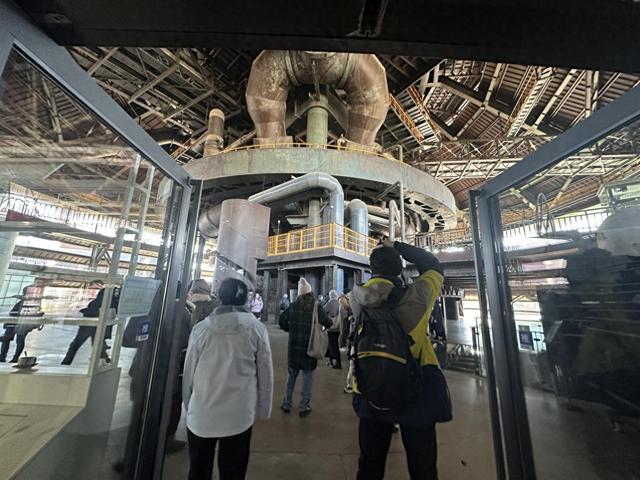
Core Perspective - Beijing has successfully integrated its rich cultural heritage with modern vitality, showcasing a vibrant blend of cultural, commercial, and tourism activities throughout the past year [1]. Group 1: Red Tourism - The "Guanqiao Chengyuan" project in Wanping has been revitalized to celebrate the 80th anniversary of the victory in the Anti-Japanese War, enhancing its appeal as a red tourism destination [2]. - Beijing's cultural and tourism bureau has launched 10 themed red tourism routes, connecting significant historical sites and promoting immersive experiences in red culture [2]. Group 2: Industrial Tourism - Shougang Park has transformed into a hub for industrial tourism, attracting visitors with its unique blend of historical industrial heritage and modern artistic experiences [3][5]. - By 2025, Beijing aims to establish a matrix of 30 industrial tourism demonstration sites, showcasing various types of industrial resources, from traditional crafts to smart manufacturing [7]. Group 3: Inbound Tourism - Inbound tourism in Beijing is experiencing rapid growth, with a 42.9% increase in international visitors in the first three quarters of 2025, reaching 3.884 million [9]. - The optimization of inbound tourism services, such as the "free half-day tour" for short-term visitors, has enhanced the overall experience and attracted a diverse range of tourists [10]. Group 4: Ticket Economy - The "ticket root economy" in the Asia-Olympic business circle allows event tickets to serve as discount cards for various dining and retail establishments, boosting local consumption [13][15]. - Major events, such as concerts and sports competitions, have significantly increased foot traffic and sales in surrounding areas, with the Bird's Nest hosting over 300 events expected to attract more than 3 million attendees [26]. Group 5: E-sports Industry - The KPL annual finals set a Guinness World Record for the highest attendance at an e-sports event, with 62,196 spectators, marking a significant milestone for Beijing's e-sports industry [23][27]. - The city is positioning itself as a center for the gaming and e-sports industry, with policies aimed at enhancing the sector's development and expanding its cultural and tourism integration [23]. Group 6: Cultural and Tourism Exhibitions - The Beijing International Cultural Tourism Expo showcased innovative experiences and attracted significant attendance, with sales reaching 211 million yuan during the event [24][25]. - Various cultural exhibitions throughout the year have successfully promoted the integration of culture and tourism, enhancing consumer engagement and driving sales [25].

北京提升打造“第二个三里屯”国际交往新场景
Zhong Guo Xin Wen Wang· 2025-10-16 13:52
Core Points - Beijing is set to implement the "Beijing International Exchange Center Planning Implementation Guidelines" by March 2025, aimed at enhancing the planning and construction of key international exchange areas and facilities [1][2] - The guidelines identify 289 key street blocks and 14 important towns for international exchange functions, strengthening spatial capacity and transportation systems [2] - The development of the "second Sanlitun" international exchange scene is highlighted, focusing on the Jinzhanzhong District and the Fourth Embassy District, with plans for international organization clusters and improved resources in education and healthcare [1][2] Group 1: International Exchange Development - The "14th Five-Year Plan" has led to significant advancements in Beijing's international exchange capabilities, with strategic tasks and spatial layouts outlined in various planning documents [2][4] - The number of international organizations registered in Beijing has increased to 127, marking a 32% growth since the end of the "13th Five-Year Plan" [4] - Beijing has become a hub for foreign enterprises, with over 35,000 foreign companies and 47 Fortune Global 500 companies, maintaining its position as a leading global city [5] Group 2: Infrastructure and Connectivity - Beijing has established 70 air points and 94 air routes to countries involved in the Belt and Road Initiative, leading the nation in both air point quantity and route density [3] - The city supports local enterprises in participating in international infrastructure projects, contributing to job creation in partner countries [3] - The implementation of the "Beijing Map" in English and the acceptance of international credit cards for public transport are part of efforts to enhance the experience for foreign visitors [6] Group 3: Services for Foreign Nationals - Beijing has introduced measures to facilitate services for foreign nationals, including online processing for social security and healthcare [6] - The city has launched payment solutions like the BEIJING PASS and other integrated products to simplify transactions for expatriates [6] - Continuous feedback from foreign nationals is being sought to improve urban internationalization services, with plans to enhance service quality in the upcoming "15th Five-Year Plan" [6]