幂方卡

Search documents
智慧出行新体验:北京一卡通“十四五”时期创新交出亮眼答卷
Xin Lang Cai Jing· 2026-01-26 22:08
Core Insights - Beijing Yikatong is transforming from a card-issuing entity to a smart travel service provider, aiming to create a leading digital livelihood service platform in China [1] Group 1: Technological Innovation - During the 14th Five-Year Plan period, Beijing Yikatong is deepening its core business in transportation payments and continuously enriching its public transport payment product system [2] - The introduction of the "Linglongtong PLUS" NFC transportation card allows users to "use first and pay later," eliminating the need for pre-recharge, with an automatic recharge limit of 35 yuan [2] - The upgraded "Tap Card" features zero initial cost, post-ride payment, nationwide usability, and screen-off tapping, with over 200,000 cards issued since launch [2][3] Group 2: Service Expansion - Beijing Yikatong is integrating into the capital's urban operation and livelihood guarantee system, supporting key social service cards like the third-generation social security card [4] - The company has partnered with nearly 100 universities in Beijing, benefiting millions of students through electronic card services and launching a dedicated student service area in its app [4] - The "BEIJING PASS" travel card, launched in July 2024, enhances payment convenience for foreign visitors, applicable in various public transport and commercial scenarios [3] Group 3: Strategic Development - Beijing Yikatong is actively involved in the design and construction of smart and green transportation, contributing to projects like the "Suburban Railway One Ticket" and the MaaS 2.0 platform [5] - The company is expanding payment scenarios by launching integrated parking payment services and collaborating with aviation companies to create a comprehensive travel service platform [5] - Looking ahead to the 15th Five-Year Plan, Beijing Yikatong aims to lead with technological innovation, ensuring the stability of the capital's public transport payment system while enhancing product service systems [5]
2025年北京共接待入境游客548万人次,同比增长39%
Bei Jing Shang Bao· 2026-01-20 07:39
Core Insights - In 2025, Beijing is projected to receive 5.48 million inbound tourists, marking a 39% year-on-year increase, with tourism spending reaching 50.56 billion yuan, a growth of 44.7%, both setting new historical records for the city [1] Group 1: Inbound Tourism Growth - The inbound tourism sector is expected to significantly contribute to Beijing's international exchange center development, with a notable increase in tourist numbers and spending [1] - The establishment of efficient "Beijing Service" stations at major airports focuses on four core areas: communication, transportation, finance, and tourism, enhancing the overall visitor experience [1] Group 2: Tax Refund and Retail Growth - The number of duty-free shops in the city has surpassed 1,500, with sales of tax refund goods reaching 1.58 billion yuan, reflecting a 66% increase year-on-year [1] - The total amount of tax refunds processed has reached 160 million yuan, showing a 60% year-on-year growth, indicating the ongoing benefits of tax refund policies for tourists [1] Group 3: Communication Services Enhancement - Communication services have improved with the introduction of an "online application, offline card collection" model, covering 45 international service star-rated outlets and airport areas [1] - The launch of two integrated payment and communication products, "Chuangyou Tong" and "Mifang Card," aims to address travel challenges, with nearly 600 devices and 12,000 cards issued, serving users across 46 countries and regions [1]
锚定政策强主业 立足首都显担当 中国银行北京市分行“十四五”答卷
Jin Rong Shi Bao· 2025-12-15 02:28
Core Viewpoint - The Bank of China Beijing Branch has effectively aligned its operations with the national strategy and the capital's development needs during the "14th Five-Year Plan" period, focusing on technology finance, green finance, cross-border finance, and addressing key social demands, thereby delivering high-quality results in supporting the capital's development [1][2][6]. Group 1: Technology Finance - The Bank of China Beijing Branch has established a three-tier service system for technology finance, including 17 specialized outlets, to comprehensively cover the service needs of innovation enterprises in the capital [2][4]. - Innovative financial products such as "Innovation Star Loan," "Specialized and New Loan," and "Entrepreneur Loan" have been launched to address the unique challenges faced by technology enterprises, particularly those with asset-light characteristics [4][5]. - The branch has actively participated in major innovation forums and customized financial products to support high-quality entrepreneurial projects in Beijing [2][4]. Group 2: Green Finance - The Bank of China Beijing Branch has developed a comprehensive green finance service system, establishing a green financial working group to provide specialized services across various sectors [6][8]. - The branch has implemented targeted credit policies for industries such as hydrogen energy and new energy vehicles, ensuring that financial support reaches green industries effectively [6][8]. - By the end of Q3 2025, the balance of green upgrade projects in infrastructure exceeded 200 billion yuan, demonstrating the branch's commitment to supporting sustainable development [8]. Group 3: Cross-Border Finance - The Bank of China Beijing Branch has enhanced cross-border financial services by launching various convenient settlement products, facilitating trade and investment for enterprises [11][12]. - The branch has pioneered several industry-first initiatives, including the establishment of a cross-border dual-currency cash pool and the first full RMB capital injection for foreign financial institutions in the region [12]. - A new innovative service product, the "Mifang Card," has been developed to enhance payment convenience for foreign visitors, integrating payment, communication, and travel needs [13]. Group 4: Social Responsibility and Inclusive Finance - The Bank of China Beijing Branch has introduced diverse financial products and services to meet the needs of the public, particularly in areas like rural revitalization and individual entrepreneurship [16][17]. - The branch has successfully supported small and micro enterprises with loans exceeding 80 billion yuan by the end of September 2025, addressing their financing challenges [17]. - Initiatives in the elderly care sector have been implemented, including the launch of various age-friendly products and the organization of financial literacy events to enhance the quality of life for senior citizens [18]. Group 5: Cultural and Community Support - The Bank of China Beijing Branch has actively engaged in cultural projects, providing financial support for the renovation of cultural sites and promoting cultural enterprises through optimized processes and reduced fees [19]. - The branch has established a one-stop service system to assist cultural enterprises in securing financing and connecting with resources, thereby enhancing the cultural industry's development [19]. - The bank's efforts in supporting cultural heritage and tourism projects have contributed to enriching the spiritual and cultural needs of the capital's residents [19].



北京提升打造“第二个三里屯”国际交往新场景
Zhong Guo Xin Wen Wang· 2025-10-16 13:52
Core Points - Beijing is set to implement the "Beijing International Exchange Center Planning Implementation Guidelines" by March 2025, aimed at enhancing the planning and construction of key international exchange areas and facilities [1][2] - The guidelines identify 289 key street blocks and 14 important towns for international exchange functions, strengthening spatial capacity and transportation systems [2] - The development of the "second Sanlitun" international exchange scene is highlighted, focusing on the Jinzhanzhong District and the Fourth Embassy District, with plans for international organization clusters and improved resources in education and healthcare [1][2] Group 1: International Exchange Development - The "14th Five-Year Plan" has led to significant advancements in Beijing's international exchange capabilities, with strategic tasks and spatial layouts outlined in various planning documents [2][4] - The number of international organizations registered in Beijing has increased to 127, marking a 32% growth since the end of the "13th Five-Year Plan" [4] - Beijing has become a hub for foreign enterprises, with over 35,000 foreign companies and 47 Fortune Global 500 companies, maintaining its position as a leading global city [5] Group 2: Infrastructure and Connectivity - Beijing has established 70 air points and 94 air routes to countries involved in the Belt and Road Initiative, leading the nation in both air point quantity and route density [3] - The city supports local enterprises in participating in international infrastructure projects, contributing to job creation in partner countries [3] - The implementation of the "Beijing Map" in English and the acceptance of international credit cards for public transport are part of efforts to enhance the experience for foreign visitors [6] Group 3: Services for Foreign Nationals - Beijing has introduced measures to facilitate services for foreign nationals, including online processing for social security and healthcare [6] - The city has launched payment solutions like the BEIJING PASS and other integrated products to simplify transactions for expatriates [6] - Continuous feedback from foreign nationals is being sought to improve urban internationalization services, with plans to enhance service quality in the upcoming "15th Five-Year Plan" [6]
带空箱子来中国,“China Travel”升级版来了
Xin Hua She· 2025-10-13 02:19
Core Insights - The topic of "bringing empty suitcases to China" has gained popularity on social media during the National Day and Mid-Autumn Festival holidays, indicating a shift from "China Travel" to "China Shopping" [1][4] - The National Immigration Administration reported that during this year's holiday, 751,000 foreign visitors entered China, with 535,000 benefiting from visa-free policies, marking increases of 19.8% and 46.8% respectively compared to the previous year [1] - The number of foreign tourists enjoying tax refunds upon departure has surged by 248% in the first eight months of this year, with tax refund sales increasing by 98% [1] Group 1: Travel and Shopping Trends - The transition from "China Travel" to "China Shopping" reflects a growing trend among foreign tourists who are increasingly satisfied with their shopping experiences in China [1][4] - As of August 2023, over 10,000 stores in China offer tax refunds for departing tourists, enhancing the shopping experience [4] - The convenience of shopping in China has been highlighted by foreign tourists who express their amazement at the quality and design of Chinese products [1][4] Group 2: Policy and Infrastructure Improvements - The Chinese government has relaxed visa policies, extending the stay duration for foreign visitors from 72 hours and 144 hours to 240 hours, thereby increasing the attractiveness of travel to China [1] - Enhanced mobile payment solutions have been introduced, making transactions easier for foreign tourists, which is crucial for improving their overall experience [5] - The seamless integration of transportation infrastructure across airports, train stations, and urban areas has significantly improved the travel experience for foreign visitors [7] Group 3: Economic Impact - In 2024, China is expected to see the establishment of 59,000 new foreign-invested enterprises, a year-on-year increase of 9.9%, with actual foreign investment reaching $116.24 billion, making it the largest recipient of foreign investment among developing economies [9] - The shift from travel to shopping is not only enhancing cultural exchanges but also fostering economic ties between China and other countries [9][10] - The increasing flow of people and capital into China signifies a growing global interest in the Chinese market and its offerings [9]

千笔楼丨带空箱子来中国,“China Travel”升级版来了
Xin Hua Wang· 2025-10-13 01:25
Core Insights - The topic of "bringing empty suitcases to China" has gained popularity on social media during the National Day and Mid-Autumn Festival holidays, indicating a shift from "China Travel" to "China Shopping" [2] - The National Immigration Administration reported that during this year's holiday, 751,000 foreign visitors entered China, with 535,000 benefiting from visa-free policies, marking increases of 19.8% and 46.8% respectively compared to the previous year [2] - The number of foreign tourists enjoying tax refunds upon departure has surged by 248% in the first eight months of this year, with tax refund sales increasing by 98% [2] Group 1 - The transition from "China Travel" to "China Shopping" reflects a growing trend among foreign tourists who are increasingly satisfied with their shopping experiences in China [2][5] - The number of foreign visitors entering China under visa-free policies reached 15.89 million from January to August, accounting for 62.1% of all foreign entries, a year-on-year increase of 52.1% [3] - The number of tax refund stores in China has exceeded 10,000 by the end of August, enhancing the shopping experience for foreign tourists [5] Group 2 - Cities in China are improving the experience for foreign tourists by enhancing mobile payment systems and providing seamless travel infrastructure, making it easier for visitors to navigate [6][7] - The integration of services across various travel scenarios has expanded the destinations for foreign tourists beyond major cities to include smaller towns, enriching their cultural experiences [7] - The influx of foreign capital is evident, with 59,000 new foreign-invested enterprises established in 2024, a 9.9% increase, and actual foreign investment amounting to $116.24 billion, making China the largest recipient of foreign investment among developing economies [8] Group 3 - The cultural exchange between China and the world is deepening, with foreign tourists gaining a more comprehensive understanding of China through their experiences [11] - The narrative of "China Travel" evolving into "China Shopping" signifies a broader economic and cultural engagement, showcasing China's openness and innovation to the world [8][11] - The ongoing improvements in service and policy are expected to attract more global attention, reinforcing China's position as a key player in international tourism and commerce [8][11]

带空箱子来中国:“China Travel”升级版来了!
Xin Hua She· 2025-10-13 00:54
Core Insights - The topic of "bringing empty suitcases to China" has gained popularity on social media during the National Day and Mid-Autumn Festival holidays, indicating a shift from "China Travel" to "China Shopping" [1] - The National Immigration Administration reported that during this holiday, 751,000 foreign visitors entered China, with 535,000 benefiting from visa-free policies, marking increases of 19.8% and 46.8% respectively compared to the previous year [1] - The number of foreign tourists enjoying tax refunds upon departure has surged by 248% in the first eight months of this year, with tax refund sales increasing by 98% [1] Group 1 - The transition from "China Travel" to "China Shopping" reflects an enhanced experience for foreign tourists, who are increasingly impressed by the quality and design of Chinese products [1][5] - The relaxation of visa policies, allowing longer stays and more streamlined processes, has made travel to China more attractive [1][7] - The number of duty-free shops in China has exceeded 10,000, facilitating a more convenient shopping experience for foreign visitors [5] Group 2 - The integration of mobile payment solutions has significantly improved the convenience for foreign tourists, with new services introduced to enhance their travel experience [5][7] - The infrastructure in Chinese cities supports seamless travel experiences, allowing tourists to enjoy a "point-to-point" travel model [7] - The diversity of travel destinations in China is expanding, with more small cities becoming popular among foreign tourists for cultural experiences [7][8] Group 3 - The influx of foreign investment in China is notable, with 59,000 new foreign-invested enterprises established in 2024, a year-on-year increase of 9.9% [8] - The actual use of foreign capital reached $116.24 billion, making China the largest recipient of foreign investment among developing economies [8] - The evolution from "Travel" to "Shopping" signifies a deeper cultural exchange and mutual understanding between China and the world [10]

感受服务贸易的数字化创新潮流
Shang Wu Bu Wang Zhan· 2025-09-15 23:03
Group 1 - The core viewpoint of the articles highlights China's impressive vitality in the digital and intelligent transformation of service trade, with "technology empowerment" and "innovation openness" being key themes at the 2025 China International Service Trade Fair [1][2] - The report released at the service trade development forum indicates that China's digital service trade scale is projected to reach $385.76 billion in 2024, reflecting a year-on-year growth of 5.2%, which is an increase of nearly 2 percentage points compared to 2023 [2] - Digital services now account for 36.7% of total service trade, marking an increase of 8.2 percentage points since 2019, showcasing the growing importance of digitalization in service trade [2] Group 2 - The architectural firm Zaha Hadid Architects emphasizes that China has evolved into a global innovation hub, not only in creativity and design but also in transforming concepts into reality, highlighting the innovation across the entire supply chain [2] - The Chief Economist of the World Bank's China office notes that China is a global leader in digital innovation and has significantly increased its service sector's value added over the past 15 years, making it a crucial engine for economic growth [2] - The Chief Economist of the Asian Development Bank states that the service sector plays an increasingly vital role in China's economic development and is a key source of national innovation and productivity [3]
北京入境游人数持续增长,航空便利化举措升级
Xin Jing Bao· 2025-09-15 12:05
Group 1 - The core viewpoint is that the inbound tourism market in Beijing is experiencing significant recovery, with a notable increase in the number of foreign tourists and tourism consumption [1] - As of July 2023, the number of inbound tourists reached 2.916 million, representing a year-on-year growth of 46.2%, and tourism consumption amounted to $3.78 billion, up 49.6% [1] - Since March 2023, the monthly inbound tourist numbers have consistently exceeded 300,000, with significant peaks in April, May, and June, averaging over 500,000 [1] Group 2 - Various measures have been implemented to promote inbound tourism, including the release of a special action plan focusing on product, promotion, service, and support [1] - Beijing Border Inspection Station has adopted a "dual-channel inspection" model to reduce waiting times for travelers and enhance customs efficiency [2] - Airlines are actively restoring and increasing international routes, with Air China operating over 1,200 destinations globally and launching 71 routes under the Belt and Road Initiative [2]

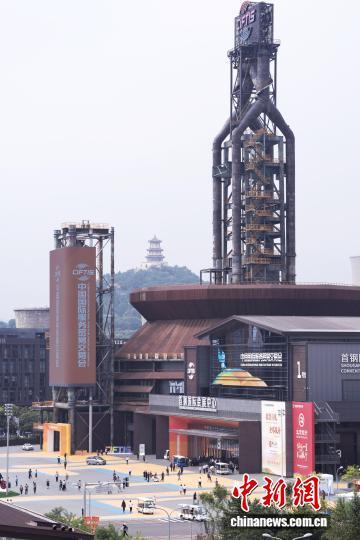
数智点亮服贸会 跨境旅游迎新机遇
Zhong Guo Xin Wen Wang· 2025-09-15 02:25
Core Insights - The 2025 China International Service Trade Fair (CIFTIS) held in Beijing from September 10 to 14 has become a focal point for global service trade, showcasing innovations in digital and smart services for foreign tourists [1][3]. Group 1: Smart Customs and Travel Solutions - The "Smart Customs" simulation area allows foreign tourists to complete entry verification in as little as one minute, significantly improving efficiency compared to traditional manual checks [1]. - The "Mifang Card," launched by China Unicom in collaboration with Bank of China and Beijing Yikatong, integrates multiple functions for foreign visitors, including access to 5G networks and digital RMB payments, enhancing convenience in daily activities [3]. Group 2: Dining and Accommodation Innovations - A 5G food recommendation system enables users to find nearby restaurants with real-time data on average spending and wait times, enhancing the dining experience [4]. - Smart accommodation features include AI-powered speakers that allow guests to control room settings and access entertainment through voice commands, providing a seamless experience [4]. Group 3: Cultural Exploration and Tax Refund Services - Digital services at cultural sites, such as the Forbidden City, offer immersive experiences, including 360-degree views of architectural details and AI-generated itineraries, enriching cultural exploration [6]. - The "2-minute tax refund" process showcased by Ant Technology simplifies the refund procedure for international visitors, allowing for quick submissions and immediate refunds, enhancing the overall travel experience [6].