BEV感知

Search documents
跨行转入自动驾驶大厂的经验分享
自动驾驶之心· 2025-11-04 00:03
Core Insights - The article emphasizes the importance of seizing opportunities and continuous learning in the rapidly evolving field of autonomous driving [1][4] - It highlights the creation of a comprehensive community platform, "Autonomous Driving Heart Knowledge Planet," aimed at facilitating knowledge sharing and career development in the autonomous driving sector [4][16] Group 1: Career Development - Transitioning to the autonomous driving industry can be successful through dedication and preparation, as illustrated by the experience of a professional who switched careers and excelled in various roles [1] - Continuous learning and adapting to industry trends are crucial for career advancement, as demonstrated by the professional's progression from algorithm evaluation to advanced safety algorithms [1] Group 2: Community and Resources - The "Autonomous Driving Heart Knowledge Planet" has over 4,000 members and aims to grow to nearly 10,000 in two years, providing a platform for discussion, technical sharing, and job opportunities [4][16] - The community offers a variety of resources, including video content, learning pathways, and Q&A sessions, to support both beginners and advanced learners in the autonomous driving field [7][10] Group 3: Technical Learning and Networking - The community organizes discussions with industry experts on various topics, including entry points for end-to-end autonomous driving and the integration of multi-sensor fusion [8][20] - Members have access to a wealth of technical routes and resources, including over 40 technical pathways and numerous datasets relevant to autonomous driving [10][36] Group 4: Job Opportunities - The community facilitates job referrals and connections with leading companies in the autonomous driving sector, enhancing members' chances of securing positions in the industry [11][12] - Regular updates on job openings and industry trends are provided, helping members stay informed about potential career advancements [21][93]


自动驾驶圆桌论坛 | 聊聊自动驾驶上半年都发生了啥?
自动驾驶之心· 2025-07-14 11:30
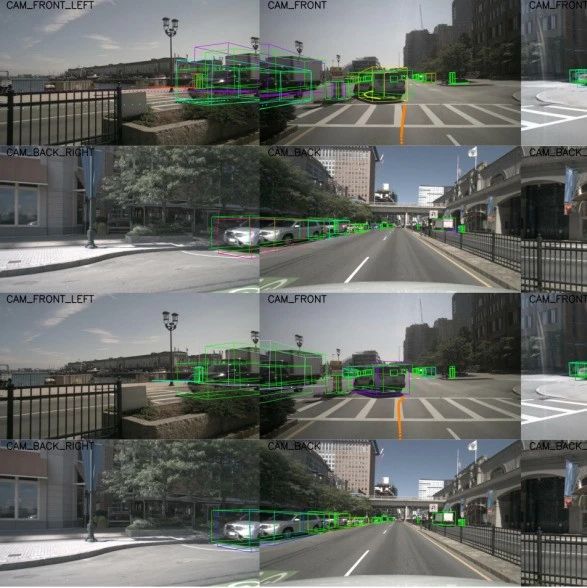
Core Viewpoint - The article discusses the current state and future directions of autonomous driving technology, highlighting the maturity of certain technologies, the challenges that remain, and the emerging trends in the industry. Group 1: Current Technology Maturity - The introduction of BEV (Bird's Eye View) and OCC (Occupancy) perception methods has matured, with no major players claiming that BEV is unusable [2][13] - The main challenge remains corner cases, where 99% of scenarios are manageable, but complex situations like rural roads and large intersections still pose difficulties [13] - E2E (End-to-End) models have not yet demonstrated clear advantages over two-stage models in practical applications, despite their theoretical appeal [4][5] Group 2: Emerging Technologies - VLA (Vision-Language Alignment) is gaining attention as it simplifies tasks and potentially addresses corner cases more effectively than traditional methods [5][6] - The efficiency of models is a critical issue, with discussions around using smaller models to achieve performance close to larger ones [6][30] - Reinforcement learning has not yet proven to be significantly impactful in autonomous driving, with a need for better simulation environments to validate its effectiveness [7][51] Group 3: Future Directions - There is a consensus that VLA and VLM (Vision-Language Model) will be key areas for future development, focusing on enhancing reasoning capabilities and safety [45][48] - The industry is moving towards a more data-driven approach, where the efficiency of data collection, cleaning, and training will determine competitive advantage [28][40] - The integration of world models and closed-loop simulations is seen as essential for advancing autonomous driving technologies [47][50] Group 4: Industry Perspectives - The shift towards VLA/VLM is viewed as a necessary evolution, with the potential to improve user experience and safety in autonomous vehicles [28][45] - The debate between deepening expertise in autonomous driving versus transitioning to embodied intelligence reflects the industry's evolving landscape and personal career choices [22][27] - The current focus on safety and robustness in L4 (Level 4) autonomous driving indicates a divergence in technical approaches between L2+ and L4 players [25][36]
2025年,找工作有些迷茫。。。
自动驾驶之心· 2025-06-28 13:34
Core Insights - The article highlights the rapid advancements in AI technologies, particularly in autonomous driving and embodied intelligence, which have significantly influenced the industry and attracted substantial investment [2] - A new platform, AutoRobo Knowledge Community, has been launched to assist job seekers in the fields of robotics, autonomous driving, and embodied intelligence, facilitating connections and providing resources [2][3] Group 1: Community and Resources - AutoRobo Knowledge Community has nearly 1,000 members, including professionals from companies like Horizon Robotics, Li Auto, Huawei, and Xiaomi, as well as students preparing for upcoming job fairs [2] - The community offers a variety of resources, including interview questions, industry reports, salary negotiation tips, and resume optimization services [3][4] Group 2: Interview Preparation - The community has compiled a list of 100 common interview questions related to autonomous driving and embodied intelligence, covering various technical aspects [6][7] - Specific topics include sensor fusion, lane detection algorithms, and multi-modal 3D object detection, providing comprehensive preparation materials for job seekers [7][11] Group 3: Industry Insights - The community provides access to industry reports that detail the current state, development trends, and market opportunities within the autonomous driving and embodied intelligence sectors [12][15] - Reports include insights into the Chinese humanoid robot market and the overall landscape of embodied intelligence, helping members understand the industry's dynamics [15]