Behavior 1K

Search documents
2025人形机器人大时代 - 具身智能大脑的进化之路
2025-11-24 01:46
Summary of Key Points from the Conference Call Industry Overview - The conference call discusses the **embodied intelligence** sector, focusing on the evolution of robotics and AI technologies, particularly the shift from model-driven to data-driven approaches in robot algorithms [1][2][3]. Core Insights and Arguments - **Algorithmic Changes**: The robotics industry is experiencing a significant transition from model-driven algorithms to data-driven approaches, driven by advancements in generative AI since 2022. This shift allows robots to not only perform actions but also understand and reason about tasks [2][3]. - **Main Algorithm Architectures**: Three primary algorithm architectures are identified: 1. **Hierarchical Control Framework**: Established since 1985, separating perception and motion control, still widely used due to its minimal disruption to existing systems [4]. 2. **VLA (Vision-Language-Action) Model**: Gaining traction among startups since 2023, suitable for interactive scenarios but may need to work alongside hierarchical frameworks in industrial settings for safety [4]. 3. **World Model**: Focuses on autonomous understanding of the physical world through continuous data, requiring high-fidelity simulations, but faces challenges in practical deployment [4][8]. - **Data Acquisition Methods**: The industry relies on three main data acquisition methods: 1. **Real Machine Acquisition**: High-value but costly, involving remote operations and large-scale training environments. 2. **Video Learning**: More cost-effective, using real video recordings to train robots. 3. **Simulation Data**: Often used by startups to compensate for the lack of real data, requiring strict data cleaning [10][20]. - **Data Security Concerns**: Increasing data security issues are highlighted, with incidents of unauthorized data transmission raising concerns about privacy and safety, especially as robots enter domestic service sectors [11][12]. - **Benchmarking and Evaluation**: The lack of a unified evaluation benchmark in the embodied intelligence sector is noted, with Stanford University introducing the **Behavior 1K** benchmark to assess embodied intelligence models, which could accelerate technological development [17]. Additional Important Content - **Research and Development Efficiency**: Companies are urged to optimize R&D processes and enhance cross-department collaboration to improve efficiency in response to industry demands [13]. - **Physical AI's Role**: Physical AI is recognized as crucial for simulation modeling, with applications in various industrial scenarios, showcasing its potential to enhance intelligent attributes [18][19]. - **Software Ecosystem**: The robotics software ecosystem comprises models, data analysis, simulation tools, and evaluation systems, attracting numerous tech companies to participate and create commercial opportunities [21]. - **Future Trends**: Over the next 3-5 years, the three algorithmic approaches are expected to coexist and evolve gradually, with hierarchical frameworks remaining relevant for industrial applications while VLA models gain traction in human-robot interaction [9]. This summary encapsulates the key points discussed in the conference call, providing insights into the current state and future directions of the embodied intelligence industry.

“AI教母”李飞飞的全新世界模型问世!一张英伟达AI芯片就能生成无限3D世界
Tai Mei Ti A P P· 2025-10-17 02:53
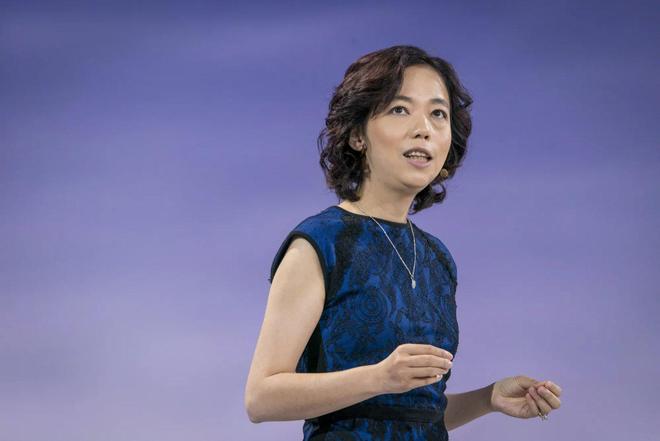
Core Insights - World Labs, co-founded by Fei-Fei Li, has launched a new real-time generative world model called RTFM (Real-Time Frame Model) which utilizes large-scale video data for efficient end-to-end training [3][4] - RTFM can generate new 2D images from one or more 2D inputs without relying on explicit 3D representations, marking a significant advancement in AI rendering capabilities [3][4] - The model can render persistent and 3D-consistent scenes in real-time using a single NVIDIA H100 GPU, enabling interactive experiences in both real and virtual environments [4][10] Company Overview - World Labs was founded in March 2023 by Fei-Fei Li and three other scholars, focusing on developing efficient, scalable, and persistent world models [8][10] - The company raised $230 million in September 2023, achieving a valuation of $1 billion within three months of its establishment [10] - The team consists of approximately 24 members, with a significant representation of Chinese individuals [10] Technology and Innovation - RTFM addresses scalability issues that have long plagued world models, enhancing spatial intelligence in machines, which allows for better navigation and decision-making in complex 3D environments [6][7] - The model's efficiency is highlighted by its ability to support interactive frame rate inference with a single H100 GPU, while its scalability allows for continuous optimization as data and computational power grow [8][10] - Future plans include developing a large model (LWM) that comprehensively understands three-dimensional, physical, and temporal concepts, with applications in AR and robotics [10][12] Research and Development - Fei-Fei Li is also spearheading the Behavior 1K challenge, aimed at standardizing tasks in embodied intelligence and robotics research, providing a platform for training and evaluation [11][12] - The Behavior 1K challenge includes 1,000 tasks focused on long-horizon tasks in everyday environments, promoting collaboration and comparison among researchers [12] - The integration of various AI technologies is seen as a transformative moment for society, emphasizing a human-centered approach in AI development [12][13]