Beyond Burger

Search documents
Can Beyond Meat Survive Beyond The Fake Meat?
Yahoo Finance· 2026-03-19 23:31
Company Overview - Beyond Meat is facing significant challenges in 2026, including a Nasdaq deficiency warning due to its share price being below $1 for 30 consecutive days and a delay in its 2025 annual report [1] - The company is reviewing its inventory balances and the accounting treatment of excess and obsolete stock, expecting to report a "material weakness" in its internal financial controls [1][2] Market Performance - Beyond Meat's initial public offering (IPO) in 2019 was highly successful, with a valuation of approximately $3.8 billion, aiming to disrupt the global protein industry with plant-based products [3] - The company's market capitalization peaked at around $14 billion shortly after its listing, with widespread adoption of its products by restaurants and supermarkets [4] - However, sales growth has significantly slowed, with U.S. retail sales of plant-based meat declining sharply since the pandemic peak, leading to a market value drop to under $350 million, which is less than 10% of its initial public debut [5] Consumer Perception - Consumer enthusiasm for Beyond Meat has waned, with some users expressing that the product is not as good as traditional meat or vegetarian options and is more expensive [7] - The broader plant-based meat sector is also struggling, as many consumers now view these products as ultra-processed foods, leading to a shift in preference towards "whole foods" with simpler ingredient lists [8]
Beyond Meat delays Q4 results over inventory accounting
Yahoo Finance· 2026-03-17 13:05
Core Viewpoint - Beyond Meat is facing delays in filing its fourth-quarter and full-year results due to an ongoing accounting review focused on inventory management [1][2]. Financial Reporting and Internal Controls - The company has indicated that it cannot file its annual report for the year ended December 31 on time without unreasonable effort or expense, requiring additional time to finalize its inventory balances, including provisions for excess and obsolete inventory [1][2]. - Beyond Meat expects to report a "material weakness" in its internal control over financial reporting as of December 31, linked to inventory provision accounting [3]. - The company is currently reviewing its internal control procedures and developing a remediation plan [4]. Revenue Expectations - Preliminary unaudited net revenues for the fourth quarter are expected to be approximately $61 million, consistent with earlier guidance of $60 million to $65 million [4]. - Full-year net revenues are projected to be around $275 million [4]. Legal and Regulatory Issues - Shareholders have filed a legal case against Beyond Meat, alleging failure to disclose material adverse facts, particularly concerning a $77.4 million impairment charge revealed in November [5]. - The company received a delisting warning from Nasdaq after its shares traded below $1 for 30 consecutive business days, with a compliance deadline set for August 31 [5][6]. Business Challenges and Strategic Initiatives - Beyond Meat has been experiencing declining sales and volumes, widening losses, and balance-sheet strains, having not turned a profit since its IPO in 2019 [6]. - Management has outlined a turnaround strategy that includes cost reductions, margin expansion efforts, and unspecified strategic initiatives [6].
X @Nick Szabo
Nick Szabo· 2026-02-15 21:58
Bad for dogs and humans both. In both cases our digestive systems -- high acid, low volume -- are optimized for meat, not plants.Sama Hoole (@SamaHoole):One of these is the ingredient list of an Impossible Burger.One is the Beyond Burger.The other is dog food. https://t.co/u94F2orWTL ...
X @Nick Szabo
Nick Szabo· 2026-02-15 21:56
RT Sama Hoole (@SamaHoole)One of these is the ingredient list of an Impossible Burger.One is the Beyond Burger.The other is dog food. https://t.co/u94F2orWTL ...
业绩持续亏损 别样肉客盯上功能饮料
Bei Jing Shang Bao· 2026-01-19 15:17
Core Viewpoint - Beyond Meat is expanding from the plant-based meat sector into the beverage market with the launch of Beyond Immerse, a plant-based functional drink aimed at muscle recovery, gut health, and immune support [1][2] Group 1: Product Launch and Strategy - Beyond Immerse is made primarily from pea protein and includes tapioca fiber, vitamin C, and electrolytes, and is free from GMOs and sugar alcohols [1] - The drink is currently available exclusively on Beyond Meat's new direct sales website, Beyond Test Kitchen, with future retail expansion dependent on customer feedback [1] - This marks Beyond Meat's first non-meat product launch, driven by rising consumer interest in obtaining protein from various product forms [1][2] Group 2: Financial Performance - Beyond Meat has faced declining revenues and ongoing losses since 2022, with revenues of $419 million in 2022, $343 million in 2023, and projected $326 million in 2024, alongside losses of $366 million, $338 million, and $160 million respectively [2] - In the first three quarters of 2025, the company reported revenues of $214 million, a year-over-year decline of 14.37%, with net losses widening to $193 million [2] Group 3: Market Trends and Competitive Position - The launch of Beyond Immerse aligns with a growing market for high-protein beverages, which saw a 122% increase in product offerings from 2020 to 2024 [3] - Innova Market Insights identifies "Powerhouse Protein" as a key trend for 2026, with nearly 60% of global dining consumers actively seeking to increase protein intake [3] - Beyond Meat's competitive edge lies in its expertise in plant protein extraction and flavor masking technology, as well as its established supply chain for pea protein, which offers cost and quality advantages [3] Group 4: Industry Insights - Experts suggest that Beyond Meat's move into beverages is a short-term strategy to address performance pressures, while also representing a long-term trend of horizontal expansion in the plant protein category [4]
业绩持续亏损 功能饮料会是别样肉客的出路吗?
Bei Jing Shang Bao· 2026-01-19 15:15
Core Viewpoint - Beyond Meat, known as the "first plant-based meat stock," is entering the beverage market with its new product, Beyond Immerse, a plant-based functional drink made primarily from pea protein, marking its first significant foray into functional foods and beverages [2][3] Expansion into Beverage Business - Beyond Meat has launched Beyond Immerse, a plant-based functional drink that includes pea protein, cassava fiber, vitamin C, and electrolytes, available in two protein versions (10g and 20g) with corresponding calorie counts of 60 and 100 [3] - The drink is offered in three flavors: Peach Mango, Lemon Lime, and Orange Tangerine, and is positioned for post-workout or daily supplementation, focusing on muscle recovery, gut health, and immune support [3] - Currently, Beyond Immerse is sold exclusively through Beyond Meat's new direct-to-consumer website, Beyond Test Kitchen, with future retail expansion contingent on customer feedback [3][4] Breaking Through "Plant Meat" Limitations - The launch of Beyond Immerse comes as Beyond Meat faces significant financial losses, with revenues declining from $419 million in 2022 to an expected $326 million in 2024, alongside increasing net losses [5][6] - The company aims to diversify its offerings beyond meat substitutes, with CEO Ethan Brown stating the goal is to become a "global protein company of the future" [6][7] Market Trends and Competitive Landscape - The global market for high-protein shakes and beverages has seen a 122% increase from 2020 to 2024, with a growing consumer interest in protein intake [8] - Traditional beverage giants and sports nutrition brands are also entering the high-protein plant-based beverage space, indicating a competitive landscape for Beyond Meat [8] - Despite the challenges, Beyond Meat's expertise in plant protein extraction and flavor masking, along with its sustainable brand image, positions it favorably against competitors [9] Strategic Positioning - The introduction of Beyond Immerse reflects a strategic shift towards product diversification and tapping into faster-growing markets, moving away from a sole focus on meat alternatives [7][8] - Industry experts suggest that while this move may be seen as a temporary measure due to financial pressures, it represents a necessary evolution towards a more resilient business model [9]

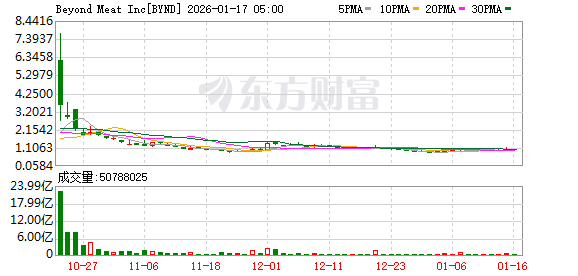
业绩持续亏损,功能饮料会是别样肉客的出路吗?
Bei Jing Shang Bao· 2026-01-19 13:53
Core Insights - Beyond Meat has officially entered the beverage market with the launch of Beyond Immerse, a plant-based functional drink made primarily from pea protein, marking its first significant foray into functional foods and beverages [1][2] - The company aims to diversify beyond its core plant-based meat products amid ongoing revenue declines, seeking new growth avenues [1][4] Product Details - Beyond Immerse features two protein versions (10g and 20g) with corresponding calorie counts of 60 and 100, and includes 7g of dietary fiber, with no GMOs or sugar alcohols [2] - The drink is available in three flavors: Peach Mango, Lemon Lime, and Orange Tangerine, and is positioned for post-workout or daily consumption, focusing on muscle recovery, gut health, and immune support [2] Market Context - The launch comes at a time when Beyond Meat is experiencing significant financial losses, with revenues dropping from $419 million in 2022 to an expected $326 million in 2024, alongside increasing net losses [4][5] - The global plant-based meat industry is facing a downturn, with a 64% drop in venture capital investment in 2024, leading to challenges for companies like Nestlé and Unilever, which have scaled back their plant-based meat operations [5] Strategic Shift - Beyond Meat is shifting its brand focus from meat alternatives to traditional plant proteins, gradually phasing out the "Meat" designation from its branding [6] - The introduction of Beyond Immerse reflects a deeper strategy to diversify product offerings and tap into faster-growing markets [6][7] Competitive Landscape - The high-protein beverage market is rapidly expanding, with a reported 122% growth in high-protein shakes and drinks from 2020 to 2024, indicating a strong consumer interest in protein intake [7] - Competitors in the beverage space include major brands like Danone and Protein Works, which have launched their own high-protein plant-based drinks [7] Consumer Insights - The company is leveraging a Direct-To-Consumer (DTC) model through its new website, Beyond Test Kitchen, to test market acceptance and gather consumer feedback, which is crucial given its current cash flow challenges [3][8] - Despite the potential for growth, there is a risk that consumers may still associate Beyond Meat primarily with plant-based meat, which could hinder the acceptance of its new beverage line [8]

Beyond dips toe outside alt-meat and into drinks
Yahoo Finance· 2026-01-15 16:16
Core Insights - Beyond Meat has announced the development of a new range of plant-based protein beverages called Beyond Immerse, which are currently available for a limited time on its direct-to-consumer site [1][2] - The drinks are made from pea protein, tapioca fiber, and electrolytes, aimed at promoting muscle health, gut health, and immune function [2] - The launch reflects a growing consumer interest in diverse protein sources beyond traditional meat products, indicating a potential shift in market demand [3] Company Developments - Beyond Meat is testing the market for its new beverage line, but has not confirmed plans for a wider rollout, indicating a cautious approach to product expansion [3] - The company is responding to consumer trends that favor plant-based protein options, which offer additional health benefits such as fiber and antioxidants [3] - The introduction of Beyond Immerse is part of a broader trend among plant-based meat suppliers to diversify their product offerings in response to sales pressures in the sector [3] Industry Trends - Impossible Foods is also expanding its product range by collaborating with Equii to introduce high-protein, grain-based bread and pasta, highlighting a trend towards integrating protein into various food categories [4] - The industry is recognizing that protein sources should extend beyond traditional meat products, with companies exploring innovative ways to enhance nutritional value in their offerings [5]
3 AgTech & Food Innovation Stocks Well-Placed for the Long Haul
ZACKS· 2025-12-10 13:35
Core Insights - The AgTech and Food Innovation landscape is evolving due to technology, sustainability requirements, and changing consumer behavior, impacting food growth, processing, and distribution [1] - The industry is shifting towards smarter, resource-efficient systems to enhance long-term resilience amid climate pressures and evolving global diets [2] Trends in AgTech & Food Innovation - Modernization of growing environments, including indoor farms and hydroponics, is enabling consistent yields with fewer inputs, exemplified by Hydrofarm Holdings Group, Inc. (HYFM) [3] - Ingredient innovation is driven by clean-label preferences and sustainable sourcing, with Ingredion Incorporated (INGR) providing plant-based proteins and specialty formulations [4] - The supply chain is transforming through digital traceability and automation, enhancing efficiency and transparency from farm to shelf [5] Key Companies in AgTech & Food Innovation - Beyond Meat, Inc. (BYND) focuses on plant-based innovation, aiming to replicate animal meat's taste and texture, with ongoing product reformulation to enhance flavor and nutritional profiles [7][8] - GrowGeneration Corp. (GRWG) is a major supplier of hydroponic and indoor-growing equipment, supporting growers with a comprehensive ecosystem of commercial solutions [11][12][13] - Tyson Foods, Inc. (TSN) is emphasizing protein innovation and sustainability, with initiatives like developing an insect-ingredient facility to convert byproducts into sustainable feed inputs [14][16]



Is This the Last Christmas for These 3 Stocks?
247Wallst· 2025-11-29 14:23
Core Insights - The article discusses the potential struggles of three companies: Beyond Meat, GoPro, and Lucid Motors, questioning whether this holiday season could be their last [4][10][14][17]. Beyond Meat (BYND) - Beyond Meat reported a loss of $111 million in Q3 2025, with revenue declining by 13% to $70 million, driven by a 20% drop in U.S. plant-based meat sales [6][8]. - The company experienced a peak in sales in 2022, but inflation and premium pricing led to a significant decline in demand, with U.S. plant-based meat sales falling by 19% in 2023 [8]. - Despite slight improvements in gross margins to 15% through cost-cutting, the company faces a net debt of $215 million and is projected to potentially go bankrupt by 2027 [10]. GoPro (GPRO) - GoPro's Q3 revenue fell by 37% to $163 million, with GAAP losses more than doubling from the previous year [13]. - The company has struggled due to competition from smartphones and drones, which have eroded its market position [12]. - Analysts have set a target price of $0.75 per share, with current shares at $1.63, indicating a challenging outlook for the company [14]. Lucid Motors (LCID) - Lucid Motors reported a Q3 revenue increase of 68% to $336 million, but net losses reached $1.03 billion, equating to a loss of over $250,000 per vehicle sold [16]. - The company has faced production delays and increased competition, leading to a significant cash burn nearing $1 billion quarterly [16]. - Although backed by Saudi Arabia's Public Investment Fund, there are concerns about the sustainability of continued financial support if losses persist [17].