
植物肉

Search documents
别样肉客推植物基功能饮料Beyond Immerse,2025年前三季度净亏1.93亿美元
Xin Lang Cai Jing· 2026-02-25 19:59
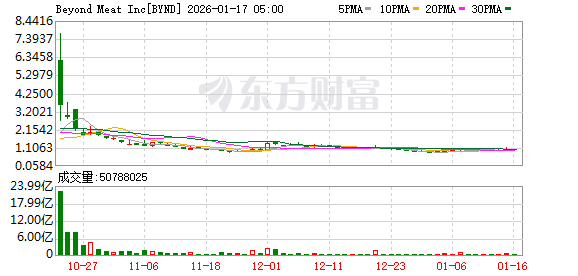
Product Development - Beyond Meat launched its first non-meat product, Beyond Immerse, in January 2026, targeting post-workout recovery and daily nutrition, focusing on muscle repair, gut health, and immune support [1] - The product is based on pea protein and aims to enter the rapidly growing high-protein functional beverage market, which saw a 122% increase in new products from 2020 to 2024 [1] - The company is testing market response through its direct sales platform, Beyond Test Kitchen, to manage cash flow constraints [1] Financial Performance - The company is currently experiencing significant losses, with revenue declining from $419 million in 2022 to $326 million in 2024, and a total net loss exceeding $800 million during the same period [2] - For the first three quarters of 2025, revenue was $214 million, a 14.37% year-over-year decline, with net losses widening to $193 million [2] - The stock price has plummeted over 99% from its peak in 2019, closing at $0.79 on February 25, 2026 [2] Company Fundamentals - Beyond Meat has expertise in plant protein extraction and flavor masking technology, with a scalable pea protein supply chain that offers cost control and quality stability [3] - The company's "clean label + sustainability" image may attract health-conscious consumers [3] Core Challenges - Consumer perception is heavily tied to "plant-based meat," making it difficult for new products to be seen as strategic shifts rather than marginal attempts [4] - The functional beverage market is already dominated by established brands, and Beyond Meat faces challenges in formulation, taste optimization, and brand trust [5] Industry Environment - The global plant-based meat industry is experiencing a downturn, with venture capital investment dropping 64% year-over-year in 2024, and major players like Nestlé scaling back related operations [6] - Beyond Meat is under capital pressure, with 67% of analysts recommending to reduce or sell, and the average target price of $1.01 offers limited upside from the current stock price [6] Future Outlook - Beyond Immerse represents a diversification effort under performance pressure, with short-term risk mitigation through small-scale testing [7] - Long-term success will depend on overcoming brand perception barriers and establishing new growth points amid a shrinking core business, tight cash flow, and a challenging industry environment [7]
别样肉客股价上涨3.75% 业务转型与成本控制受关注
Jing Ji Guan Cha Wang· 2026-02-13 16:24
Group 1 - The company's stock price increased by 3.75% to $0.72 on February 13, 2026, influenced by business and technological developments [1] - The company is advancing its business transformation by expanding protein solutions and aims to achieve core profitability by the end of 2026 [1] - The recent launch of the "Beyond Immerse" protein drink indicates the company's intention for cross-industry expansion, with market interest in whether innovative products can improve long-term performance [1] Group 2 - The company has set a profitability target based on business adjustments for 2025, which include suspending operations in China and cost-cutting measures [1] - The Q3 2025 financial report showed a 14.37% decline in revenue but a narrowing of losses, leading some investors to have expectations regarding the effectiveness of cost reduction measures [1] Group 3 - The plant-based meat industry is facing challenges, and the company's stock has seen a long-term decline, dropping 31.02% over the past 20 days [1] - Short-term technical rebounds and low liquidity (with a turnover rate of 1.28% on the day) may amplify stock price volatility [1] - On the same day, the overall US stock market stabilized, with the Nasdaq index slightly rising by 0.11%, and the packaged food sector remained flat, providing some support for the stock price [1]
别样肉客业务转型与财务目标引关注
Jing Ji Guan Cha Wang· 2026-02-12 19:44
Core Insights - Beyond Meat is undergoing a business transformation to expand its protein solutions and aims to achieve positive core profits by the end of 2026 [1][3] - The company recently launched a protein beverage product, indicating its intention to diversify beyond traditional plant-based meat [2] Business and Technical Development - Beyond Meat is breaking through the limitations of traditional plant-based meat by expanding into a broader range of protein solutions to seek new growth models [2] - CEO Ethan Brown emphasized a focus on innovative protein product development, exemplified by the recent launch of the "Beyond Immerse" protein beverage [2] Company Performance Goals - The company plans to achieve positive core profits by the end of 2026 through cost-cutting measures, based on business adjustments announced in 2025, which include suspending operations in China and reducing costs [3] Stock Performance Trends - Beyond Meat's stock price fluctuations may be influenced by financial report releases and industry trends, with a reported revenue decline of 14.37% and an increase in losses for Q3 2025 [4] - Future attention is needed on quarterly financial reports and changes in global plant-based meat demand [4]
别样肉客2025年三季度亏损扩大 中国业务全面退出
Xin Lang Cai Jing· 2026-02-11 16:53
Core Viewpoint - Beyond Meat is facing financial pressure, having fully exited its operations in China while attempting to transform its business through new product launches [1] Financial Performance - For the first three quarters of 2025, Beyond Meat reported a revenue decline of 14.37% year-over-year to $214 million, with net losses widening to $193 million. In Q3 alone, revenue was $70.22 million, and net loss was $111 million, primarily due to decreased sales volume and lower prices [2] Business Developments - In February 2025, the company announced the suspension of its operations in China, laying off 95% of its workforce and closing its Jiaxing factory. By November of the same year, it terminated operations on e-commerce platforms like Tmall, officially completing its exit from the Chinese market. Currently, products are only sold through distributors to clear existing inventory. This adjustment marks a significant step in the company's global strategic contraction [3] Stock Performance - On January 8, 2026, Beyond Meat's stock price experienced a notable increase of 5.71%, closing at $0.987 per share with a trading volume of 24.58 million shares. This price fluctuation may be linked to market sentiment regarding the company's transformation progress [4] Strategic Initiatives - In January 2026, Beyond Meat launched a new protein beverage called "Beyond Immerse," aiming to break through the limitations of plant-based meat and expand its innovative protein solutions. The CEO, Ethan Brown, stated the goal is to achieve positive core profitability by the end of 2026 through cost reduction and product diversification [5] Institutional Perspectives - As of January 2026, the majority of brokerage firms have issued sell recommendations, with 57% of institutions holding a bearish outlook, reflecting cautious sentiment regarding the company's fundamentals. Future attention will be needed on the effectiveness of its transformation measures and quarterly financial results [6]

业绩持续亏损 别样肉客盯上功能饮料
Bei Jing Shang Bao· 2026-01-19 15:17
Core Viewpoint - Beyond Meat is expanding from the plant-based meat sector into the beverage market with the launch of Beyond Immerse, a plant-based functional drink aimed at muscle recovery, gut health, and immune support [1][2] Group 1: Product Launch and Strategy - Beyond Immerse is made primarily from pea protein and includes tapioca fiber, vitamin C, and electrolytes, and is free from GMOs and sugar alcohols [1] - The drink is currently available exclusively on Beyond Meat's new direct sales website, Beyond Test Kitchen, with future retail expansion dependent on customer feedback [1] - This marks Beyond Meat's first non-meat product launch, driven by rising consumer interest in obtaining protein from various product forms [1][2] Group 2: Financial Performance - Beyond Meat has faced declining revenues and ongoing losses since 2022, with revenues of $419 million in 2022, $343 million in 2023, and projected $326 million in 2024, alongside losses of $366 million, $338 million, and $160 million respectively [2] - In the first three quarters of 2025, the company reported revenues of $214 million, a year-over-year decline of 14.37%, with net losses widening to $193 million [2] Group 3: Market Trends and Competitive Position - The launch of Beyond Immerse aligns with a growing market for high-protein beverages, which saw a 122% increase in product offerings from 2020 to 2024 [3] - Innova Market Insights identifies "Powerhouse Protein" as a key trend for 2026, with nearly 60% of global dining consumers actively seeking to increase protein intake [3] - Beyond Meat's competitive edge lies in its expertise in plant protein extraction and flavor masking technology, as well as its established supply chain for pea protein, which offers cost and quality advantages [3] Group 4: Industry Insights - Experts suggest that Beyond Meat's move into beverages is a short-term strategy to address performance pressures, while also representing a long-term trend of horizontal expansion in the plant protein category [4]
业绩持续亏损 功能饮料会是别样肉客的出路吗?
Bei Jing Shang Bao· 2026-01-19 15:15
Core Viewpoint - Beyond Meat, known as the "first plant-based meat stock," is entering the beverage market with its new product, Beyond Immerse, a plant-based functional drink made primarily from pea protein, marking its first significant foray into functional foods and beverages [2][3] Expansion into Beverage Business - Beyond Meat has launched Beyond Immerse, a plant-based functional drink that includes pea protein, cassava fiber, vitamin C, and electrolytes, available in two protein versions (10g and 20g) with corresponding calorie counts of 60 and 100 [3] - The drink is offered in three flavors: Peach Mango, Lemon Lime, and Orange Tangerine, and is positioned for post-workout or daily supplementation, focusing on muscle recovery, gut health, and immune support [3] - Currently, Beyond Immerse is sold exclusively through Beyond Meat's new direct-to-consumer website, Beyond Test Kitchen, with future retail expansion contingent on customer feedback [3][4] Breaking Through "Plant Meat" Limitations - The launch of Beyond Immerse comes as Beyond Meat faces significant financial losses, with revenues declining from $419 million in 2022 to an expected $326 million in 2024, alongside increasing net losses [5][6] - The company aims to diversify its offerings beyond meat substitutes, with CEO Ethan Brown stating the goal is to become a "global protein company of the future" [6][7] Market Trends and Competitive Landscape - The global market for high-protein shakes and beverages has seen a 122% increase from 2020 to 2024, with a growing consumer interest in protein intake [8] - Traditional beverage giants and sports nutrition brands are also entering the high-protein plant-based beverage space, indicating a competitive landscape for Beyond Meat [8] - Despite the challenges, Beyond Meat's expertise in plant protein extraction and flavor masking, along with its sustainable brand image, positions it favorably against competitors [9] Strategic Positioning - The introduction of Beyond Immerse reflects a strategic shift towards product diversification and tapping into faster-growing markets, moving away from a sole focus on meat alternatives [7][8] - Industry experts suggest that while this move may be seen as a temporary measure due to financial pressures, it represents a necessary evolution towards a more resilient business model [9]

业绩持续亏损,功能饮料会是别样肉客的出路吗?
Bei Jing Shang Bao· 2026-01-19 13:53
Core Insights - Beyond Meat has officially entered the beverage market with the launch of Beyond Immerse, a plant-based functional drink made primarily from pea protein, marking its first significant foray into functional foods and beverages [1][2] - The company aims to diversify beyond its core plant-based meat products amid ongoing revenue declines, seeking new growth avenues [1][4] Product Details - Beyond Immerse features two protein versions (10g and 20g) with corresponding calorie counts of 60 and 100, and includes 7g of dietary fiber, with no GMOs or sugar alcohols [2] - The drink is available in three flavors: Peach Mango, Lemon Lime, and Orange Tangerine, and is positioned for post-workout or daily consumption, focusing on muscle recovery, gut health, and immune support [2] Market Context - The launch comes at a time when Beyond Meat is experiencing significant financial losses, with revenues dropping from $419 million in 2022 to an expected $326 million in 2024, alongside increasing net losses [4][5] - The global plant-based meat industry is facing a downturn, with a 64% drop in venture capital investment in 2024, leading to challenges for companies like Nestlé and Unilever, which have scaled back their plant-based meat operations [5] Strategic Shift - Beyond Meat is shifting its brand focus from meat alternatives to traditional plant proteins, gradually phasing out the "Meat" designation from its branding [6] - The introduction of Beyond Immerse reflects a deeper strategy to diversify product offerings and tap into faster-growing markets [6][7] Competitive Landscape - The high-protein beverage market is rapidly expanding, with a reported 122% growth in high-protein shakes and drinks from 2020 to 2024, indicating a strong consumer interest in protein intake [7] - Competitors in the beverage space include major brands like Danone and Protein Works, which have launched their own high-protein plant-based drinks [7] Consumer Insights - The company is leveraging a Direct-To-Consumer (DTC) model through its new website, Beyond Test Kitchen, to test market acceptance and gather consumer feedback, which is crucial given its current cash flow challenges [3][8] - Despite the potential for growth, there is a risk that consumers may still associate Beyond Meat primarily with plant-based meat, which could hinder the acceptance of its new beverage line [8]
消费者不爱,资本退潮,植物肉在中国的故事讲不下去了?
Sou Hu Cai Jing· 2025-12-22 09:44
Core Viewpoint - Beyond Meat, known as the "first stock of plant-based meat," has ceased operations on Tmall and Pinduoduo, indicating a potential exit from the Chinese market [1][2]. Company Developments - Beyond Meat has closed its flagship stores and halted production at its factory in Jiaxing, with its official social media accounts last updated on October 1 [2]. - The company previously had successful collaborations with major brands like Starbucks and Yum China, launching plant-based products that gained consumer interest [2][3]. - Despite initial success, sales in retail channels have not met expectations, with the best-selling product, a plant-based burger patty, only achieving monthly sales of approximately 400 units [3][4]. Financial Performance - Beyond Meat's revenue has been declining, projected to drop from $419 million in 2022 to $326 million in 2024, with cumulative losses reaching $864 million [5]. - In response to financial pressures, the company has implemented significant cost-cutting measures, including a plan to suspend operations in China and reduce its workforce by 95% [5]. Market Trends - The plant-based meat sector has seen a significant decline in investment, with a 64% drop in global venture capital for plant-based companies in 2024 [7]. - Consumer feedback indicates a lack of interest in plant-based meat, with 74% of Chinese consumers stating they do not plan to repurchase these products due to taste and price concerns [9]. - Major food brands have stopped offering plant-based meat products, reflecting a shift in market strategy as consumer demand wanes [9][10]. Future Outlook - Experts suggest that while the plant-based meat market may have potential for recovery in the long term, short-term prospects remain challenging due to taste and price issues [10].

Is a Beyond Meat (BYND) Stock Rally in the Cards in 2026?
The Motley Fool· 2025-12-21 03:33
Core Insights - Beyond Meat's product appeal has diminished due to high prices and shifting consumer sentiment [1][10] - The stock has experienced significant volatility, dropping over 70% year to date, with a brief spike in mid-October [1][6] - The company is facing declining sales and increasing net operating losses, indicating challenges for long-term growth [9][8] Sales Performance - Sales are declining across all segments except for international foodservice, which saw a modest increase of 2.4% [5] - U.S. revenue has decreased by 21% year over year, while international revenue has dropped by 13.3% [5] - The overall trend shows a loss of market share in a cooling plant-based meat industry [7] Financial Metrics - Beyond Meat's current market capitalization stands at $503 million [6] - The gross margin is reported at 5.98%, indicating pressure on profitability [7] - Net operating losses have increased to $34.9 million, up from $30.9 million in the same quarter last year, excluding a one-time impairment loss of $77.4 million [8] Industry Trends - The plant-based meat industry is experiencing a decline from its peak success in 2021 and 2022 [7] - Consumer sentiment towards ESG (Environmental, Social, and Governance) initiatives has weakened, impacting Beyond Meat's positioning as an environmental alternative [10][11] - Rising living costs and reduced emphasis on virtue signaling have made Beyond Meat's products less appealing [12]
研判2025!中国植物肉行业发展历程、市场规模、竞争格局及发展趋势分析:健康消费升级驱动,植物肉未来有望增长[图]
Chan Ye Xin Xi Wang· 2025-12-10 01:23
Core Insights - The plant-based meat industry is gaining attention due to increasing consumer awareness of healthy eating and sustainability, with unique taste and nutritional value driving demand [1][9] - The market for plant-based meat in China saw a decline in 2022, with a 5.6% year-on-year decrease, but is expected to recover, reaching a market size of 10.5 billion yuan by 2025, a 10.5% increase [1][9] Industry Overview - Plant-based meat is made from plant proteins like soy and peas, mimicking the texture and flavor of animal meat, and offers health benefits such as zero cholesterol and high essential amino acids [1][3] - The industry has evolved through five stages, from early exploration (1970s-2008) to commercialization (2009-2018), explosive growth (2019-2021), a cooling adjustment period (2022-2024), and now a phase of transformation and standardized development [4][5][6] Market Dynamics - The global plant-based meat market is projected to grow from $12.1 billion in 2019 to $16.5 billion in 2024, with a compound annual growth rate (CAGR) of 6.4% driven by health and sustainability concerns [9] - In China, the market is expected to recover and grow, with companies diversifying their product offerings to adapt to local tastes and preferences [1][9] Competitive Landscape - Major players in the global market include Beyond Meat and Impossible Foods, while in China, companies like Yantai Shuangta Food Co., Ltd., Jinzi Ham Co., Ltd., and Shenzhen Qishan Food Co., Ltd. are key competitors [2][10] - Jinzi Ham has developed various plant-based products and was the first to sell plant-based meat in China, while Shuangta Food focuses on pea protein and has established a dedicated plant-based meat team [10][12] Development Trends - The industry is expanding into Chinese culinary contexts, with products like dumplings and hot pot meatballs emerging, while technological advancements are improving taste and texture [13] - A standardized labeling and safety framework is expected to enhance consumer trust and market growth, alongside a diversification of raw materials beyond soy and peas to include microalgae and yeast proteins [13][14]


