Bible Chat

Search documents
连上帝都去IPO敲钟了,这届AI生意太魔幻了
创业邦· 2025-12-01 00:09
Core Viewpoint - The article discusses Gloo, a company that has transformed from a basic service provider for churches into a significant player in the AI-driven religious technology market, achieving a market valuation of $696 million and substantial revenue growth through strategic acquisitions and innovative AI applications [6][36]. Group 1: Company Overview - Gloo is described as a "Christian technology platform" that provides AI tools and digital content for churches and non-profit organizations, with its product Bible Chat being the fastest-growing religious app globally, reaching 10 million users and generating $15 million in annual revenue within a year of launch [7][17]. - The company has integrated AI into its offerings, with a focus on enhancing user engagement and operational efficiency for religious organizations [28][39]. Group 2: Market Potential - The U.S. religious market is highlighted as a multi-billion dollar industry, with religious organizations generating $245 billion in revenue in 2024 and an annual growth rate of 8.6%, significantly outpacing the service industry [12]. - Gloo's strategy capitalizes on the dense presence of Christian organizations in the U.S., with an average of 20 churches per town, creating a competitive landscape for religious services [13]. Group 3: Business Strategy - Gloo's initial business model struggled due to the nature of church funding, which relies heavily on donations and community engagement, prompting the company to pivot towards AI and acquisitions to drive revenue [30][32]. - The company has adopted a "buy and integrate" strategy, acquiring AI religious companies to enhance its product offerings and market position, including the purchase of Faith Assistant, which powers Bible Chat [14][16]. Group 4: Revenue Growth - Gloo's revenue model has evolved, with significant contributions from projects like "He Gets Us," which aims to modernize the image of Jesus among younger audiences, generating $13.33 million in 2023 alone [31]. - By mid-2025, Gloo's revenue reached $28.48 million, reflecting a 168.7% year-over-year increase, indicating successful implementation of its new business strategy [36]. Group 5: Technological Innovation - Gloo is developing its own AI assistant that utilizes a "truth library" to ensure accurate theological responses, differentiating itself from other AI applications that may produce erroneous information [26]. - The company also offers a white-label solution for churches, allowing them to deploy customized AI assistants under their branding, further expanding its market reach [27]. Group 6: Conclusion - Gloo's transformation illustrates the intersection of faith and technology, as it seeks to modernize religious engagement through data-driven solutions, positioning itself as a leader in the emerging field of AI in religion [40][41].


连上帝都去IPO敲钟了,这届AI生意太魔幻了
3 6 Ke· 2025-11-24 11:38
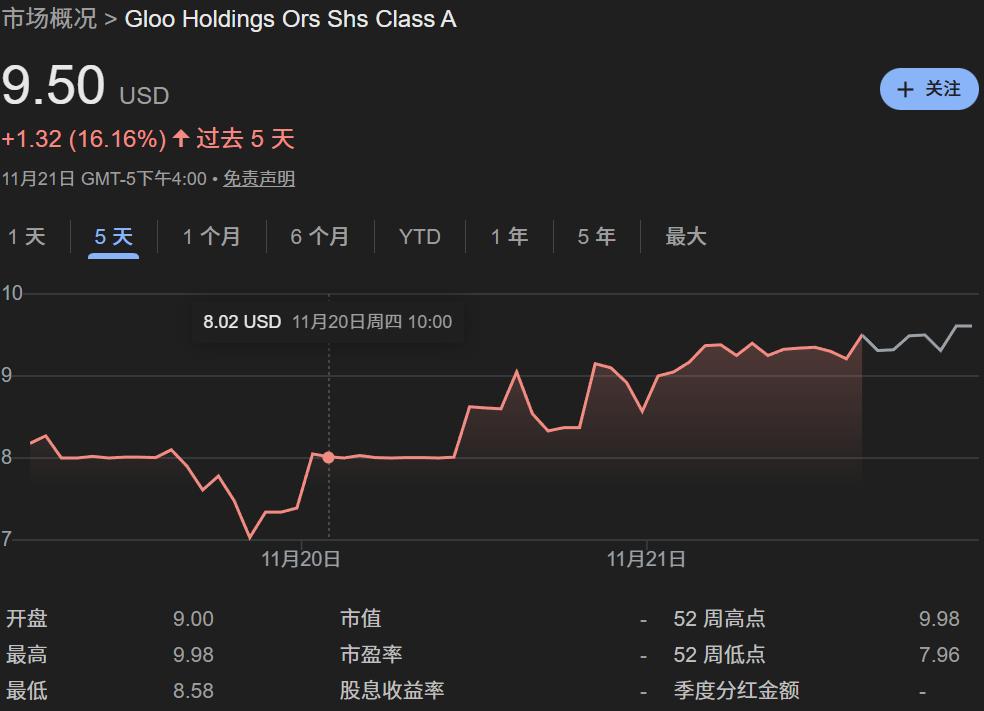
Core Insights - Gloo, a company that provides AI tools and digital content for churches and non-profit organizations, has recently gone public and is experiencing significant growth in the religious technology sector [2][4][21] - The company’s flagship product, Bible Chat, has reached 10 million users and generated $15 million in annual revenue within just one year of launch, making it the fastest-growing religious app globally [2][8][9] - Gloo's stock has increased by 18.75% since its IPO, with a current market capitalization of $747 million [2] Industry Overview - The religious sector in the U.S. is a multi-billion dollar industry, with projected revenues of $245 billion in 2024 and an annual growth rate of 8.6%, significantly outpacing the average growth in the service industry [5] - There are approximately 415,000 Christian organizations across 19,500 towns and villages in the U.S., indicating a high density of religious institutions [6] Company Strategy - Initially, Gloo operated as a messaging service for churches but pivoted to focus on AI technology to enhance its offerings and revenue potential [7][18] - The company has adopted an aggressive acquisition strategy, purchasing two AI religious companies to bolster its product lineup and enhance its market position [7][21] - Gloo's approach includes developing proprietary AI tools and acquiring existing successful applications, such as Bible Chat, which functions as an "AI pastor" [10][12][18] Financial Performance - Gloo's revenue model has evolved, with the company generating $21.29 million in total revenue in 2023, largely driven by a significant project that contributed $13.33 million [19] - By 2025, Gloo's revenue is projected to reach $28.48 million, reflecting a year-over-year growth of 168.7% [24][25] Product Development - Gloo is developing an AI assistant that utilizes a "truth library" to ensure accurate theological responses, differentiating itself from other AI applications that may produce incorrect information [14] - The company also offers a white-label solution, allowing churches to customize AI tools under their branding [15] Market Positioning - Gloo aims to create a comprehensive "church operating system" that integrates marketing, engagement, fundraising, and operational support for religious organizations [22][24] - The company is positioning itself as a leader in the religious technology space, transforming traditional religious practices into data-driven, modern business operations [27][28]
上帝大模型,开始收费了
创业邦· 2025-11-12 00:28
Core Viewpoint - The rise of AI-driven religious applications, such as Bible Chat and Hallow, is transforming the way individuals engage with their faith, providing accessible spiritual support and guidance at any time [6][13][24]. Group 1: AI Religious Applications - Bible Chat, launched in 2023, has gained over 30 million downloads and 10 million users, generating an annual revenue of approximately $15 million [13]. - Hallow, a Catholic app, surpassed Netflix and TikTok to become the top app on the App Store, with total funding reaching $105 million and downloads exceeding 14 million [16]. - Pray.com, a previously leading app, is now developing its own chatbot to keep up with the competition, having around 25 million downloads [17][18]. Group 2: User Experience and Engagement - Users like Krista Rogers and Delphine Collins find comfort in AI applications, using them for instant support during difficult times [8][12][24]. - The applications are designed to be highly accessible and emotionally responsive, with features that encourage daily engagement, such as reminders and challenges [21]. - Bible Chat has a low paid user ratio of 3% to 5%, yet its large user base ensures substantial revenue [22]. Group 3: Market Dynamics and Financial Performance - The financial success of these applications is evident, with Hallow's estimated annual revenue reaching around $33.4 million in 2023, and projections suggesting it could approach $120 million [22]. - The commercialization of religious experiences through subscription models and partnerships with faith organizations is a clear trend in this emerging market [21][22]. Group 4: Societal Impact and Concerns - The decline in church attendance, with approximately 40 million Americans leaving churches over the past decades, highlights a potential role for these applications in re-engaging individuals with spirituality [25]. - Concerns about data privacy and the potential for AI to replace human spiritual guidance are prevalent, with some users questioning the authenticity of their interactions with AI [27][29].

月流水上涨数倍、多品类爆发,AI产品在移动端越来越赚钱?
3 6 Ke· 2025-09-23 00:07
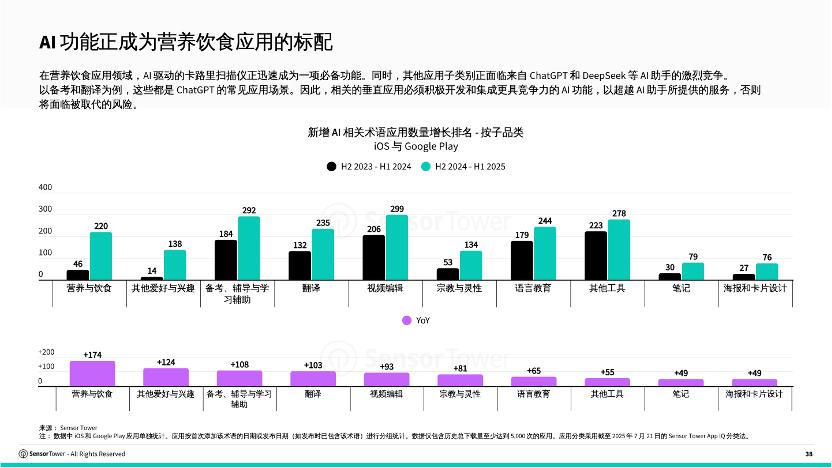
Core Insights - The report by Sensor Tower indicates that mobile AI product IAP revenue is expected to grow by 100% in the first half of 2025, with all top 10 global IAP revenue products being ChatBots, highlighting a lack of diversity in profitable AI-native products on mobile platforms compared to web platforms [1][3] - Beyond ChatBots, various categories have leveraged AI to significantly enhance revenue, with many entrepreneurs entering different sectors with AI products [3] Nutrition and Diet - The nutrition and diet category has seen a surge in AI-related products, with an increase of 174 products incorporating AI-related terms between the two reporting periods [3] - The top 5 AI-integrated products in this category have all achieved full AI integration, with the leading product, Cal.ai, generating nearly $3 million in monthly revenue as of August 2025 [4][5] - Cal.ai's DAU increased from 57,000 to 378,000, marking a growth of 5.6 times, while older products like YAZIO experienced a decline in DAU [5][6] Religion and Spirituality - The religion and spirituality category saw an increase of 81 products incorporating AI-related terms, with Bible Chat emerging as a significant player, achieving a DAU of 132,000 and monthly revenue of $951,000 by August 2025 [13][15] - Bible Chat's interactive AI dialogue feature enhances user engagement, allowing users to ask questions about texts and personal issues, which has contributed to its growth [18][20] Language Learning - The language learning sector has added 65 AI-related products, with AI-driven speaking practice becoming a standard feature across many applications [21] - Duolingo remains the leading product, with a DAU of 19.43 million, while Babbel's DAU has stagnated, indicating a competitive landscape where differentiation in course design is crucial [22][28] - Speak has introduced new courses and a review feature, contributing to its growth in the U.S. market, while other AI products like Learna and Praktika focus on immersive experiences to differentiate themselves [23][26]