Blade Battery 2.0

Search documents
Tesla vs BYD: The Better EV Stock for 2026
247Wallst· 2026-03-27 18:12
Core Viewpoint - The article compares Tesla and BYD as potential investment opportunities in the electric vehicle (EV) sector for 2026, highlighting their differing strategies and market challenges. Financial Performance - Tesla reported Q4 2025 revenue of $24.9 billion, a decrease of 3.1% year-over-year, with vehicle deliveries down 16% to 418,227 units [2][8] - BYD delivered 4.54 million vehicles in 2025, marking a 6.94% increase year-over-year, making it the world's largest EV seller by volume [3][10] - BYD's February 2026 domestic sales fell 65% year-over-year to 89,590 units, continuing a six-month decline [3][11] Growth Drivers - Tesla's growth is driven by energy storage and Full Self-Driving (FSD) subscriptions, with energy revenue increasing 25% year-over-year to $3.84 billion [2][8] - BYD is focusing on overseas exports and its new Blade Battery 2.0 technology, which allows for ultra-fast charging [3][14] Strategic Focus - Tesla is investing heavily in AI, robotaxi services, and humanoid robots, while also diversifying into energy storage and software subscriptions [4][13] - BYD is addressing domestic demand issues by promoting its ultra-fast charging technology and expanding internationally [4][10] Market Position and Valuation - Tesla's gross margin expanded by 386 basis points to 20.1%, despite lower vehicle sales, indicating effective cost management [9] - Tesla's shares are trading at a trailing P/E of approximately 357x and a forward P/E near 175x, reflecting high future growth expectations [16] - BYD's shares have gained 11.52% year-to-date in 2026, while Tesla shares are down 14.18% [17] Future Catalysts - For Tesla, the key catalyst in 2026 is the ramp-up of Cybercab production and the expansion of its robotaxi service [18] - BYD's recovery in domestic sales is critical, as it lowered its 2025 sales target by 16% due to weakening demand [18]



BYD Just Announced 5-Minute EV Charging. Should Tesla Investors Be Concerned?
The Motley Fool· 2026-03-14 18:30
Core Viewpoint - BYD has introduced its Blade Battery 2.0 and Flash Charging system, which can significantly reduce charging times for electric vehicles, potentially posing a competitive threat to Tesla in the EV market [1][2]. Group 1: BYD's Technological Advancements - BYD claims that its Blade Battery 2.0 can charge a vehicle from 10% to 70% in about five minutes and from 20% to 97% in approximately 12 minutes [1]. - The introduction of this technology could enhance BYD's reputation as a leading EV manufacturer, especially if it performs as claimed [9]. Group 2: Competitive Landscape - Tesla and BYD are not direct competitors in the U.S. market due to a 100% tariff on Chinese EVs, but they do collaborate in some areas, with Tesla sourcing some batteries from BYD [2][4]. - Tesla's 4680 battery, while reliable and offering a long range, has slower charging times compared to BYD's Blade Battery 2.0, taking 20 to 25 minutes to charge from 10% to 97% [5]. Group 3: Market Implications - The rapid charging capability of BYD's battery may appeal to consumers who prefer shorter wait times, potentially impacting Tesla's market share if BYD's technology gains traction [6][7]. - BYD is currently building a network of 1,500-kilowatt charging hubs in China to support its fast charging technology, but international infrastructure remains a challenge [11].

DENZA Z9GT to start Europe's FLASH Charging revolution in April: Ready in 5, Full in 9, Cold Add 3
Globenewswire· 2026-03-13 11:41
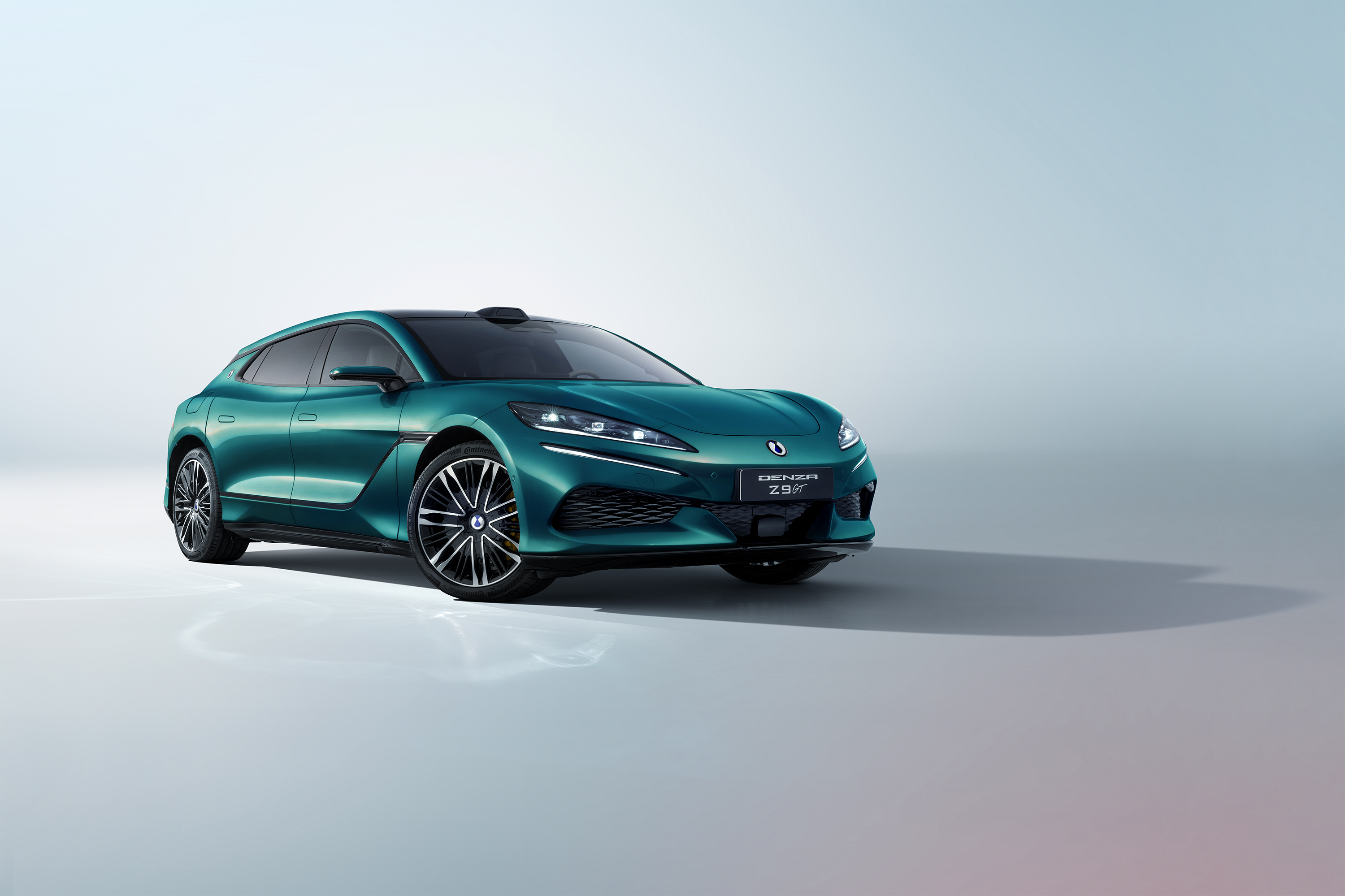
Core Insights - DENZA, a premium automotive brand under BYD Group, is set to launch its flagship Z9GT in Europe on April 8, 2026, featuring innovative FLASH Charging technology [1][4]. Group 1: FLASH Charging Technology - FLASH Charging is designed to facilitate the transition to zero-emissions mobility, utilizing a charging station capable of up to 1,500kW and the second generation of BYD's Blade Battery [2]. - The charging process allows for a battery charge from 10% to 70% in five minutes, and from 10% to 97% in nine minutes, even in extreme cold conditions [3][8]. - The principle of 'Ready in 5, Full in 9, Cold Add 3' highlights the efficiency of FLASH Charging, which can recharge from 20% to 97% in just 12 minutes at -30°C [3][8]. Group 2: Z9GT Features and Performance - The Z9GT features a bespoke e3 Platform and a 122kWh Blade Battery, offering a range of up to 800km in the rear-wheel-drive version [4]. - The vehicle boasts a powerful triple-motor version with over 960PS, achieving 0-100km/h acceleration in under three seconds [4]. - Inside, the Z9GT will provide an opera-house entertainment experience through a partnership with Devialet, utilizing advanced audio technology for immersive sound [5]. Group 3: Strategic Importance and Market Position - The introduction of the Z9GT in Europe is a significant milestone for DENZA, showcasing the brand's commitment to advanced technology and premium design [6]. - The global rollout of FLASH Charging, starting in Europe, aims to enhance the Z9GT's market appeal by addressing charging speed and convenience [7]. - Thousands of FLASH Charging stations have already been installed in China, with plans for further expansion in Europe to support the Z9GT's launch [7].

BYD breaks down final barriers to electrification with Blade Battery 2.0 and FLASH Charging
Globenewswire· 2026-03-09 14:19
Core Insights - BYD is set to enhance the widespread adoption of electric vehicles (EVs) with its self-developed FLASH Charging technology and the second generation of its Blade Battery, which can deliver up to 1500kW through a single connector [1][10]. Technology Advancements - The FLASH Charging technology allows for rapid recharging, enabling a 10% to 70% refill in as little as five minutes and a 10% to 97% refill in just nine minutes, even under extreme conditions such as -30°C [2][10]. - The Blade Battery 2.0 features a 5% increase in energy density, allowing for ranges exceeding 1,000km on a single charge, as tested under Chinese CLTC efficiency standards [2][5]. Research and Development - BYD's new technologies are the result of extensive research aimed at overcoming consumer barriers to electric mobility, particularly concerns about battery capacity and range [3][4]. - The Blade Battery 2.0 was developed over six years and resolves the trade-off between fast charging and high energy density, achieving both simultaneously [5][10]. Safety and Durability - The Blade Battery 2.0 has passed rigorous safety evaluations, including tests for thermal runaway and durability, demonstrating no fire or explosion even under extreme conditions [11][12]. - The overall capacity degradation of the Blade Battery 2.0 is reduced by 2.5% compared to its predecessor, enhancing its longevity [12]. Infrastructure Development - BYD has installed 4,239 FLASH Charging stations in China as of March 5, 2026, with plans to expand to 20,000 by the end of the year [14]. - The FLASH Charger features a T-shaped design that improves the user experience by addressing common criticisms of conventional charging stations, such as hygiene and ease of use [15]. Market Expansion - The DENZA Z9GT, the first vehicle equipped with FLASH Charging and Blade Battery 2.0, will be introduced to European customers, with further details on specifications to be released soon [16].

BYD breaks down final barriers to electrification with Blade Battery 2.0 and FLASH Charging
Globenewswire· 2026-03-09 14:19
Core Insights - BYD is set to enhance the widespread adoption of electric vehicles (EVs) with its self-developed FLASH Charging technology and the second generation of its Blade Battery, which can deliver up to 1500kW through a single connector [1][10] Technology Advancements - The FLASH Charging technology allows for rapid recharging, enabling a 10% to 70% refill in as little as five minutes and a 10% to 97% refill in nine minutes, even under extreme conditions such as -30°C [2][10] - The Blade Battery 2.0 features a 5% increase in energy density, allowing for ranges exceeding 1,000km on a single charge, as tested under Chinese CLTC efficiency standards [2][3] Development Background - The new technologies are a result of extensive research by BYD aimed at addressing consumer concerns regarding battery capacity and range, which are critical factors for EV buyers [3][4] Safety and Durability - The Blade Battery 2.0 has undergone rigorous safety evaluations, including tests for thermal runaway, and has shown no adverse effects even after 500 FLASH Charging cycles [11] - Compared to the original Blade Battery, the new version has reduced overall capacity degradation by 2.5% [12] Charging Infrastructure - BYD has installed 4,239 FLASH Charging stations in China as of March 5, 2026, with plans to expand to 20,000 by the end of the year [14] - The FLASH Charger features a T-shaped design that improves user experience by keeping connectors clean and easy to use [15] European Market Entry - The DENZA Z9GT, the first vehicle equipped with FLASH Charging and Blade Battery 2.0, will be introduced to European customers, with further specifications to be released soon [16]
BYD sales plunge in first two months of 2026 as EV giant loses more ground to competitors
CNBC· 2026-03-05 09:40
Core Insights - BYD has experienced a significant decline in sales, losing market share to domestic competitors in the first two months of 2026 due to a slowdown in overall demand in China's electric vehicle market [1][2][5] Sales Performance - BYD's combined sales volume for January and February 2026 decreased by approximately 36% compared to the same period in 2025, adjusted for seasonal factors [2] - In contrast, other EV manufacturers in China, such as Leapmotor and Xiaomi, reported substantial year-on-year sales increases of 19% and 48%, respectively [3] - Nio and Geely's Zeekr saw impressive sales growth of 77% and 84% year-on-year, while Xpeng faced a 42% decline in sales [4] Market Dynamics - The narrowing lead of BYD in the domestic market indicates a more competitive landscape, with rivals enhancing their offerings to attract consumers [5][6] - Competitors are focusing on providing high value at competitive prices, a strategy referred to as involution [6] - The introduction of a 5% purchase tax on new energy vehicles may have created a "demand vacuum" for BYD as consumers rushed to buy before the tax took effect [7] Competitive Strategies - BYD is responding to increased competition by expanding its focus on international markets, with exports surpassing domestic sales for the first time in February 2026 [9] - The company plans to launch new products, including advancements in battery technology, to stimulate demand [10] Regulatory Environment - The Chinese EV market is facing challenges due to a slowdown in demand, partly attributed to the reintroduction of the purchase tax on new energy vehicles [11][12] - Analysts suggest that the reduction in financial incentives may suppress new EV purchases, as costs are likely to be passed on to consumers [13] - Some automakers are implementing creative financing schemes to encourage consumer demand amidst the slowing market [14][15]