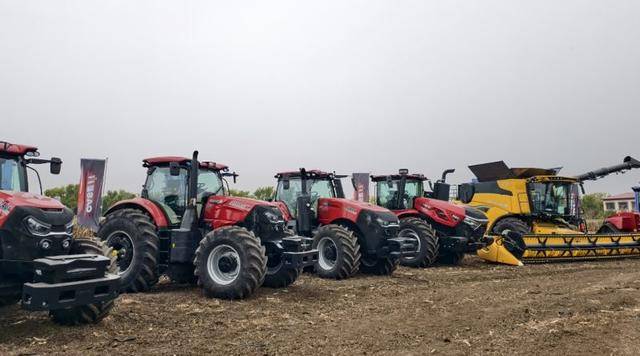
CR8.90联合收割机

Search documents
农机市场进入深度调整期,凯斯纽荷兰高层详解中国市场生存术
Sou Hu Cai Jing· 2025-10-16 02:32
Core Insights - The Chinese agricultural machinery market is undergoing a deep adjustment, with overall sales performance remaining sluggish in recent years [2][3] - CNH Industrial, a global agricultural machinery manufacturing giant, is facing challenges and has proposed several strategies to adapt to the current market conditions [2][3] Market Performance - The sales growth of agricultural machinery in China has entered a mature phase, with high mechanization rates for major crops: corn at 90.6%, wheat at 97.6%, rice at 86.9%, and soybeans at 87.9% [3][5] - Overall market performance is expected to remain poor, with tractor sales projected to decline by about 10% in 2025, and combine harvester sales expected to drop by 10% after an 8% increase in 2024 [3][4] Strategic Focus - CNH Industrial aims to focus on niche markets and capitalize on equipment replacement opportunities, particularly in the high-horsepower tractor segment and larger capacity combine harvesters [3][5] - The company is also emphasizing localization of its supply chain to enhance competitiveness and meet domestic demand [5][6] Technological Advancements - The company is committed to enhancing the intelligence of its products, with the launch of the CR8.90 combine harvester, which is one of the most advanced in terms of automation [6][7] - The introduction of the "CNH Industrial Agricultural Cloud" aims to create a smart ecosystem for users, integrating IoT and digital technologies for improved farm management [6][7] Future Opportunities - The transition from high mechanization rates to high-quality, efficient, and intelligent equipment presents significant market opportunities for CNH Industrial [5][6] - The annual value of agricultural machinery updates in China is estimated at 300 billion yuan, with government subsidies supporting machinery replacements [5][6] Financial Overview - In 2024, CNH Industrial's total revenue is projected to be $19.8 billion, with 71% derived from agricultural machinery, 15% from construction machinery, and 14% from financial services [7]