CTD(温盐深仪)

Search documents
中国南极考察又有新发现!中层鱼拖网获取的珍贵样品都有啥?
Xin Lang Cai Jing· 2026-02-14 16:42
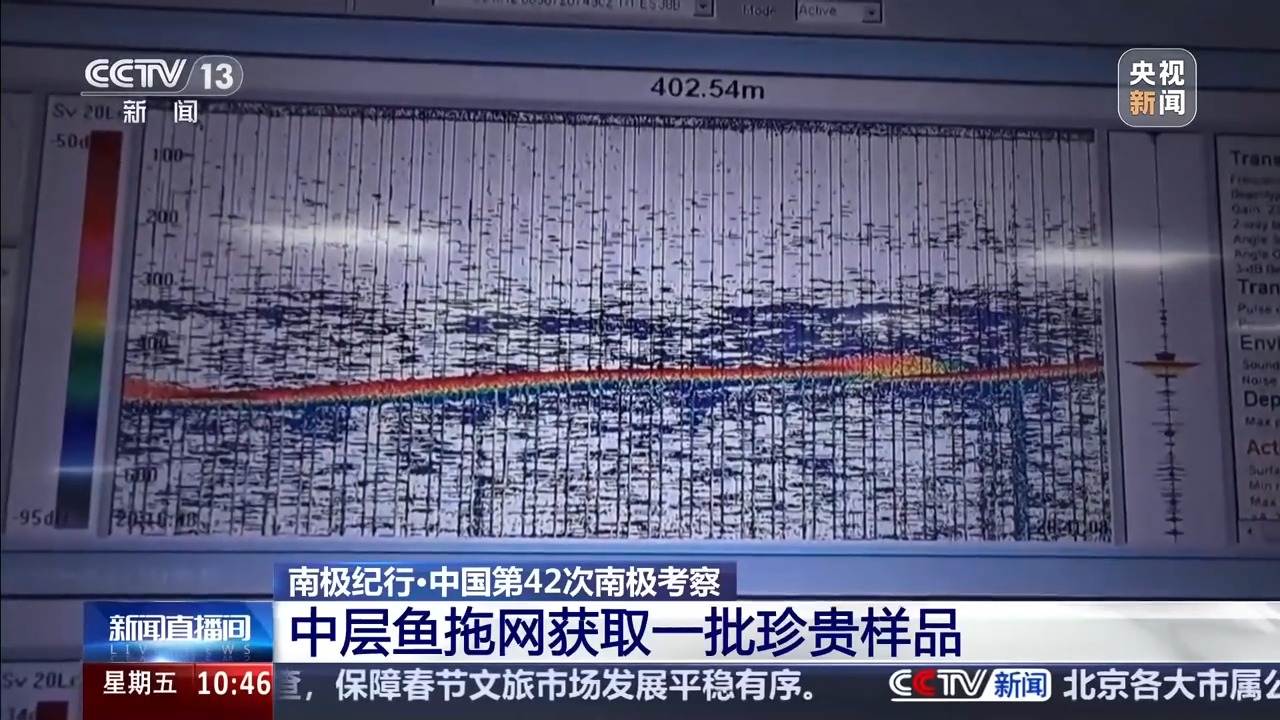
Core Viewpoint - The 42nd Antarctic Expedition of China has successfully completed operations in the Amundsen Sea, obtaining valuable scientific samples, including Antarctic krill, midwater fish, and benthic organisms. Group 1: Research Achievements - The expedition successfully conducted multiple tasks, including CTD observations, water sampling, and various types of net tows, resulting in the collection of precious scientific samples [1]. - The midwater fish net tow operation faced challenges due to the small size and fast swimming speed of the target fish, making capture difficult [1][3]. - Despite several unsuccessful attempts, the final net tow yielded over 20 midwater fish, including lanternfish and deep-water salmon, which are considered valuable specimens for research [11][13]. Group 2: Operational Challenges - The team encountered difficulties during several net tows, with some nets sustaining damage and yielding minimal catches [8][10]. - The depth of the water, exceeding 1400 meters, added complexity to the fishing operations, as retrieving fish from such depths is particularly challenging [11]. - The experience gained by younger team members throughout the expedition contributed to improved operational efficiency in the final net tow [13].

第42次南极考察丨9级风浪中前行 4000米深处取水 马不停蹄开启大洋作业
Yang Shi Wang· 2026-01-29 02:52
Core Viewpoint - The Chinese 42nd Antarctic Expedition, aboard the "Snow Dragon," is conducting oceanographic operations in the Amundsen Sea, facing significant challenges due to a powerful cyclone encountered during transit [1][3][5]. Group 1: Expedition Operations - The "Snow Dragon" has completed eight survey stations and plans to conduct over 20 stations during its oceanographic operations in the Amundsen Sea and Ross Sea [1]. - The expedition team faced a cyclone with wave heights of 5 to 6 meters and wind speeds of up to 9 on the Beaufort scale, causing significant ship movement and disruption onboard [3][5]. - The captain decided to alter the ship's course by 90 degrees to avoid the cyclone, transitioning from a lateral to a fore-and-aft motion [9][11]. Group 2: Oceanographic Research - The first station in the Amundsen Sea was over 4000 meters deep, marking the deepest point of the expedition, with CTD (Conductivity, Temperature, Depth) equipment deployed to collect data [15]. - The CTD device is equipped with 24 sampling bottles to collect water samples at various depths, which are crucial for studying ocean acidity and greenhouse gas concentrations [20][22]. - Following the water sampling, the team conducted additional operations including biological net tows and gravity core sampling to familiarize themselves with the procedures for efficient future tasks [22].