CUDA X

Search documents
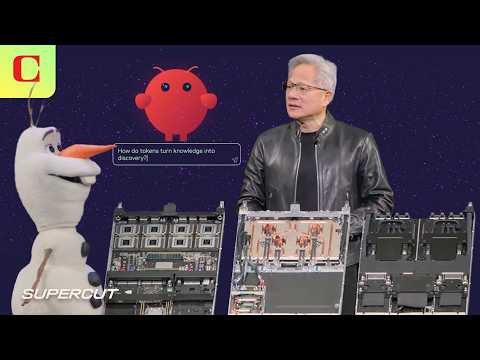
NVIDIA GTC 2026 Keynote: See Everything That Happened in 12 Minutes
CNET· 2026-03-16 22:00
Welcome to GTC. GTC. We're going to talk about technology. We're going to talk about platforms.Nvidia has three platforms. You think that we mostly talk about one of them. It's related to CUDA X.Our systems is another platform and now we have a new platform called AI factories. We're going to talk about all of them. And most importantly, we're going to talk about ecosystems.About 10 years ago, we thought that AI would revolutionize computer graphics. Just as GeForce brought AI to the world, AI is now going ...


AI Supercomputing for Next Generation Semiconductor Design and Manufacturing
NVIDIA· 2025-11-13 23:33
Market Opportunities & Industry Transformation - The semiconductor ecosystem is at the start of a new industrial revolution, driven by AI factories and physical AI, representing a multi-trillion dollar total addressable market (TAM) [7][55] - Physical AI is poised to transform manufacturing industries by automating millions of factories and hundreds of thousands of warehouses [8][47] - AI factories transform energy into intelligence, similar to how dynamos transformed energy into industrial productivity in the first industrial revolution [7] AI & Accelerated Computing in Semiconductor - AI supercomputing and accelerated computing are crucial for capturing opportunities in AI factories and physical AI, aiding innovation across semiconductor design and manufacturing [9][56] - NVIDIA's CUDA X libraries and AI physics frameworks like NVIDIA Physics Nemo accelerate core workloads in semiconductor design and manufacturing, with performance boosts ranging from 20x to 100x in areas like TCAD [23][26] - Agentic AI enhances the capabilities and productivity of semiconductor engineers, with NVIDIA partnering with companies like Cadence, Siemens, and Synopsys to integrate AI into their platforms [38][39][40] NVIDIA's Strategy & Partnerships - NVIDIA is transforming into an AI infrastructure company, providing the hardware and software needed for AI factories, including CPUs, GPUs, DPUs, NICs, switches, memory, and storage [11][12] - NVIDIA emphasizes partnerships with the semiconductor ecosystem, collaborating with companies like Applied Materials, Cadence, KLA, Lam Research, Siemens, Synopsys, Samsung and TSMC to accelerate semiconductor manufacturing and design workloads [25][26][27] - NVIDIA and Lam Research are collaborating to accelerate the device roadmap for AI applications, creating a virtuous cycle where Lam's tools help NVIDIA build better technologies [35][36] Digital Twins & AI Factories - Digital twins, enabled by the NVIDIA Omniverse blueprint, are essential for designing, optimizing, and simulating AI factories before physical construction, reducing costs and downtime [41][51] - The NVIDIA Omniverse blueprint for AI factory digital twins allows for collaborative planning and optimization of AI factories, integrating data from various sources to maximize TCO and power usage effectiveness [52] - Physical AI requires three computers: one for training AI, one in the robot for physical instantiation, and one for simulating the environment to ensure safety and correct operation [48]

5 Growth Stocks to Invest $1,000 in Right Now
The Motley Fool· 2025-06-19 07:55
Core Viewpoint - Despite market uncertainties, it is a favorable time to invest in growth stocks with a cautious approach, starting with smaller investments and potentially increasing positions if stock prices decline. Group 1: Nvidia - Nvidia is the leader in AI infrastructure, with its GPUs being the primary chips for AI workloads, supported by its proprietary software platform CUDA [3][4] - Nvidia captured over 90% of the GPU market in Q1, with data center revenue growing more than 9 times in two years, and demand for its new Blackwell chips is accelerating [4][5] - Nvidia is positioned as a key investment in AI infrastructure despite potential risks from data center spending slowdowns [5] Group 2: Taiwan Semiconductor Manufacturing (TSMC) - TSMC is crucial in manufacturing advanced AI chips, holding significant capabilities that few companies possess [6][7] - Nearly 60% of TSMC's business comes from high-performance computing chips, with strong demand continuing [7] - TSMC is raising prices to offset near-term margin pressures and is expected to be a long-term winner in the AI sector [8] Group 3: Pinterest - Pinterest has transformed by embracing AI, leading to increased engagement and improved average revenue per user (ARPU) [9][10] - The company’s AI-driven solutions are enhancing user engagement and helping advertisers run more effective campaigns [10] - Despite potential economic slowdowns, Pinterest has strong growth prospects due to its large user base [11] Group 4: Eli Lilly - Eli Lilly is benefiting from the growth of GLP-1 drugs, with Mounjaro and Zepbound generating $6.1 billion in revenue last quarter [12] - Zepbound's revenue surged from $517 million to $2.3 billion year-over-year, indicating strong momentum [12] - The company’s next-generation oral GLP-1 drug, orforglipron, shows promise and has advantages over existing injectable drugs [13][14] Group 5: e.l.f. Beauty - e.l.f. Beauty is entering a growth phase following its $1 billion acquisition of Rhode, which generated $212 million in sales despite limited product offerings [15][16] - The acquisition is timely as e.l.f.'s growth slowed, and Rhode's expansion into Sephora presents a significant opportunity [16][17] - e.l.f. has strong retail relationships that can facilitate Rhode's distribution growth, making it an attractive investment opportunity [17]