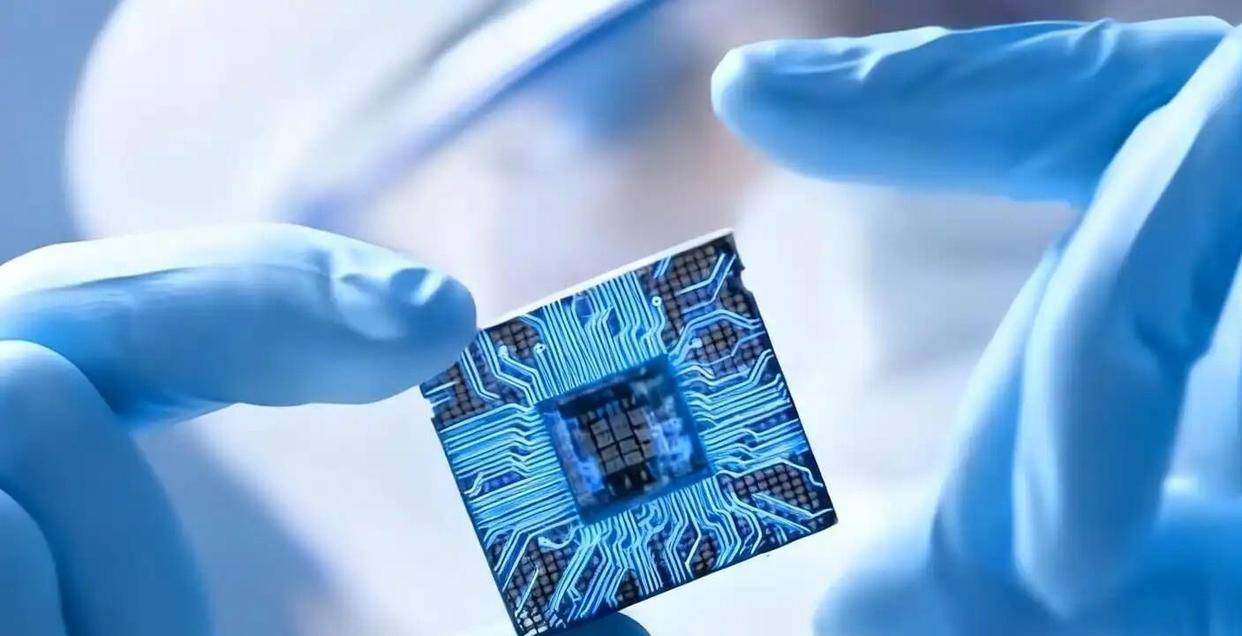
Chiplet(芯粒)技术

Search documents
美国帮中国了一个大忙!美宣布对我们加征关税,反而助力中国补齐短板
Sou Hu Cai Jing· 2025-12-27 07:08
Core Viewpoint - The U.S. announcement of tariffs on chips may not harm China but instead clarify strategies and accelerate progress in the Chinese semiconductor industry [1][3] Group 1: U.S. Tariff Strategy - The U.S. plans to impose tariffs on chips starting in June 2027, which appears to be a "preemptive pressure" tactic rather than an immediate action [5] - The focus on 28nm and above "mature process" chips indicates a shift from targeting cutting-edge technologies, revealing concerns about China's established advantages in this area [5][8] Group 2: China's Semiconductor Industry Position - China accounts for 42.3% of global semiconductor equipment spending in 2024, with over one-third of chips sold to China [3] - Chinese companies have achieved large-scale production of 28nm chips, dominating the market with competitive pricing and efficient supply chains [7][10] - The U.S. semiconductor giants rely heavily on revenue from the Chinese market, indicating that a complete supply chain disruption would hurt them more than China [3][10] Group 3: Technological Advancements and Self-Sufficiency - China has made significant strides in semiconductor manufacturing, including breakthroughs in lithography equipment, with the first domestically produced ArF lithography machine set to be mass-produced in 2024 [10][13] - The self-sufficiency rate of semiconductor equipment and materials in China has increased from less than 7% in 2020 to a projected 32% by 2025 [13] - China's chip self-sufficiency has risen from approximately 15% in 2018 to 26% in 2023, with integrated circuit exports exceeding 1 trillion RMB in the first eleven months of 2024 [17] Group 4: Strategic Responses and Future Outlook - Chinese companies are exploring new avenues such as RISC-V architecture and Chiplet technology to circumvent U.S. export controls and enhance competitiveness [15] - The pressure from U.S. tariffs has inadvertently catalyzed the strengthening of China's semiconductor industry, fostering collaboration and accelerating the resolution of key weaknesses [19] - The evolving landscape suggests that while competition in advanced fields continues, China is solidifying its position in the mature process market, leveraging its manufacturing capabilities and ecosystem [19]

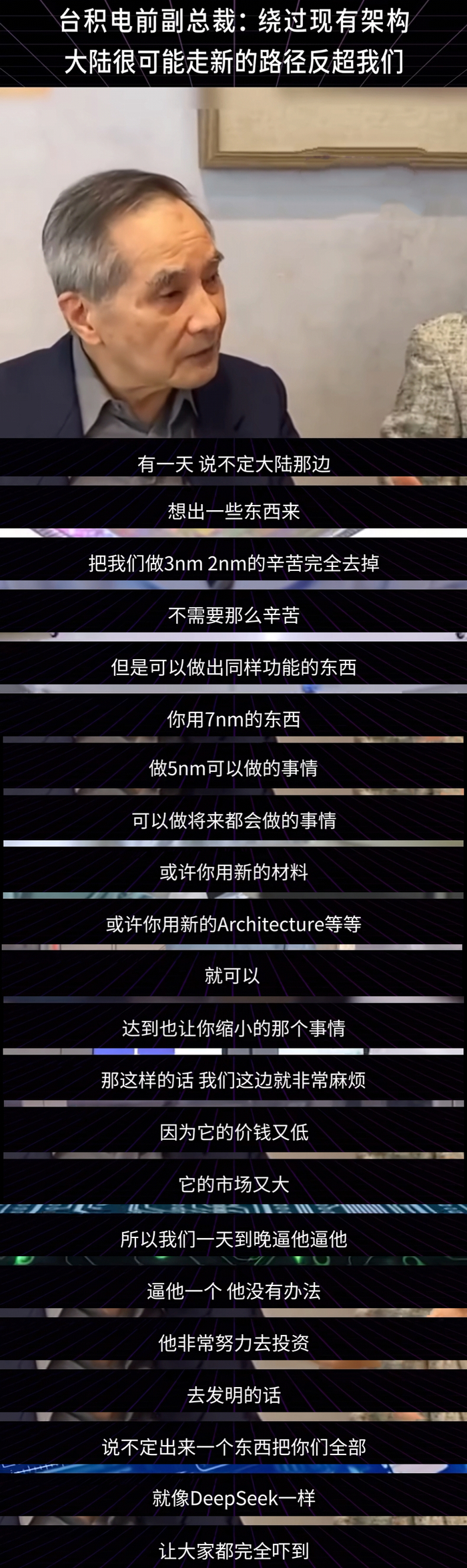
台积电前副总警告:绕过现有架构,大陆说不定走新的路径反超我们,就像DeepSeek把大家都吓到!网友:不是说不定,是一定
Xin Lang Cai Jing· 2025-11-03 10:24
Core Viewpoint - The discussion centers around whether the semiconductor industry in mainland China can find alternative paths to achieve technological advancements and potentially surpass Taiwan's TSMC, especially in light of the challenges faced in advanced process nodes like 3nm and 2nm [1][5]. Group 1: Industry Dynamics - TSMC's former vice president suggested that mainland China might develop new technologies that could bypass the challenges of advanced nodes, such as using 7nm technology to achieve functionalities similar to 5nm [5]. - The semiconductor industry has seen escalating costs in advanced process development, with 3nm research costs reaching billions of dollars, while physical limitations like leakage and heat generation become more pressing [5]. - Despite being behind in traditional processes, mainland China's large market and lower costs provide fertile ground for innovation and experimentation [5]. Group 2: Recent Developments - A domestic research institute recently announced breakthroughs in gallium oxide semiconductor materials, which could significantly enhance performance in high-frequency and high-voltage applications, potentially circumventing existing silicon-based process limitations [5]. - A leading chip design company is reportedly testing a "compute-storage integration" architecture chip, achieving near 5nm AI computing power using 7nm technology, exemplifying the concept of using older nodes to perform tasks typically associated with newer nodes [5]. - The demand for cost-effective chips in the booming domestic electric vehicle and IoT markets is driving the commercialization of these new paths, with local wafer fabs operating at full capacity on 14nm lines [5]. Group 3: Community Reactions - Industry professionals express optimism about the potential for "new path" advancements, citing examples of overcoming Western sanctions and developing new packaging technologies that can match the performance of newer processes while reducing costs [6]. - Historical parallels are drawn, suggesting that the semiconductor industry could replicate past successes in other tech sectors where countries have "leapfrogged" traditional methods to achieve leadership [7]. Group 4: Challenges Ahead - While there are opportunities in pursuing new paths, challenges remain in standardizing technologies like Chiplet, which require collaboration across the supply chain, making it more complex than simply advancing process nodes [7].