Covered Call Option

Search documents
Westwood Announces Monthly Income Distributions for Westwood Salient Enhanced Midstream Income ETF (MDST), Westwood Salient Enhanced Energy Income ETF (WEEI) and Westwood Enhanced Income Opportunity (YLDW)
Globenewswire· 2026-02-05 13:00
Core Viewpoint - Westwood Holdings Group (WHG) announced monthly income distributions for its ETFs, focusing on providing investors with income through dividends and options premiums [1][2]. ETF Distributions - The Westwood Salient Enhanced Midstream Income ETF (MDST) has a distribution of $0.225 per share, with an annualized distribution rate of 9.9% [2]. - The Westwood Salient Enhanced Energy Income ETF (WEEI) also has a distribution of $0.225 per share, with an annualized distribution rate of 11.9% [2]. - The Westwood Enhanced Income Opportunity (YLDW) has a distribution of $0.149 per share, with an annualized distribution rate of 7.0% [2]. Fund Objectives and Management - MDST, launched on April 8, 2024, aims to deliver current income and capital appreciation by investing in midstream energy companies, with net assets of $188 million as of January 29, 2026 [3]. - WEEI, launched on April 30, 2024, provides exposure to various energy sectors and has net assets of $40 million as of January 29, 2026 [4]. - YLDW, launched on December 11, 2025, seeks income and capital appreciation from diverse asset classes, with net assets of $10 million as of January 29, 2026 [5]. Performance Metrics - MDST has a year-to-date (QTD) NAV return of 0.28% and a one-year return of 7.21% [6]. - WEEI shows a QTD NAV return of 3.38% and a one-year return of 11.25% [6]. - YLDW has a QTD NAV return of 0.22% since its inception [6]. Yield Information - The subsidized 30-day yield for MDST is 4.42%, while WEEI's is 2.57% [6][8]. - The current month's distribution for MDST and WEEI is 100% return of capital (ROC) [8].


Find Out How Covered Call Option Traders Can Use RSI and Bollinger Bands to Gain an Edge
Yahoo Finance· 2026-01-23 17:41
Core Insights - Covered calls are most effective when momentum has already become stretched, allowing for better trade candidates without relying on direction or yield chasing [2][3] Group 1: Strategy Overview - Covered calls are not solely about collecting premiums; they focus on targeting stocks where upside momentum is likely to slow rather than accelerate [3] - The strategy begins with assessing the stock's momentum context rather than yields, answering the question of whether the stock has already made its move [3] Group 2: Technical Filters - The first technical filter used is the RSI Rank, which measures recent price momentum on a scale of 0 to 100, indicating overbought conditions above 70 and oversold conditions below 30 [4] - Elevated implied volatility (IV) often leads to inflated call option premiums, creating favorable conditions for covered call sellers [5] - The second filter suggested is the Bollinger Band Rank (BBR), which provides a volatility-based alternative for screening stocks [6]
Short vs. Long-Term Covered Calls on WFC: Which Works Better?
Yahoo Finance· 2025-12-09 12:00
Core Viewpoint - Income investors are increasingly interested in covered calls, with blue-chip high-yielding stocks like Wells Fargo (WFC) being a prime choice, as WFC has shown a strong performance with a 28.22% increase in 2025 so far [1][2]. Summary by Sections Investment Performance - Wells Fargo has performed strongly in 2025, with a year-to-date increase of 28.22% [1]. - The current dividend yield for WFC is 1.89%, providing a reasonable income for investors [2]. Covered Call Strategy - A covered call strategy can generate additional income from high-yielding stocks like WFC [2]. - An example of a covered call involves buying 100 shares of WFC at approximately $9,006 and selling a January 16, $92.50 strike call option for around $2.31, generating $231 in premium [3]. - Selling the January call option yields an income of 2.6% over 39 days, which annualizes to about 24.6% [4]. - If WFC closes above $92.50 at expiration, the total return would be 5.4%, equating to an annualized return of 50.7% [4]. Alternative Covered Call Example - An alternative covered call example involves selling a September 18, 2026, $92.50 strike call option for $8.20, generating an income of 10.0% over 284 days, which annualizes to approximately 12.9% [5]. - If WFC closes above $92.50 at expiration, the total return would be 13.0%, translating to an annualized return of 16.7% [5]. Technical Opinion - The Barchart Technical Opinion rates WFC as a 100% Buy, indicating a strong short-term outlook for maintaining the current direction [8]. - Long-term indicators support a continuation of the upward trend, with implied volatility at 24.07%, compared to a 12-month low of 20.49% and a high of 61.76% [8]. Company Overview - Wells Fargo & Company is one of the largest financial services companies in the U.S., offering a wide range of services including banking, insurance, trust and investments, mortgage banking, investment banking, retail banking, brokerage services, and consumer and commercial finance through over 4,700 retail bank branches and various distribution channels globally [9].

Exxon Has A Compelling Dividend Yield. This Strategy Can Boost Its Attractiveness.
Investors· 2025-10-24 15:44
Core Insights - The stock market has reached record highs following a cooler Consumer Price Index (CPI) report, which may influence investor sentiment positively [1] Exxon Mobil Overview - Exxon Mobil (XOM) is viewed as a lower-risk energy investment due to its global operations and offers a dividend yield of 3.45% as of Thursday [1] - The company is one of the largest integrated oil and gas firms, with diversified revenue streams across upstream exploration, downstream refining, and chemical operations [4] Investment Strategy - Income investors may consider using a covered call strategy to enhance the dividend yield while slightly reducing risk on a long stock position [2] - A covered call trade on Exxon Mobil could involve buying 100 shares for approximately $11,600 and selling a Dec. 19, 120-strike call option for a premium of $225, resulting in a potential total profit of $625 if the stock closes above $120 at expiration [3] Performance Metrics - Exxon Mobil has shown an 8% gain year-to-date, making it attractive for conservative investors seeking income and modest capital appreciation [6] - The stock has a Composite Rating of 43, an Earnings Per Share Rating of 52, and a Relative Strength Rating of 46 according to Investor's Business Daily [5] - The implied volatility of Exxon Mobil is currently at 24.57%, with a 12-month low of 17.92% and a high of 49.43% [5]

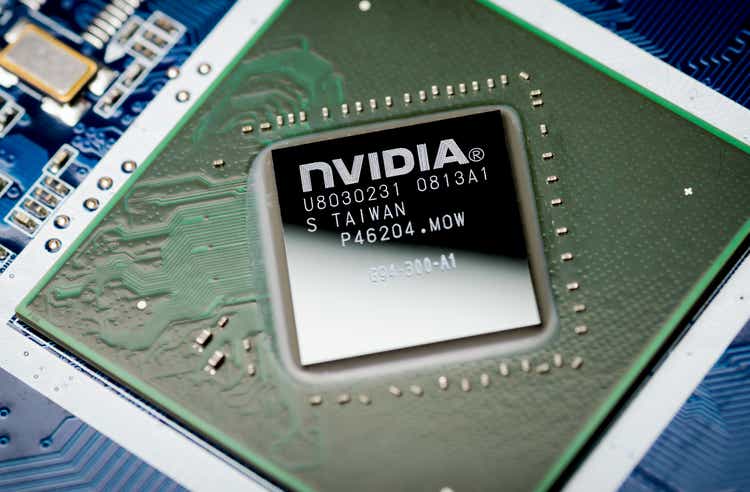
Nvidia: Covered Call Option Is The Right Play (NASDAQ:NVDA)
Seeking Alpha· 2025-10-02 16:07
Core Viewpoint - The company emphasizes providing actionable and clear investment ideas through independent research, aiming to help members outperform the S&P 500 and avoid significant losses during market volatility [1] Investment Strategy - The company offers a service called Envision Early Retirement, which includes at least one in-depth article per week focused on investment ideas [1] - The approach has proven effective in navigating both equity and bond market fluctuations [1]