Creed(恺芮得)

Search documents
高端美妆又行了,上海柜姐:每天“一车车”发货|新春走基层
Xin Lang Cai Jing· 2026-02-15 02:08
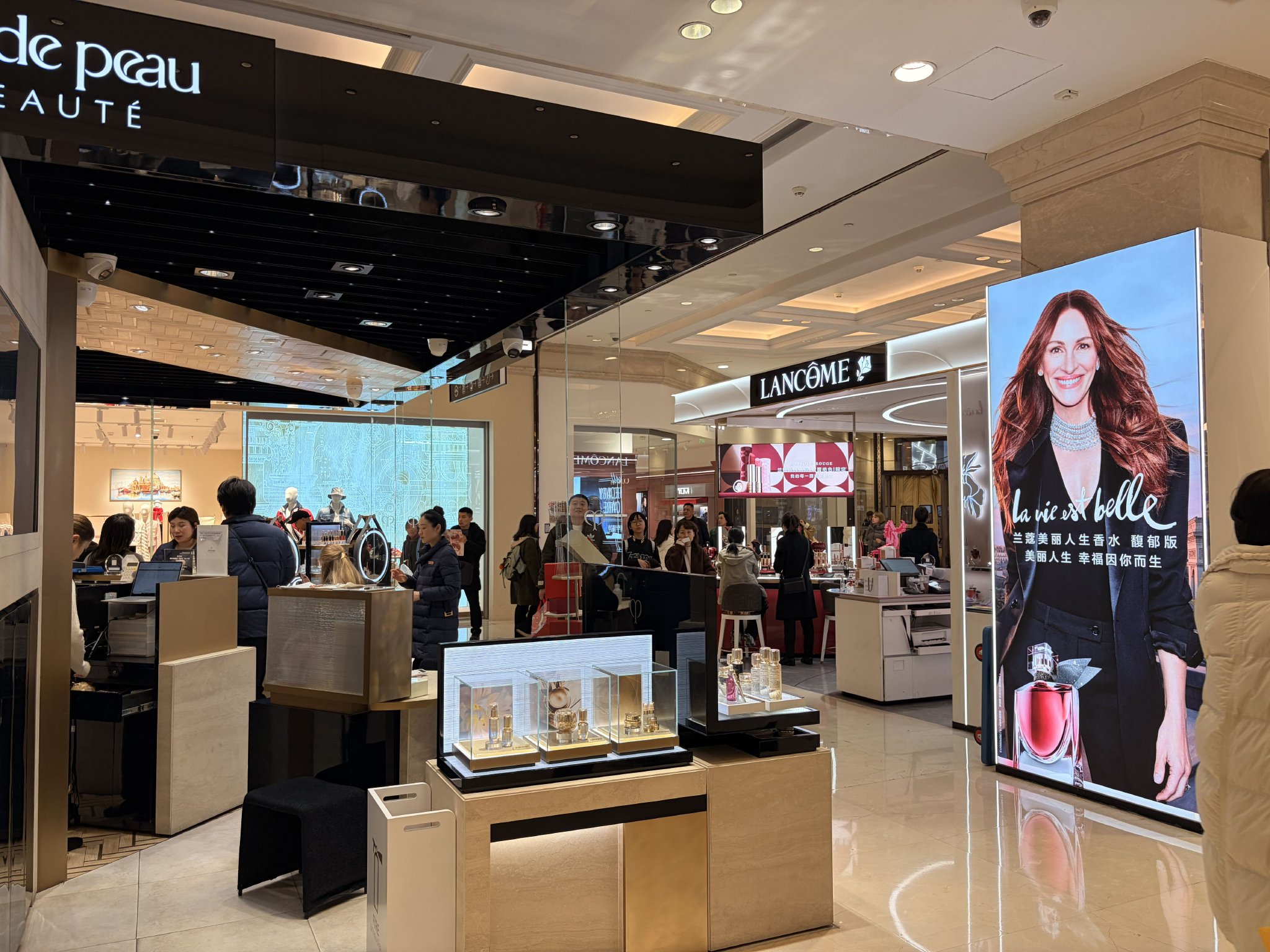
Core Viewpoint - The financial reports from major beauty groups indicate a recovery trend in China's high-end beauty market in the second half of 2025 [1] Group 1: Financial Performance and Market Trends - L'Oréal's sales growth in mainland China is projected to be 1% in the first half and 5% in the second half of 2025, contributing to growth in the North Asia region [2] - Estée Lauder and Shiseido have adjusted their financial reporting, with Estée Lauder separating mainland China from the Asia-Pacific market starting in Q2 2025, and Shiseido merging its China and travel retail businesses [2] - Estée Lauder's revenue growth in mainland China for Q2 to Q4 of 2025 is expected to be -2%, 9%, and 13% respectively, while Shiseido's comparable sales growth is projected at -14%, -7%, 8%, and 2% for the same quarters [2] - Bain & Company's report indicates that the beauty and personal care category will be the first to recover positive growth in 2025, while other luxury categories are still in a phase of decline [2] Group 2: Consumer Behavior and Market Dynamics - Increased consumer traffic in beauty sections of malls, particularly during the pre-Spring Festival period, indicates a rise in purchasing activity [3][4] - The beauty market is expected to rebound in 2025 after a slight decline in 2024, with a projected growth rate of 5.1% [7] - High-end brands are adjusting prices and inventory to facilitate recovery, with a notable shift of consumers from high-end to mass brands due to improved offerings and competitive pricing [11][17] Group 3: Product Innovation and Market Strategy - Major beauty brands are focusing on localized research and innovation in China, with L'Oréal, Estée Lauder, and Shiseido establishing R&D centers in Shanghai [19] - New product launches and collaborations, such as L'Oréal's partnership with Huashan Hospital and Shiseido's introduction of a new medical beauty brand, reflect a trend towards localized product development [20] - The market is shifting towards more specialized segments, such as scalp care and lip care, indicating a move from basic skincare to more refined personal care [12][13] Group 4: Long-term Market Outlook - The sustainability of current growth drivers, such as price reductions and niche market expansions, remains uncertain [14] - The beauty market is entering a phase of stock competition, with brands needing to enhance core competitiveness and adapt to changing consumer preferences [18] - The demand for high-end beauty products persists, but consumers are increasingly discerning, leading to a need for brands to align pricing with product value [17]

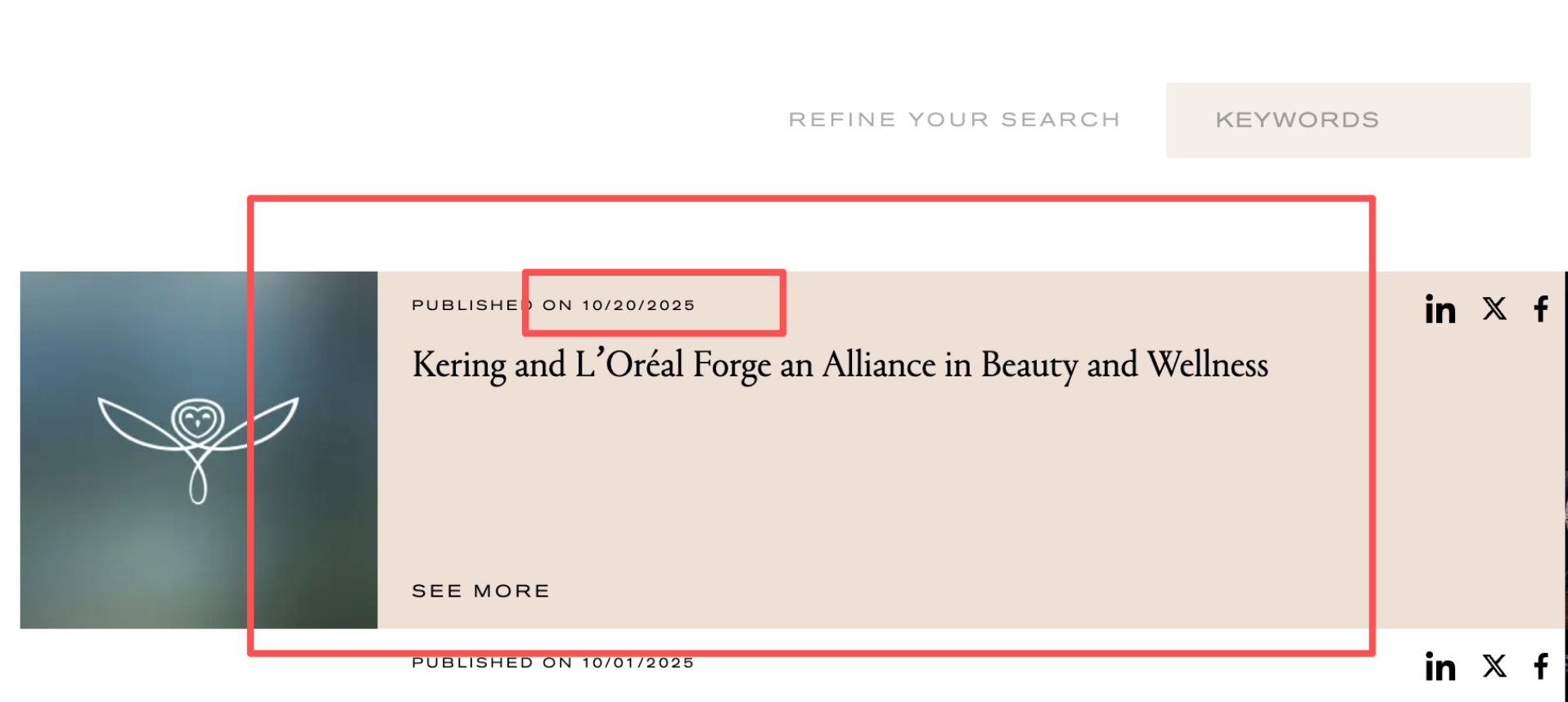
40亿欧元交易引奢侈品美妆变局:开云集团售业务“回血”,欧莱雅揽授权“扩局”
Mei Ri Jing Ji Xin Wen· 2025-10-21 13:01
Core Points - Kering Group announced a significant transaction with L'Oréal Group, involving the sale of its fragrance and beauty division for a total of €4 billion (approximately ¥33.2 billion) [1] - The deal includes the acquisition of the Creed brand and a 50-year exclusive licensing agreement for several luxury brands, including Gucci, Bottega Veneta, and Balenciaga [1][4] - The transaction is expected to be completed in the first half of 2026 and will be paid in cash [1][4] Financial Impact - Kering's beauty division, established in 2023, has shown high growth potential, with Creed being a significant revenue contributor, generating €323 million in 2024 [3] - Kering's overall revenue declined by 16% year-on-year to €7.587 billion in the first half of 2023, with Gucci's revenue down 27% [6] - The sale is seen as a way for Kering to alleviate financial pressure and focus on core brands, although it may hinder future diversification efforts [6][7] Market Reactions - Industry experts express skepticism about the transaction, suggesting that the €4 billion price tag is excessive for a group of brands facing challenges [4][8] - The sale may limit Kering's ability to adapt to future trends in the luxury market, particularly the shift towards lifestyle services [7] - The deal also affects Coty Group, which currently holds the licensing rights for Gucci beauty products until 2028, potentially impacting Coty's strategic direction [9][10] Strategic Considerations - The acquisition by L'Oréal is expected to enhance its high-end product offerings, but it faces risks related to brand performance and market dynamics [8] - The beauty industry is experiencing a shift towards brand diversification, with new competitors emerging, which may challenge L'Oréal's market position [8] - The sale of Kering's beauty division is part of a broader strategy to streamline operations and focus on core business areas [6][7]
开云集团拟40亿欧元出售美妆业务 与欧莱雅集团达成合作
Zheng Quan Ri Bao· 2025-10-20 16:43
Group 1 - L'Oréal Group and Kering Group announced a long-term strategic partnership in the luxury beauty sector, with Kering selling its beauty business to L'Oréal for €4 billion (approximately 33.3 billion RMB) [1] - L'Oréal will acquire the Creed brand and gain exclusive rights to develop perfumes and beauty products for Kering's brands such as Gucci, Bottega Veneta, and Balenciaga for a period of 50 years [1][2] - The transaction is expected to be completed in the first half of 2026, and both companies plan to explore further collaboration opportunities in luxury goods, health, and longevity through a 50-50 joint venture [1] Group 2 - Kering's beauty division, established in 2023, reported total sales of €32.3 million in 2024, a significant increase of 421% year-on-year, primarily driven by Creed [2] - Despite the growth in the beauty sector, Kering's overall sales declined by 16% year-on-year, and net profit fell by 46%, indicating financial pressure [2] - Kering's new CEO, Luca de Meo, is focused on improving the company's balance sheet, making the sale of the underperforming beauty business a necessary step [2][3] Group 3 - The partnership is expected to strengthen L'Oréal's leadership position in the luxury beauty market, leveraging the potential of brands like Gucci and Bottega Veneta [2] - Analysts believe that this collaboration will help Kering gain a larger market share in the luxury sector amid overall industry pressures [3]
40亿欧元交易引奢侈品美妆变局:开云“回血”、欧莱雅“扩局”、科蒂2028年失Gucci授权,但赢家难定
Mei Ri Jing Ji Xin Wen· 2025-10-20 11:58
Core Viewpoint - Kering Group announced a significant transaction with L'Oréal Group, involving the sale of its fragrance and beauty division for a total of €4 billion (approximately ¥33.2 billion), which includes the acquisition of the Creed brand and a 50-year exclusive licensing agreement for several luxury brands [1][6]. Group 1: Transaction Details - The agreement allows L'Oréal to acquire the Creed brand and obtain exclusive rights to develop, produce, and distribute beauty products for Gucci, Bottega Veneta, and Balenciaga [1][6]. - The transaction is expected to be completed in the first half of 2026 and will be paid in cash [1][6]. - Kering's beauty division, which was established in 2023, has shown high growth potential, making the sale surprising to industry experts [2][9]. Group 2: Financial Implications - The sale is seen as a way to alleviate Kering's financial pressure, especially as the company has faced declining revenues, with a 15% drop in Q2 revenue to €3.7 billion [7][9]. - Kering's beauty division generated €323 million in revenue in 2024, primarily from Creed, indicating its importance to the group's overall performance [3][9]. - The sale may provide Kering with more resources to focus on its core brands, particularly Gucci, which has been experiencing a decline in sales [7][9]. Group 3: Market Reactions and Future Outlook - Industry experts express skepticism about the sale, suggesting it may hinder Kering's diversification strategy and limit future growth opportunities in the luxury market [2][9]. - The acquisition price of €4 billion is considered high for a company and brands that are perceived to be past their peak, raising concerns about the long-term value of the investment for L'Oréal [6][10]. - The sale will also impact Coty Group, which currently holds the licensing rights for Gucci beauty products until 2028, potentially leading to strategic shifts for Coty following the loss of this key brand [11][14].