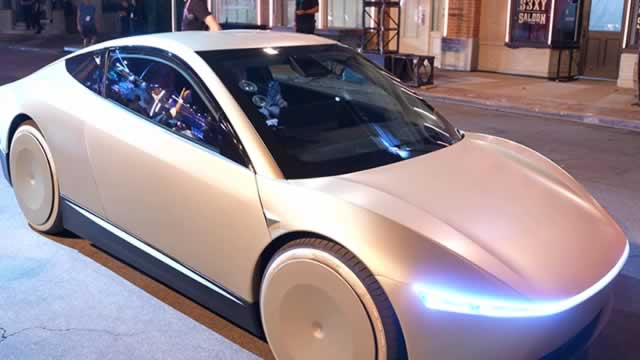
Cybercab robotaxi

Search documents
Elon Musk warns Tesla employees over future of German megafactory ahead of union election
Business Insider· 2026-02-27 12:07
Core Insights - Tesla's sales in Europe are significantly declining, with a nearly 38% drop in EV registrations in the EU last year, attributed to backlash against Elon Musk's political actions [7] - Musk has indicated that any potential expansion of the Giga Berlin factory is dependent on the absence of interference from external organizations, particularly in light of upcoming union elections [2][3] - The German union IG Metall is pushing to gain control of the site's work council, which is crucial for negotiating employee pay and working conditions [3][5] Group 1 - Tesla's sales in Europe fell to just 8,000 units in January, less than half of what Chinese competitor BYD sold [7] - Musk's comments regarding expansion were made ahead of a crucial vote at the Giga Berlin factory, highlighting the tension between Tesla and the union [3][4] - The union IG Metall has denied allegations of misconduct and has accused Tesla's management of defamation, indicating ongoing disputes over working conditions [6] Group 2 - Musk mentioned that Tesla expects to receive approval for its Full-Self-Driving technology in the Netherlands on March 20 [8] - The company is considering expanding its Giga Berlin facility to include production of battery cells and new vehicle models, contingent on the outcome of the union elections [1][2]


The EV winter is going global. Here's why it's hitting Tesla hard.
Business Insider· 2026-02-18 10:18
Core Insights - The global electric vehicle (EV) market is experiencing a downturn, with sales declining by 3% year-over-year in January, influenced by policy changes in the US and China [1][2] - In North America and China, EV sales fell significantly, with a 33% drop in North America and a 20% decline in China [1] Industry Overview - The removal of the $7,500 tax credit for new EVs in the US has led to a sharp decline in sales, prompting warnings from industry leaders about a challenging period ahead [2] - In China, EVs represented about 50% of total vehicle sales last year, but recent government policy changes, including the end of a key tax exemption, are creating hurdles for manufacturers [5] Company-Specific Challenges - Tesla's sales in China fell below 20,000 units in January, marking its lowest sales figure since late 2022, amidst increasing competition from local brands [7] - The lack of new product launches since the Model Y in 2021 has left Tesla vulnerable, with its Model Y outsold by Xiaomi's YU7 in January [8] - BYD has overtaken Tesla as the largest seller of battery-powered vehicles globally, although it also faced a 30% sales decline in January [9] Regional Performance - Tesla's performance in Europe is struggling, with a 42% drop in registrations in France and only 82 cars sold in Norway, while BYD sold four times as many cars as Tesla in the UK [10][9] - Despite a 25% increase in overall EV sales in Europe, Tesla's challenges in key markets hinder its recovery efforts [13] Financial Implications - The Detroit "big three" automakers have reported over $50 billion in charges related to their EV businesses, indicating a broader industry shift towards gas-powered and hybrid vehicles [15] - In January, only 90,000 electric vehicles were sold in North America, reflecting the ongoing struggles within the market [15] Strategic Shifts - Tesla is pivoting away from traditional automotive production, with plans to discontinue the Model X and S to focus on developing its Optimus humanoid robot and future autonomous vehicles [16][17]
Billionaire George Soros Just Made Big, Bold Bets on 2 AI Stocks
247Wallst· 2026-02-14 13:08
Group 1: Investment Moves - Soros Fund Management initiated positions in Broadcom and Tesla worth a combined $69 million in Q4 [1] - The fund purchased 102,379 shares of Broadcom valued at approximately $35.4 million, averaging around $345 per share [1] - Soros acquired 56,661 shares of Tesla worth about $25.5 million, with an implied average buy price of $450 per share [1] Group 2: Broadcom's Performance - Broadcom's Q4 AI chip revenue reached $6.5 billion, up 74% year-over-year, with Q1 guidance of $8.2 billion, indicating 100% growth [1] - Analysts project AI semiconductor sales to double as a portion of revenue by 2026, potentially exceeding half of total sales by year-end [1] - Overall revenue for Broadcom is expected to grow 52% in fiscal 2026, reaching about $94 billion, driven by AI and infrastructure software [1] Group 3: Tesla's AI Initiatives - Tesla is investing between $30 billion to $70 billion in AI and robotics, including Full Self-Driving software and the Optimus humanoid robot [1] - The company aims to ramp up production of the Optimus robot to 50,000 to 100,000 units by 2026 [1] - Analysts forecast Tesla's net income to reach around $6.1 billion by 2026, with a potential market cap of $5 trillion if robotics initiatives succeed [2]


2026年的特斯拉:电动车承压,AI接棒
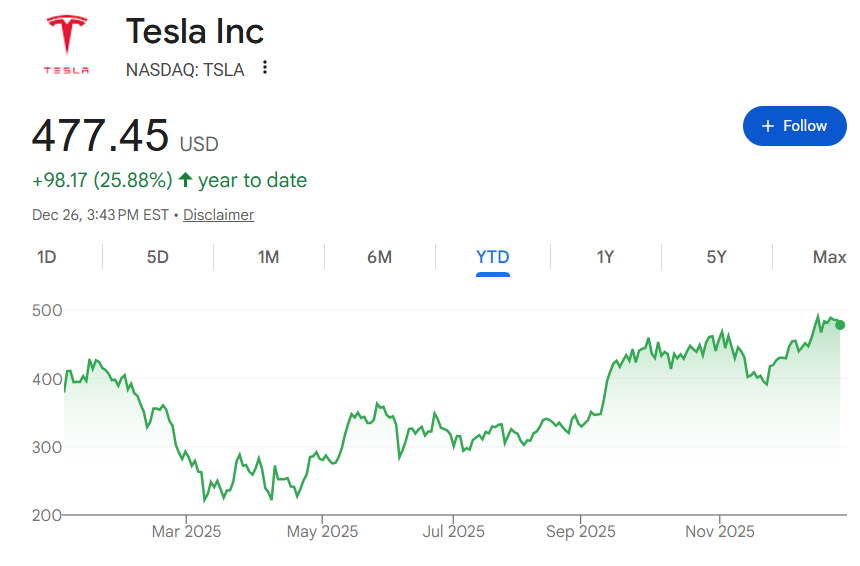
Hua Er Jie Jian Wen· 2025-12-26 21:53
Group 1 - Tesla's stock price has increased over 25% this year, surpassing the S&P 500 index's 18% gain, reaching an intraday high of $498.83 in December [1] - Despite pressure on electric vehicle sales, there are high expectations for Tesla's advancements in autonomous taxi services, humanoid robots, and in-house chip development [3] - Analyst Dan Ives predicts Tesla could reach a $3 trillion valuation after a "monster year," nearly double its current market value [3] Group 2 - Tesla's robotaxi network is progressing far below expectations, with only about 160 vehicles currently operating, despite promises of expansion to multiple urban areas [4] - Analysts express skepticism about Tesla's ambitious goals, noting that the company has a history of over-promising on product timelines [4][5] - The adoption rate of Tesla's Full Self-Driving (FSD) software remains low, with only 12% of customers paying for it as of Q3 [6] Group 3 - Tesla plans to introduce humanoid robots and a new microchip, which could define its future, with the humanoid robot market potentially reaching $5 trillion by 2050 [9][10] - The company faces challenges in developing the humanoid robot, particularly in sourcing components and designing its features [10] - The next-generation AI5 chip is expected to begin production by the end of 2026, with significant improvements over the current AI4 chip [11][12]
$800 for Tesla Stock Could Be Reality in 2026. Here’s Why.
Yahoo Finance· 2025-12-23 14:30
Group 1 - Tesla is maintaining strong investor confidence despite challenges such as political noise, a cooling EV market, and increasing global competition, with shares trading near record highs [1] - Future product platforms, including the Cybercab robotaxi and Optimus humanoid robot, are driving optimism and investment in Tesla, with expectations for significant advancements in autonomous transportation and AI-driven robotics [2][4] - Wedbush Securities projects Tesla will launch robotaxi services in over 30 cities by 2026 and increase production of Cybercabs, with a base-case valuation of $600 per share and a bullish target of $800, indicating a potential 64.7% upside [3] Group 2 - Tesla's market capitalization is approximately $1.6 trillion, positioning it among the elite "Magnificent Seven," with a shift in investor perception from an automaker to a long-term AI and robotics company [5] - The company's ambitions extend beyond electric vehicles, focusing on innovations in AI, autonomous driving, and robotics, suggesting that these areas could become major revenue drivers in the future [4][5]
An ‘EV Winter’ Is Coming for Tesla. Should You Sell TSLA Stock Now?
Yahoo Finance· 2025-12-10 21:23
Core Insights - Tesla, with a market capitalization of approximately $1.48 trillion, is part of the "Magnificent Seven" but faces challenges in 2025 due to political controversies, rising EV competition, and slowing demand in key markets [1] - The company has evolved from being solely an electric vehicle manufacturer to a technology firm focused on AI, autonomous driving, robotics, and clean energy, although its core EV business remains vital [2] Financial Performance - Tesla's Q3 2025 revenue increased by 12% year-over-year to $28.1 billion, surpassing Wall Street expectations of $26.6 billion, marking the first quarter of growth compared to 2024 [10] - The automotive segment revenue rose 6% year-over-year to $21.2 billion, while the energy-storage division saw a significant 44% revenue increase to $3.4 billion [11][12] - Despite revenue growth, gross margin decreased to 18% from 19.8% a year ago, and operating margin fell by 501 basis points to 5.8% due to ongoing price cuts [13] Market Sentiment and Analyst Views - Morgan Stanley downgraded Tesla to "Equal Weight" from "Overweight," citing a challenging outlook for the EV business with softer margins and slowing deliveries [3][4] - The bank anticipates a potential "EV winter," predicting U.S. light-vehicle sales to drop to 15.9 million units next year, with EV volumes declining by around 20% [4] - Analysts are divided on Tesla's future, with a consensus "Hold" rating; 14 analysts rate it a "Strong Buy," while 9 have a "Strong Sell" rating [16] Stock Performance - Tesla's stock has increased by 12.85% in 2025 and 31.04% over the last three months, significantly outperforming the S&P 500 Index's 5.5% gain during the same period [6][7] - The stock trades at a high valuation of 303.16 times price-to-earnings trailing and 14.99 times price-to-sales trailing, compared to industry averages of 19.7x and 0.95x [8] Future Outlook - Tesla is focused on ambitious projects, including the Cybercab robotaxi, heavy-duty Semi truck, and next-gen Megapack 3, aiming for volume production by 2026 [14] - The company is also advancing its humanoid robot, Optimus, indicating a shift from EV manufacturing to robotics and AI [15] - Despite current challenges, Tesla's long-term vision remains intact, but investors must weigh the risks against future potential [18]
Ford Just Reported an Absolute Collapse in Its EV Sales. That Could Be a Key Warning for Tesla Stock.
Yahoo Finance· 2025-12-03 21:49
Core Insights - Tesla's long-term growth is heavily reliant on the success of its Cybercab autonomous robotaxi and Optimus humanoid robot, which investors believe could surpass the revenue generated by its automotive business [1][11] - The company has transformed from a startup to a major player in the automotive industry, reshaping it with high-performance electric vehicles (EVs) under CEO Elon Musk [2] Industry Trends - A significant decline in Ford's EV sales, with a 61% drop, raises concerns about the overall EV market, suggesting that demand may be highly sensitive to incentives like the federal EV tax credit [5][12] - Tesla's momentum has slowed due to increased competition, a cooling EV market, and macroeconomic pressures, leading to a cautious sentiment among investors [6][10] Financial Performance - Tesla's Q3 2025 results showed a 12% year-over-year revenue increase to $28.1 billion, driven by a surge in demand before the expiration of the federal EV tax credit [8][13] - The automotive segment's revenue rose 6% year-over-year to $21.2 billion, while the energy-storage division experienced a remarkable 44% annual revenue increase to $3.4 billion [9] - Despite strong revenue growth, profitability declined, with gross margin falling to 18% and adjusted EPS dropping 31% year-over-year to $0.50, indicating pressure to maintain market share [10][14] Future Outlook - Tesla aims for volume production of the Cybercab robotaxi, Semi truck, and Megapack 3 energy-storage system by 2026, while also ramping up production of the Optimus humanoid robot [11] - Analysts are divided on Tesla's stock, with a consensus "Hold" rating, reflecting uncertainty about its future performance, although some analysts see potential upside if Tesla can execute its ambitious plans [15]

Elon Musk's Tesla disappoints investors despite record sales as profit dented by higher costs, fading credits
New York Post· 2025-10-22 22:08
Core Insights - Tesla reported record third-quarter revenue of $28.1 billion, exceeding Wall Street estimates of $26.37 billion, driven by high electric vehicle sales as US buyers rushed to secure tax credits before expiration [11] - However, Tesla's profit per share was 50 cents, falling short of analysts' expectations of 55 cents, impacted by rising costs and a decline in income from regulatory credits [12] Financial Performance - Total revenue for the third quarter was $28.1 billion, surpassing analysts' average estimate of $26.37 billion [11] - Profit per share was 50 cents, below the expected 55 cents [12] - Automotive regulatory credits decreased to $417 million from $739 million a year ago and $435 million in the previous quarter [12] - Gross margin was reported at 18%, slightly above the estimate of 17.5%, while automotive gross margin, excluding regulatory credits, was 15.4%, below the average estimate of 15.6% [12] Cost and Expenses - Operating expenses rose by 50%, driven by AI and R&D projects, stock-based compensation, and increased costs per vehicle due to tariffs [13] - The company is facing challenges from tariffs imposed on auto-part imports, which are affecting overall costs [6] Market Dynamics - Demand for Tesla's vehicles is expected to decline without the tax credits that have been crucial for EV sales [4][8] - To address potential demand drops, Tesla introduced lower-cost variants of Model Y and Model 3, reducing prices by approximately $5,000 to $5,500 [8] - Analysts caution that the introduction of cheaper models may squeeze profit margins as cost reductions may not fully offset lower selling prices [9][15] Strategic Outlook - Tesla's valuation of $1.45 trillion reflects investor confidence in CEO Elon Musk's focus on robotics and AI, although vehicle sales remain essential for financial stability [5] - The company is on track to begin volume production of its Cybercab robotaxi, Semi truck, and Megapack 3 battery by 2026 [9] - Tesla's limited rollout of its self-driving "robotaxi" service marks a strategic shift towards self-driving technology, although Wall Street anticipates an 8.5% decline in deliveries in 2025 due to the expiration of tax credits and increased competition [14][16]
Meet the Unstoppable Stock That Could Beat Tesla to This $10 Trillion Opportunity
Yahoo Finance· 2025-10-08 09:59
Group 1 - Ark Investment Management's "Big Ideas" report suggests that autonomous vehicles could transform ride-hailing into a $10 trillion industry over the long term [1][9] - Tesla is a key player in autonomous technology, with its Cybercab robotaxi set for mass production next year, aiming to create a 24/7 ride-hailing network [2][9] - Uber Technologies operates the largest ride-hailing network globally and has partnered with over 20 companies in the autonomous vehicle space, some of which are already completing thousands of paid trips daily [3][8] Group 2 - Tesla faces challenges in matching Uber's scale, as timely ride availability is crucial for customer satisfaction, which Uber has optimized for its 180 million monthly users [5][6] - Uber's CEO highlighted the company's 15 years of experience in managing ride utilization in major cities, which is essential for profitability in the autonomous era [6][9] - The balance of deploying the right number of cars is critical; too few cars lead to poor user experience, while too many can result in idle vehicles that hurt profit margins [7][9] Group 3 - Uber's partnerships with various companies, including Alphabet's Waymo, enable it to leverage a combination of networks, with Waymo completing over 250,000 paid autonomous trips weekly across five U.S. cities [8][9] - The competitive landscape indicates that while Tesla has developed its autonomous robotaxi, it is lagging in commercialization compared to Uber's established network [9]

Elon Musk Thinks Tesla Will Become the World's Most Valuable Company. Here's Why Its Stock Could Plunge by 70% (or More) Instead.
The Motley Fool· 2025-07-05 08:22
Core Viewpoint - Tesla's true value may lie in its future product platforms, such as autonomous robotaxis and humanoid robots, rather than its current electric vehicle (EV) sales [1][10] Sales Performance - Tesla delivered 1.79 million EVs in 2024, marking a 1% decline from the previous year, which is the first annual drop since 2011 [5] - In Q1 2025, Tesla delivered 336,681 EVs, reflecting a 13% year-over-year decline [6] - For Q2 2025, Tesla delivered 384,122 EVs, also down 13% year-over-year, indicating a potential sharper annual decline in sales for 2025 compared to 2024 [6] Competitive Landscape - Tesla's sales in Europe fell by 40% in May, while the overall EV market in Europe grew by 26% [7] - Chinese EV brands have doubled their market share in Europe, presenting significant competition for Tesla [7] - Tesla's pricing strategy is challenged by competitors like BYD, which offers lower-priced models, making it difficult for Tesla to compete in key markets [8] Future Product Development - Tesla is focusing on its Cybercab robotaxi, which will operate on full self-driving software, avoiding a price war with competitors [9][10] - The goal is to have millions of Cybercabs generating revenue through passenger transport and small deliveries [10] Financial Implications - Tesla's total revenue shrank by 9% in Q1 2025, with earnings plummeting by 71% to $0.12 per share [13] - The stock is down approximately 34% from its peak, but the decline in earnings is more severe, leading to a high price-to-earnings (P/E) ratio of 173.4 [14] - Comparatively, major tech companies have an average P/E ratio of 35.4, indicating Tesla's stock may be overvalued [15] Market Outlook - If Tesla's FSD and Cybercab initiatives succeed, the current stock price may appear cheap in the long term, but regulatory hurdles remain [16] - Significant declines in stock value could occur if EV sales continue to drop or if the robotaxi business fails to gain traction [18]