
Deep Research智能体

Search documents
最新一篇长达76页的Agentic AI综述
自动驾驶之心· 2025-10-28 00:03
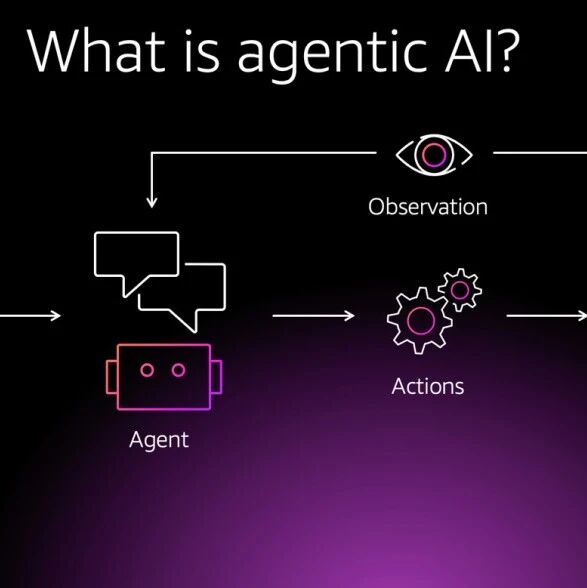
Core Insights - The article discusses the evolution of Agentic AI from pipeline-based systems to model-native paradigms, emphasizing the internalization of reasoning, memory, and action capabilities within the models themselves [1][44]. - It highlights the role of reinforcement learning (RL) as a driving force in transforming static models into adaptive, goal-oriented entities capable of learning from interactions with their environment [1][44]. Background - The rapid advancement of generative AI has primarily focused on reactive outputs, lacking long-term reasoning and environmental interaction. The shift towards Agentic AI emphasizes three core capabilities: planning, tool usage, and memory [3]. - Early systems relied on pipeline paradigms where these capabilities were externally orchestrated, leading to passive models that struggled in unexpected scenarios. The new model-native paradigm integrates these capabilities directly into the model parameters, allowing for proactive decision-making [3][6]. Reinforcement Learning for LLMs - The scarcity of programmatic data and vulnerability to out-of-distribution scenarios necessitate the use of result-driven RL to internalize planning and other capabilities, moving away from prompt-induced behaviors [6][7]. - RL offers advantages over supervised fine-tuning (SFT) by enabling dynamic exploration and relative value learning, transforming models from passive imitators to active explorers [8][9]. Unified Paradigm and Algorithm Evolution - Early RLHF methods excelled in single-turn alignment but struggled with long-term, multi-turn, and sparse rewards. Newer result-driven RL methods like GRPO and DAPO enhance training stability and efficiency [12]. - The evolution of algorithms involves leveraging foundational models to provide priors while refining capabilities through interaction and rewards in task environments [12]. Core Capabilities: Planning - The pipeline paradigm views planning as automated reasoning and action sequence search, which is limited in flexibility and stability under complex tasks [14][15]. - The model-native paradigm integrates planning capabilities directly into model parameters, enhancing flexibility and robustness in open environments [15][18]. Core Capabilities: Tool Usage - Early systems embedded models in fixed nodes, lacking flexibility. The model-native transition internalizes decision-making regarding tool usage, forming a multi-objective decision problem [21][22]. - Challenges remain in credit assignment and environmental noise, which can destabilize training. Modular training approaches aim to isolate execution noise and improve sample efficiency [22]. Core Capabilities: Memory - Memory capabilities have evolved from external modules to integral components of task execution, emphasizing action-oriented evidence governance [27][30]. - Short-term memory utilizes techniques like sliding windows and retrieval-augmented generation (RAG), while long-term memory focuses on external libraries and parameter-based internalization [30]. Future Directions - The trajectory of Agentic AI indicates a shift towards deeper integration between models and their environments, moving from systems designed to use intelligence to those that grow intelligence through experience and collaboration [44].

产业观察:【AI产业跟踪~海外】微软开源Phi~4新版
GUOTAI HAITONG SECURITIES· 2025-07-16 08:44
Investment Rating - The report does not explicitly provide an investment rating for the AI industry Core Insights - The AI industry is experiencing significant advancements with major companies like Microsoft, Google, and Meta making strides in AI model development and applications [1][9][10][11][21] - The competition in the AI sector is intensifying, with companies focusing on developing innovative models and applications to maintain their market positions [7][8][24][25] Summary by Sections 1. AI Industry Dynamics - Meta has recruited Apple's AI foundational model leader, indicating a shift in talent amidst Apple's internal struggles with AI strategy [7] - Goldman Sachs is focusing on nurturing "AI natives," young professionals who are adept at using generative AI, to lead future innovations [8] 2. AI Application News - Microsoft has launched the Deep Research AI agent, which automates complex research tasks by integrating OpenAI's models and Bing search capabilities [9] - Google has upgraded its Veo 3 platform, allowing users to create videos from images with audio, enhancing content creation capabilities [10] - Elon Musk's xAI has released the Grok 4 series models, showcasing superior reasoning capabilities in benchmark tests [11] 3. AI Large Model News - Berkeley has open-sourced the DeepSWE model, which excels in code tasks through reinforcement learning [13] - EarthMind, a multi-modal model for Earth observation data, has been released, enhancing capabilities in disaster monitoring and urban planning [14] - The DeepSeek R1T2 model has gained popularity for its speed and efficiency in generating outputs [15] - Microsoft has released a new version of the Phi-4 model, optimized for edge devices with significant improvements in reasoning efficiency [21] 4. Technology Frontiers - AI has shown potential in medical diagnostics, with systems like MAI-DxO outperforming human doctors in complex case evaluations [24] - DeepMind's Isomorphic Labs has advanced drug design, moving candidates into human trials, marking a significant step in AI-driven pharmaceuticals [25] - Meta's new 2-Simplicial Transformer architecture enhances the capabilities of traditional models, particularly in data-scarce environments [26] - The STAR technology developed by Columbia University offers new possibilities for fertility treatments using AI [28] - MIT's radial attention technology has revolutionized video generation efficiency, significantly reducing training costs and time [29]
