
DeepEncoder

Search documents
DeepSeek的终极野心:把大语言模型的基本语言都改造成图像
3 6 Ke· 2025-10-21 12:52
Core Insights - DeepSeek has open-sourced DeepSeek-OCR, an OCR model that achieves state-of-the-art results on benchmarks like OmniDocBench [1] - The motivation behind entering the OCR field is to address the computational bottleneck of long context processing in large language models (LLMs) [4][6] - The paper proposes that text information can be efficiently compressed through optical 2D mapping, allowing visual language models (VLMs) to decompress original information from images [4][6] Group 1: Long Context Processing - The pursuit of longer context in LLMs has led to a competitive arms race, with token windows expanding from thousands to millions [7] - The core limitation arises from the attention mechanism in the Transformer architecture, where computational complexity and memory usage grow quadratically with sequence length [7] - DeepSeek-AI's engineers propose a fundamental question: can the number of tokens be compressed rather than just optimizing attention calculations? [7][10] Group 2: Visual Tokens vs. Text Tokens - Visual tokens are the basic units of information processed by visual models, while text tokens are used by LLMs [8] - A 1024x1024 image can be divided into 4096 visual tokens, significantly reducing the number of tokens needed compared to text representation [9] - The understanding that visual modalities can serve as efficient compression mediums for text information led to the creation of DeepSeek-OCR [9] Group 3: DeepEncoder and Compression Techniques - DeepSeek-OCR is essentially a proof of concept for an "optical compression-decompression" system [10] - The DeepEncoder, a key innovation, is designed to handle high-resolution inputs while producing minimal visual tokens [11][12] - The architecture consists of three stages: a local detail processor, a compression module, and a global attention layer [14][16] Group 4: Performance Metrics - Experimental results show a 10.5x compression rate with 64 visual tokens decoding 600-700 text tokens, achieving an OCR accuracy of 96.5% [17][18] - At a 20x compression rate, the model maintains around 60% accuracy while decoding over 1200 text tokens [17][18] - DeepSeek-OCR outperforms existing models like GOT-OCR2.0 and MinerU2.0 in terms of performance and token efficiency [19][20] Group 5: Future Vision and Memory Simulation - The team aims to simulate human memory's forgetting mechanism, which naturally prioritizes relevant information while compressing less important details [25][27] - The multi-resolution design of DeepSeek-OCR provides a technical foundation for managing memory in a way that mimics human cognitive processes [29][30] - The ultimate goal is to create a system that balances information retention and computational efficiency, potentially leading to a new paradigm in AI memory and input systems [32][35]



重磅,DeepSeek再开源:视觉即压缩,100个token干翻7000个
3 6 Ke· 2025-10-21 01:35
Core Insights - DeepSeek-OCR model explores the boundaries of visual-text compression, demonstrating the ability to decode over ten times the amount of text information from a limited number of visual tokens, thus addressing long-context issues in large language models (LLMs) [1][16]. Group 1: Model Performance - In the OmniDocBench benchmark, DeepSeek-OCR surpasses GOT-OCR2.0 by using only 100 visual tokens compared to GOT-OCR2.0's 256 tokens per page [2][44]. - The model shows practical value in OCR tasks, achieving a compression ratio of 10.5× to 19.7× while maintaining high decoding accuracy, with precision rates around 97% within a 10× compression ratio [37][41]. Group 2: Technical Architecture - DeepSeek-OCR employs an end-to-end visual language model (VLM) architecture consisting of an encoder (DeepEncoder) and a decoder (DeepSeek-3B-MoE) [21][34]. - The encoder, DeepEncoder, utilizes a novel architecture with approximately 380 million parameters, combining SAM-base and CLIP-large for feature extraction and tokenization [23][24]. Group 3: Compression Capabilities - The model can achieve a compression ratio of 7 to 20 times in different historical contexts, providing a feasible direction for addressing long-context issues in LLMs [16]. - DeepSeek-OCR can generate training data for LLMs/VLMs at a rate of 33 million pages daily using 20 computing nodes, each equipped with 8 A100-40G GPUs [39]. Group 4: Multilingual and Application Scope - DeepSeek-OCR is capable of processing nearly 100 languages, enhancing its applicability in global contexts [43]. - The model can also interpret charts, chemical equations, simple geometric shapes, and natural images, showcasing its versatility in various document types [43][44].
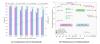
DeepSeek团队发布新型视觉压缩模型DeepSeek-OCR
智通财经网· 2025-10-20 11:37
Core Insights - DeepSeek-AI team has launched a new research achievement called DeepSeek-OCR, which innovatively compresses long text context into visual tokens, significantly reducing the number of tokens needed for processing [1] - The system consists of two main components: DeepEncoder, designed for high-resolution input with low computational activation, and DeepSeek3B-MoE-A570M as the decoder [1] - Experimental results show that when the number of text tokens does not exceed ten times the number of visual tokens (compression ratio below 10x), the model achieves an OCR accuracy of 97%, and even at a 20x compression ratio, the accuracy remains around 60% [1] Performance Metrics - In the OmniDocBench test, DeepSeek-OCR surpassed the performance of GOT-OCR2.0, using only 100 visual tokens compared to 256 tokens per page for GOT-OCR2.0 [2] - DeepSeek-OCR also outperformed MinerU2.0, which uses an average of over 6000 tokens per page, by utilizing less than 800 visual tokens [2] - The system can generate over 200,000 pages of training data for large language models/visual language models daily on a single A100-40G GPU [2]