Deskpro 386电脑

Search documents
英特尔80386,40周岁了
半导体行业观察· 2025-10-20 01:47
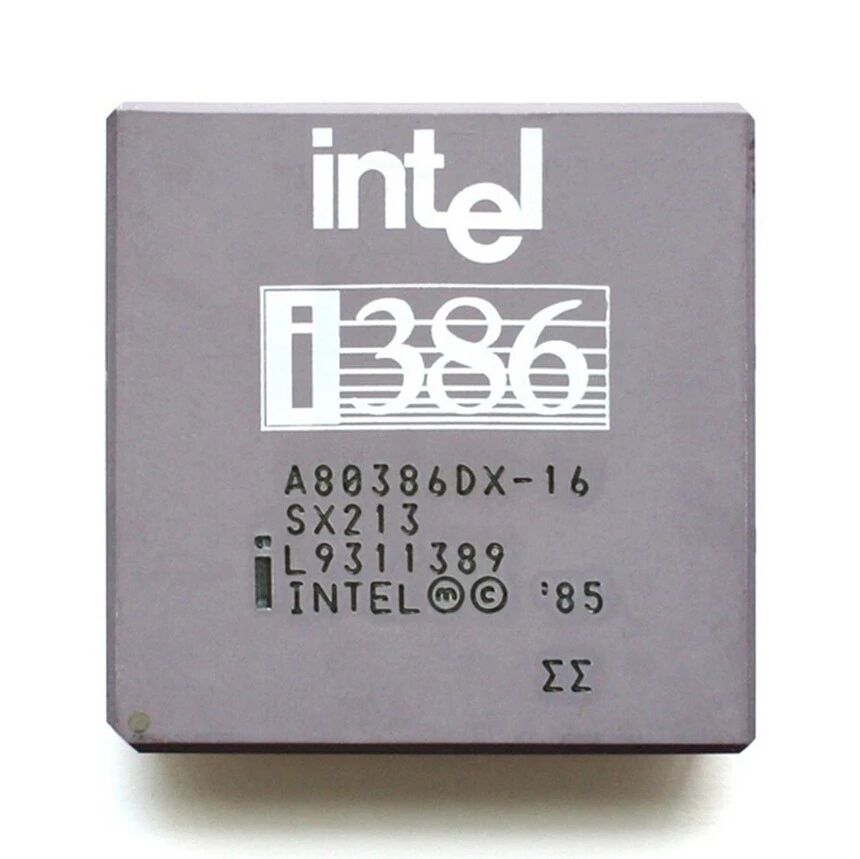
Core Insights - The Intel 80386 processor, launched in October 1985, marked a significant turning point in personal computing as the first 32-bit chip in Intel's PC product line and the origin of the IA-32 instruction set [2][6] - The 80386 featured 275,000 transistors and operated at a frequency of up to 16 MHz, supporting a flat memory model and up to 4GB of address space, which laid the groundwork for true multitasking and virtual memory [2][5] - Compaq was the first company to release a computer with the Intel 80386, the Deskpro 386, in September 1986, which became a pivotal moment in the PC industry [3][11] Group 1: Technical Features and Innovations - The 80386 introduced several key architectural features, including protected mode, virtual 8086 mode, and hardware paging, enabling advanced multitasking capabilities [2][5] - The architecture allowed for the development of true Unix-like systems without complex workarounds, as demonstrated by the early Linux kernel targeting the 386 hardware [5][15] - The 80386's instruction set, IA-32, remained a cornerstone for Windows and most Linux distributions well into the 2010s [5][15] Group 2: Market Impact and Competition - The introduction of the 80386 came at a time when Intel faced significant pressure from competitors, as IBM had previously established a multi-vendor approach for its PCs [6][8] - The 80386's success was crucial for Intel, especially after experiencing losses in 1986 due to manufacturing issues, making its market performance vital for the company's future [11][15] - By the end of the 386 era, competitors like AMD and Chips & Technologies had increased clock speeds, sometimes surpassing Intel's offerings, highlighting the competitive landscape [13][15] Group 3: Legacy and Evolution - The 80386's architecture laid the foundation for the x86 architecture, which continues to influence modern computing, including smartphones and AI data centers [15] - The processor's design and features have persisted in various forms, with the IA-32 architecture being a significant part of Intel's legacy [5][15] - The 80386's introduction of a protected multitasking software platform was unprecedented and has had lasting implications for software development and operating systems [5][10]