Diesel fuel

Search documents
'We have to cut back': Local chicken farmers feel Iran war's impact on diesel prices
MSNBC· 2026-04-05 19:51
“Adding these extra expenses in diesel, it really means we have to cut back in other areas.” As the Iran war continues, the price of diesel fuel has surged nationwide, impacting farmers who depend on it to maintain and use their tractors. MS NOW’s Alex Tabet spoke with chicken farmers Jake Engelen and Geoff Mandell, who are also Afghanistan War veterans, about how the Iran war has driven up costs for them. MS NOW: My Source for News, Opinion, and the World. » Subscribe to MS NOW: https://www.youtube.com/@ms ...


Why an Oil Export Ban Could Backfire on Fuel Prices
Yahoo Finance· 2026-03-24 19:59
Core Insights - The U.S. is self-sufficient in crude oil production, but the current energy crisis, exacerbated by the Iran War, has led to discussions about reinstating an oil export ban to lower prices [2][3] - Experts suggest that an export ban is unlikely to effectively reduce gasoline prices, despite the rationale behind it [5][8] Economic Impact - Gasoline prices have surged by over a dollar per gallon on average, with diesel prices increasing even more, contributing to inflation and potential economic slowdown [3][5] - The historical context of the 1975 export ban, implemented after the 1973 oil embargo, highlights the long-term economic implications of such policies [5][6] Industry Dynamics - An export ban would restrict oil companies from selling overseas, theoretically increasing domestic supply and lowering prices; however, this may not translate to lower consumer prices due to market dynamics [4][7] - U.S. refineries are primarily designed for heavy, sour crude oil, while domestic crude is lighter and sweeter, making it more suitable for international markets [7][8] - Experts argue that lower domestic crude prices would not lead to proportional reductions in gasoline or diesel prices, potentially introducing inefficiencies that could raise costs [8]
Americans are about to get a crash course in the global economy: Higher prices are coming for pineapples, plastic, chocolate and berries
Yahoo Finance· 2026-03-21 12:30
Fertilizer Industry - The price of Middle East urea, a key nitrogen fertilizer, has increased over 50% since the beginning of the year, significantly impacting agricultural costs [1] - Major fertilizer producers, including Iran, Qatar, and Saudi Arabia, are currently blocked from exporting due to the ongoing conflict in the Strait of Hormuz, affecting global fertilizer supply [5] - The cost of nitrogen fertilizer has risen by $50 per acre for farmers, coinciding with the start of the planting season, which limits their ability to adjust to sudden price increases [4][6] Oil and Energy Costs - Brent crude oil prices have surpassed $110 per barrel, contributing to rising costs across various sectors, including agriculture and food production [2] - Diesel fuel prices have increased by 50 cents per gallon, further straining agricultural operations and increasing overall production costs [4][18] Food Prices and Consumer Impact - Grocery prices have already begun to rise, with food costs increasing by 2.6% year over year as of February [8] - Experts predict that consumers may see price increases of 15% for items like coffee, tea, and chocolate by fall due to higher packaging and transportation costs [10] - Produce prices, particularly for off-season items, could rise between 5% and 20% depending on origin, driven by increased input costs [11][12] Meat and Seafood Prices - The cost of meat and poultry is expected to rise, with beef prices potentially increasing by 50 cents to $1 per pound due to higher feed, fertilizer, and fuel costs [13] - Seafood prices sourced from Asia could increase by 20% by fall, exacerbated by longer shipping routes and higher transportation costs [15] - Local seafood businesses have raised prices by 25% to 30% due to increased diesel costs for fishing and distribution [16][18]
Stock market today: Dow, S&P 500, Nasdaq fall after PPI inflation comes in hot ahead of Fed decision
Yahoo Finance· 2026-03-18 13:31
Market Overview - US stocks declined as inflation data indicated rising prices, with the Dow Jones Industrial Average falling 0.5%, the S&P 500 down 0.3%, and the Nasdaq Composite decreasing by 0.4% [1][6] - The Producer Price Index (PPI) rose 0.7% month-over-month in February, exceeding economists' expectations of 0.3%, and showed a year-over-year increase of 3.4%, surpassing the anticipated 3% [2][10][11] Inflation and Federal Reserve - The PPI data raised concerns about inflation ahead of the Federal Reserve's policy decision, with expectations that rates will remain unchanged in the 3.5% to 3.75% range [3][6] - The central bank's Summary of Economic Projections will provide insights into policymakers' expectations regarding inflation and the labor market [3] Oil Market Dynamics - Brent crude futures rose to $108 per barrel, while West Texas Intermediate crude traded near $98, influenced by geopolitical tensions in the Middle East [5][7] - The conflict in the region has led to concerns about oil supply, with the market focused on the potential reopening of the Strait of Hormuz, which is currently deemed unlikely without a ceasefire [4][27] Corporate Earnings - Macy's reported better-than-expected fourth-quarter earnings with adjusted EPS of $1.84, surpassing the $1.54 estimate, and revenue of $7.6 billion, slightly above the $7.5 billion forecast [21][24] - Micron Technology is set to report quarterly results, and its stock rose 2% ahead of the announcement [5][20] Other Corporate Developments - New Fortress Energy's shares increased by 10% following a significant debt restructuring plan that reduces its debt from $5.7 billion to $527.5 million [30] - Lumentum and Coherent Corp saw premarket stock increases of 7% and 6%, respectively, due to positive market sentiment regarding optical networking [19]

Stock market today: Dow, S&P 500, Nasdaq futures fall after PPI inflation comes in hot ahead of Fed decision
Yahoo Finance· 2026-03-17 22:54
Market Overview - US stock futures declined as inflation readings indicated accelerating prices, with Dow Jones Industrial Average futures down 0.4% and S&P 500 and Nasdaq 100 futures falling 0.3% [1] - Wholesale inflation rose 0.7% month-over-month in February, exceeding economists' expectations of 0.3%, and a year-over-year increase of 3.4% also surpassed estimates [2][7][8] Oil Market - Brent crude futures increased to nearly $105 per barrel amid ongoing Middle East conflicts, while West Texas Intermediate crude futures traded near $95 [4] - The rise in oil prices is influenced by geopolitical tensions, including attacks on Iranian energy facilities and the killing of a key Iranian official [11][12][13] Federal Reserve and Economic Projections - Wall Street anticipates the Federal Reserve's policy decision, with expectations of maintaining interest rates in the 3.5% to 3.75% range [5] - The Fed's Summary of Economic Projections will provide insights into expectations for inflation, the labor market, and the overall US economy [5] Corporate Earnings - Micron Technology is set to report quarterly results, while General Mills and Macy's are also reporting [6] - Macy's reported better-than-expected fourth-quarter earnings with adjusted EPS of $1.84, surpassing the $1.54 estimate, and revenue of $7.6 billion, slightly above the $7.5 billion forecast [20][21] - Macy's same-store sales increased by 1.8%, outperforming the expected decline, with luxury business Bloomingdale's seeing nearly 10% growth [22][23] Debt Restructuring - New Fortress Energy shares rose 10% following a significant debt restructuring plan that reduces debt from $5.7 billion to $527.5 million [29]
War Could Push Up More Than Just Gas Prices
Investopedia· 2026-03-12 00:00
Core Insights - The ongoing conflict in Iran is expected to lead to significant price increases across various sectors, not just in fuel, as the war disrupts oil supply and transportation costs [1] Economic Impact - Economists predict that the longer the war continues, the more severe the price hikes will be, with a 60-cent-per-gallon increase in gasoline prices already observed since the conflict began [1] - The war has restricted sea traffic through the Strait of Hormuz, affecting about 20% of the world's oil supply, which has resulted in higher gas and diesel prices, with diesel reaching $4.81 per gallon, up $1.07 since March 1 [1] - Air travel costs are also expected to rise, as fuel accounted for approximately 25% of airline expenses in 2019, with jet fuel prices up 64% compared to the previous month [1] - Higher energy prices are likely to squeeze household budgets, leading to reduced consumer spending, particularly affecting middle- and lower-income households still recovering from previous inflation [1] - If oil prices remain elevated, with forecasts suggesting a need for prices to reach $130 per barrel to trigger a recession, the overall inflation trend could be negatively impacted [1] Future Outlook - The potential for moderating goods inflation through 2026 exists if energy price increases are contained and the conflict does not significantly disrupt global supply [1] - A prolonged or escalating conflict could pose renewed risks to overall inflation, affecting various sectors and consumer behavior [1]

CPI Report Live: What Today's Inflation Report Means For the Fed
Investopedia· 2026-03-11 16:00
Core Insights - The February CPI report indicates a stable inflation rate of 2.4% year-over-year, consistent with January's figures and aligning with economists' expectations [13] - Core prices, excluding food and energy, also remained unchanged at a 2.5% increase, suggesting persistent inflationary pressures [13] Economic Commentary - Economists suggest that the current inflation data may serve as a baseline before new price pressures emerge due to geopolitical events, particularly the Iran War and global tariff threats [3][4] - The shift from a frictionless supply-side economy to one facing multiple supply shocks (pandemic, geopolitical tensions, tariffs) is noted as a significant change in the inflation regime [4] - Rising energy demand, driven by technological advancements, is outpacing supply, contributing to unanchored inflationary expectations among consumers [5] Sector-Specific Insights - Key inflation drivers in February included significant increases in moving costs, sporting event tickets, and jewelry, while categories like electronics and meats saw declines [9][10] - Gasoline prices are projected to rise to approximately $3.75 per gallon nationally, with a slow return to pre-conflict levels anticipated [7][12] - The average price of regular gasoline has increased to $3.58 per gallon, up from $2.94 a month prior, indicating a notable inflationary trend in energy costs [12]
Trump Soothes Market's Iran Fears. Why the Threat's Not Over for Stocks, Oil.
Barrons· 2026-03-10 11:06
Group 1 - Diesel fuel prices are indicating potential economic concerns, which may impact various sectors including transportation and logistics [1] - Airlines are facing increased costs due to higher jet fuel prices, which could affect their profitability and operational strategies [1] - Long security lines at airports may lead to decreased customer satisfaction and could impact airline revenues as travelers seek alternative transportation options [1] Group 2 - Oracle's cloud services are driving significant growth for the company, indicating a strong demand for cloud-based solutions in the market [1]
Oil surges above $100 as Gulf states cut back production
Youtube· 2026-03-09 12:49
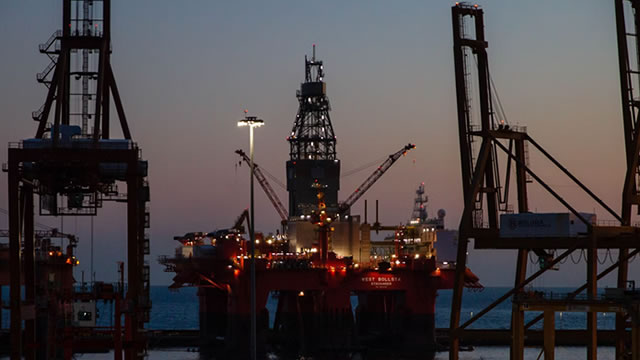
Core Viewpoint - The recent geopolitical developments and attacks on oil infrastructure have led to a significant spike in oil prices, driven by a forced covering of short positions in oil options. Group 1: Oil Price Movements - A large short options position in oil was present, with many investors incorrectly assuming a more stable geopolitical environment in the Gulf region [1] - Recent attacks on oil fields and the appointment of a hardline leader in Iran contributed to a rapid increase in oil prices, marking one of the largest percentage spikes in oil prices in a single night [2] - Current oil prices are over $100 per barrel, which is expected to drive gasoline prices up to $4.50 or even $5 in some areas, with diesel fuel prices posing a significant concern for the economy [3] Group 2: Company Performance - Major oil companies such as Exxon, Chevron, Schlumberger, and Halliburton are experiencing rising stock prices, with many now at or above their average analyst price targets [3][4] - The International Energy Agency and G7 are considering releasing global oil stockpiles, but the effectiveness of such measures may be limited if the oil is not positioned where it is needed [5]

Star Group Q1 Earnings Call Highlights
Yahoo Finance· 2026-02-07 05:08
Core Insights - The company reported a significant increase in home heating oil and propane volume, rising by 11.5 million gallons, or 14%, to approximately 94 million gallons, driven by acquisitions and colder temperatures, although offset by net customer attrition and other factors [1] - Adjusted EBITDA increased by $16.5 million, or 32%, to $68 million, primarily due to colder-than-normal weather, recent acquisitions, and effective per-gallon margin management [2][5] - The company experienced a modest net customer attrition during the period, despite operational challenges posed by persistent cold temperatures [2][3] Financial Performance - Product gross profit rose by roughly $29 million, or 19%, to approximately $179 million, attributed to higher volume and improved per-gallon margins [5][6] - Combined service and installation gross profit declined to $5.6 million from $6.9 million in the previous year, with installation gross profit increasing by $1.4 million but service gross profit worsening due to high service demand and additional costs [6] - Net income increased by $3 million to $36 million, reflecting the rise in adjusted EBITDA, partially offset by unfavorable changes in the fair value of derivative instruments [9][10] Expenses and Costs - Delivery, branch, and general & administrative expenses increased by $11 million compared to the prior year, with $5 million attributed to weather hedge contracts due to colder temperatures [7][8] - Delivery expenses rose by $3.8 million, or 13%, largely due to the 14% increase in heating oil and propane volume sold [8] Acquisitions and Future Outlook - The company did not close any acquisitions during the quarter but completed the purchase of a small heating oil business shortly thereafter, with expectations for additional prospects as the company approaches spring [13] - The company remains focused on customer service, cost control, and growing service and installation profitability, with plans to report fiscal 2026 second-quarter results in May [14] Company Overview - Star Group, L.P. provides home heating oil and propane products and services to residential and commercial customers in the U.S., serving approximately 402,200 full-service customers and 52,400 delivery-only customers as of September 30, 2023 [15]