Dropout

Search documents
刚刚,Geoffrey Hinton成为第二位引用量破百万的科学家
机器之心· 2026-01-16 01:55
Core Viewpoint - Geoffrey Hinton has officially become the second computer scientist in history to surpass 1 million citations on Google Scholar, marking a significant milestone in his academic career and contributions to artificial intelligence [1][3]. Group 1: Academic Achievements - Hinton's citation count currently stands at 1,000,083, with an h-index of 192, indicating his substantial impact in the field of computer science and artificial intelligence [2]. - He is renowned for his work on backpropagation, which addressed the training challenges of multilayer neural networks, laying the groundwork for the deep learning revolution [10]. - Hinton, along with Yoshua Bengio and Yann LeCun, received the Turing Award in 2018, recognizing their pivotal contributions to the field of deep learning [13]. Group 2: Key Contributions - Hinton's notable innovations include the Boltzmann Machine, Restricted Boltzmann Machine, Deep Belief Network, Dropout technique, t-SNE for data visualization, Capsule Networks, and Knowledge Distillation, among others [14]. - His collaboration on AlexNet, which won the ImageNet competition in 2012, is considered a landmark moment that demonstrated the power of deep learning [16]. - The paper "Deep Learning," co-authored by Hinton, has garnered over 100,000 citations, summarizing the evolution and principles of deep learning [16]. Group 3: Personal Background and Career - Born into an academic family, Hinton's early life was marked by high expectations, which shaped his relentless pursuit of knowledge [5][8]. - He moved to Canada in the 1980s, where he established a long-term academic career at the University of Toronto, contributing significantly to the development of AI in Canada [9]. - Hinton's later years have seen him express concerns about the potential risks of AI, emphasizing the need for caution in its development [20]. Group 4: Legacy and Impact - Hinton's citation milestone reflects not only his individual achievements but also the collaborative efforts of his students, Alex Krizhevsky and Ilya Sutskever, who have also made significant contributions to AI [29]. - The historical context of Hinton's work illustrates the broader narrative of humanity's quest to understand intelligence, highlighting the transformative impact of his research on modern AI [31].

AI教父Geoffrey Hinton,全球第二个百万引用科学家
3 6 Ke· 2026-01-16 01:28
Core Insights - Geoffrey Hinton, a prominent figure in AI, has surpassed 1 million citations for his research papers, marking a significant milestone in academic recognition [1][3][12] - Hinton is the second individual globally to achieve this milestone, following Yoshua Bengio, who reached 1.036 million citations [7][10] - This achievement reflects the growing influence and recognition of deep learning theories and methodologies in the academic community [12] Academic Achievements - Hinton's most cited paper, "Imagenet classification with deep convolutional neural networks," has received 188,837 citations, highlighting its impact on the field [18][34] - Other notable works include "Deep Learning," co-authored with Bengio and Yann LeCun, which has garnered 107,646 citations, serving as a foundational text in deep learning [20][38] - Hinton's contributions span various influential papers, including "t-SNE" with 63,932 citations and "Dropout" with 60,895 citations, showcasing his extensive influence across multiple areas of machine learning [21][47] Historical Context - Hinton's work is rooted in decades of academic research, with significant contributions that have shaped the evolution of deep learning [18][25] - His early work during the AI winter and subsequent breakthroughs, such as the introduction of deep belief networks, played a crucial role in reviving interest in neural networks [27][28] - The recognition of Hinton, alongside Bengio and LeCun, with the Turing Award in 2018, underscores their collective impact on modern AI algorithms [28] Industry Implications - Hinton's research has laid the groundwork for contemporary AI applications, including large models like ChatGPT and Gemini, which rely on deep learning principles [24] - The advancements in deep learning, driven by Hinton's theories, have transformed various industries, particularly in computer vision and natural language processing [35][36] - The ongoing exploration of AI, as emphasized by Hinton, suggests that future research will continue to uncover the complexities of large models and their operations [24][49]
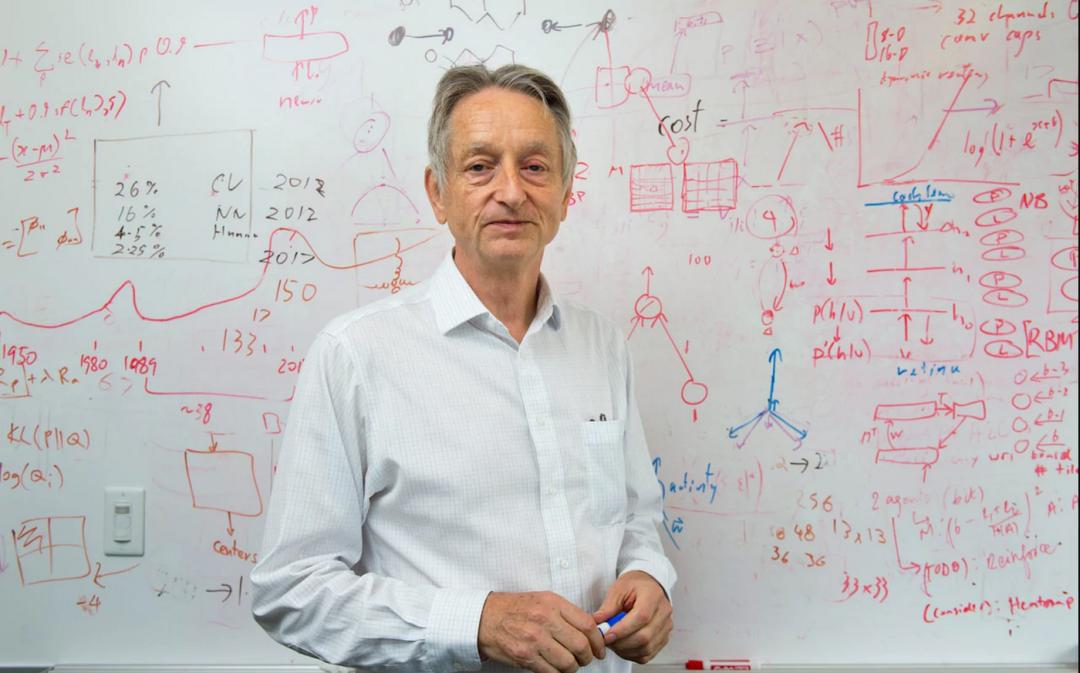
被拒≠失败!这些高影响力论文都被顶会拒收过
机器之心· 2025-12-11 02:47
Core Insights - Waymo has released a deep blog detailing its AI strategy centered around its foundational model, emphasizing the use of distillation methods to create efficient models for onboard operations [1] - Jeff Dean highlighted the significance of knowledge distillation in AI, reflecting on its initial rejection by NeurIPS 2014, which underestimated its potential impact [3][4] Group 1: Historical Context of Rejected Papers - Many foundational technologies in AI, such as optimizers for large models and computer vision techniques, were initially rejected by top conferences, showcasing a systemic lag in recognizing groundbreaking innovations [6] - Notable figures in AI, including Geoffrey Hinton and Yann LeCun, faced rejection for their pioneering work, often due to reasons that seem absurd in hindsight, such as claims of lacking theoretical basis or being overly simplistic [6] Group 2: Specific Case Studies of Rejected Innovations - LSTM, a milestone in handling sequential data, was rejected by NIPS in 1996 during a period when statistical methods were favored, only to later dominate fields like speech recognition [8] - The SIFT algorithm, which ruled the computer vision domain for 15 years, faced rejection from ICCV and CVPR due to its perceived complexity and lack of elegance, ultimately proving the value of robust engineering design [11] - Dropout, a key regularization method for deep neural networks, was rejected by NIPS in 2012 for being too radical, yet it became crucial for the success of models like AlexNet [17] - Word2Vec, despite its revolutionary impact on NLP, received a strong rejection at ICLR 2013 due to perceived lack of scientific rigor, but it quickly became a cornerstone of text representation [19][20] Group 3: Reflection on Peer Review Limitations - The peer review system often struggles to recognize disruptive innovations, leading to a "simplicity trap" where reviewers equate mathematical complexity with research contribution [40] - Reviewers tend to maintain existing paradigms, which can hinder the acceptance of novel ideas that challenge traditional metrics of success [40] - The demand for rigorous theoretical proof in an experimental field like deep learning can stifle practical breakthroughs, as seen with the initial skepticism towards methods like Adam optimizer [40] Group 4: Broader Implications - The experiences of rejected papers illustrate the nonlinear nature of scientific progress, highlighting that peer review, while essential, is limited by human cognitive biases [41] - Historical anecdotes, such as Einstein's rejection of a paper on gravitational waves, emphasize that the true measure of a research's impact is its long-term relevance rather than immediate acceptance [42][44]