Efficient Fabric

Search documents
颠覆冯·诺依曼架构,这款AI处理器能效提升100倍!
半导体行业观察· 2025-12-20 02:22
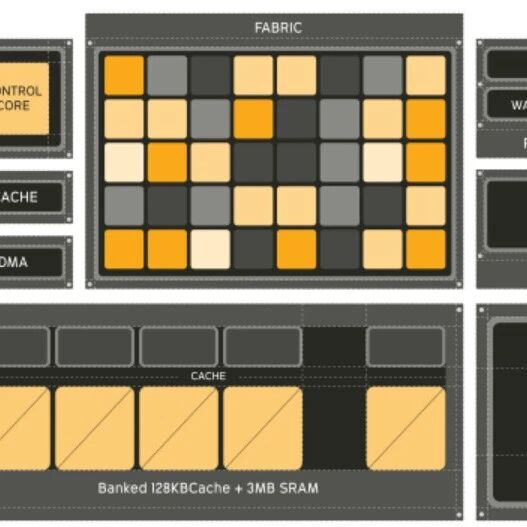
Core Viewpoint - Efficient Computer has developed a general-purpose processor, Electron E1, which claims to be a true alternative to traditional von Neumann architecture, offering significantly higher energy efficiency compared to conventional low-power processors [1][2]. Group 1: Product Features - The Electron E1 processor features a 128kB ultra-low-power cache, 3MB SRAM, and 4MB MRAM for non-volatile storage, achieving 21.6 GOPS at 200MHz in high-power mode and 5.4 GOPS at 50MHz in low-power mode [2]. - The processor utilizes Efficient Fabric, a proprietary spatial data flow architecture, which minimizes the energy consumption typically associated with data movement between memory and processing cores in traditional systems [1][4]. Group 2: Architectural Innovation - The Fabric architecture fundamentally rethinks how computations are executed, reducing the need for data transfer between memory and processing units, a common inefficiency in traditional von Neumann architectures [2][4]. - Each computing unit in the grid is activated only when its input is available, contrasting with the continuous instruction cycles and indirect data transfers typical of traditional CPU pipelines [4]. Group 3: Market Applications - The Electron E1 is particularly suited for applications requiring long battery life and efficient performance in power-constrained environments, such as drones and industrial sensors, indicating the company's aim to integrate AI into the physical world [5]. - Efficient is collaborating with BrightAI for the initial deployment of Electron E1, enabling real-time AI computations at the edge and reducing reliance on high-energy cloud computing for tasks like signal processing and AI inference [5]. Group 4: Development and Future Outlook - Efficient recently released an evaluation kit (EVK) for early developers and cloud users, providing a ready-to-use platform for creating, testing, and optimizing software for the processor [6]. - The founding team of Efficient has a decade-long research collaboration with Carnegie Mellon University, positioning the company to lead the transition to a post-von Neumann era of general-purpose computing that is faster and more energy-efficient than current market offerings [6].