冯·诺依曼架构

Search documents
冯诺依曼架构的新替代方案
半导体行业观察· 2025-12-24 02:16
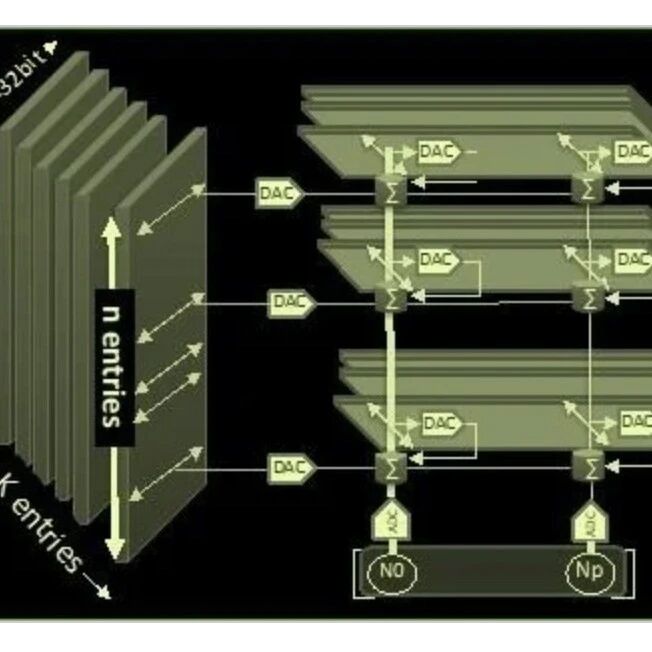
Core Viewpoint - The semiconductor industry is struggling to meet the immense demand for computing power driven by artificial intelligence (AI), particularly in data centers that consume significant electricity. The traditional computing architectures, such as the von Neumann architecture, are inadequate for the parallel processing needs of AI systems, necessitating a new approach to chip design [1][4][19]. Group 1: Challenges in Current Architectures - The traditional von Neumann architecture is inefficient for neural networks due to its sequential instruction processing, which does not align with the matrix-based structure of AI models [2][4]. - Large language models (LLMs) require extensive computations, with inference potentially needing between 100 billion to 10 trillion operations, highlighting the limitations of memory access times in von Neumann architectures [4][5]. - The inherent memory access issues in traditional CPUs and GPUs hinder their performance and power efficiency, as they cannot place sufficient memory close enough to the arithmetic logic units (ALUs) [5][6]. Group 2: Innovative Solutions - The exploration of alternative architectures, such as pulse arrays, aims to better align computing structures with neural network topologies, but previous attempts have faced challenges in practical implementation [6][8]. - Ambient Scientific's DigAn technology enables the creation of configurable matrix computers, which optimize the processing of AI workloads by integrating memory and computation more effectively [9][11]. - The new architecture features a novel computing unit called the analog MAC, which addresses the memory and computation separation issue inherent in von Neumann designs, allowing for significant improvements in efficiency [11][13]. Group 3: Performance and Power Efficiency - The DigAn architecture dramatically reduces the number of cycles needed for neural network operations, achieving a performance increase of over 100 times compared to typical microcontroller units (MCUs) while consuming less than 1% of the power of conventional GPUs [13][19]. - The GPX series chips, utilizing this innovative architecture, are designed for high performance and low power consumption, making them suitable for embedded systems and edge AI applications [14][16]. - The GPX10 Pro model features clusters of MX8 cores, providing a complete system-on-chip (SoC) solution that supports mainstream machine learning frameworks, facilitating easier model training and deployment [18][19].

颠覆冯·诺依曼架构,这款AI处理器能效提升100倍!
半导体行业观察· 2025-12-20 02:22
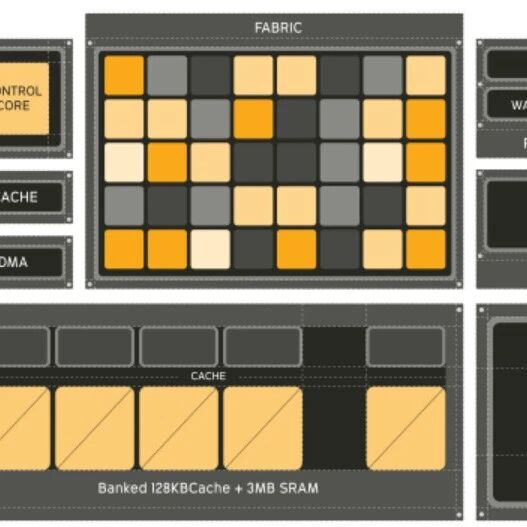
Core Viewpoint - Efficient Computer has developed a general-purpose processor, Electron E1, which claims to be a true alternative to traditional von Neumann architecture, offering significantly higher energy efficiency compared to conventional low-power processors [1][2]. Group 1: Product Features - The Electron E1 processor features a 128kB ultra-low-power cache, 3MB SRAM, and 4MB MRAM for non-volatile storage, achieving 21.6 GOPS at 200MHz in high-power mode and 5.4 GOPS at 50MHz in low-power mode [2]. - The processor utilizes Efficient Fabric, a proprietary spatial data flow architecture, which minimizes the energy consumption typically associated with data movement between memory and processing cores in traditional systems [1][4]. Group 2: Architectural Innovation - The Fabric architecture fundamentally rethinks how computations are executed, reducing the need for data transfer between memory and processing units, a common inefficiency in traditional von Neumann architectures [2][4]. - Each computing unit in the grid is activated only when its input is available, contrasting with the continuous instruction cycles and indirect data transfers typical of traditional CPU pipelines [4]. Group 3: Market Applications - The Electron E1 is particularly suited for applications requiring long battery life and efficient performance in power-constrained environments, such as drones and industrial sensors, indicating the company's aim to integrate AI into the physical world [5]. - Efficient is collaborating with BrightAI for the initial deployment of Electron E1, enabling real-time AI computations at the edge and reducing reliance on high-energy cloud computing for tasks like signal processing and AI inference [5]. Group 4: Development and Future Outlook - Efficient recently released an evaluation kit (EVK) for early developers and cloud users, providing a ready-to-use platform for creating, testing, and optimizing software for the processor [6]. - The founding team of Efficient has a decade-long research collaboration with Carnegie Mellon University, positioning the company to lead the transition to a post-von Neumann era of general-purpose computing that is faster and more energy-efficient than current market offerings [6].