
FLNG(浮式液化天然气装置)

Search documents
惠生清能董事长刘洪钧:融合破局 驶向海洋高端装备深蓝区
Zhong Guo Zheng Quan Bao· 2025-11-10 01:53
Group 1 - The core viewpoint emphasizes that the ocean economy is becoming a new engine for economic growth and a new domain for technological competition, with a focus on the integration of high-end equipment manufacturing [1] - The ocean economy is projected to reach a production value of 10 trillion yuan in 2024, with a year-on-year growth of 5.9%, and the marine manufacturing industry contributing 3 trillion yuan, indicating significant market potential [2] - The current ocean economy is transitioning from quantitative accumulation to qualitative leaps, characterized by a shift towards deep-sea development compared to traditional near-sea exploration [2] Group 2 - The industry faces challenges such as core technology monopolies, a fragmented industrial structure, and pressures from extreme environments and ecological protection in deep-sea development [2] - The company advocates for a shift from traditional "single-point technology breakthroughs" to a focus on "integration, intelligence, modularization, and low-carbon" as core principles for reshaping industrial development [2][3] - The company has achieved significant results with the "four modernizations" in its core products, including a major breakthrough in the FLNG sector, capturing approximately 30% of the global new FLNG platform market [3] Group 3 - The company has established long-term stable partnerships with international energy firms, evolving from a project participant to a co-builder of the international energy ecosystem, enhancing its market, brand, and technological capabilities [3] - The future outlook suggests that Chinese companies should not be satisfied with mere manufacturing but should extend towards the two ends of the "smile curve" by enhancing front-end design and basic research, as well as improving back-end brand value and service levels [3]
惠生清能董事长刘洪钧: 融合破局 驶向海洋高端装备深蓝区
Zhong Guo Zheng Quan Bao· 2025-11-09 22:51
Core Insights - The ocean economy is emerging as a new engine for economic growth and a competitive frontier for technology, with a focus on the integration of high-end equipment manufacturing [1][2] - The ocean economy's production value in China is projected to reach 10 trillion yuan in 2024, with a year-on-year growth of 5.9%, and the marine manufacturing sector contributing 3 trillion yuan [2] - The industry is transitioning from quantity accumulation to quality leap, characterized by a shift towards deep-sea development [2] Industry Development - Continuous policy support is driving the industry's growth, with the 20th National Congress of the Communist Party of China emphasizing the construction of a strong marine nation [2] - During the 14th Five-Year Plan period, China's marine engineering equipment sector leads the world in manufacturing value added, export volume, and new orders [2] Challenges and Strategies - The industry faces challenges such as core technology monopolies, a fragmented industrial structure, and pressures from extreme environments and ecological protection [2] - To overcome these challenges, the industry must adopt an integrated approach focusing on "integration, intelligence, modularization, and low carbon" [2][3] Company Achievements - The company has made significant progress in its core products, particularly in the FLNG sector, where it has delivered China's first fully autonomous FLNG, capturing approximately 30% of the global new FLNG platform market [3] - In the FPSO sector, while the company has addressed basic operational issues, it still needs to enhance brand recognition and competitiveness in the supply chain [3] Future Outlook - The company aims to extend its capabilities along the "smile curve" by enhancing front-end design and basic research, as well as improving back-end brand value and service levels [3] - Emphasizing innovation-driven growth is essential for elevating the overall value chain of the marine high-end equipment manufacturing sector, positioning it as a national asset for building a strong marine nation [3]
融合破局 驶向海洋高端装备深蓝区
Zhong Guo Zheng Quan Bao· 2025-11-09 20:14
Core Insights - The ocean economy is emerging as a new engine for economic growth and a competitive frontier for technology, with a focus on the integration of high-end equipment manufacturing [1] - The ocean economy is projected to reach a production value of 10 trillion yuan in 2024, with a year-on-year growth of 5.9%, indicating significant market potential for high-end equipment manufacturing [1] - The industry is experiencing a transition from quantitative accumulation to qualitative leaps, characterized by a shift towards deep-sea development [1] Industry Development - Continuous policy support is driving the industry's growth, with the Chinese government emphasizing the construction of a strong marine nation and the importance of marine engineering equipment [1] - The marine engineering equipment sector leads the world in manufacturing value added, export volume, and new orders during the 14th Five-Year Plan period [1] Challenges and Solutions - The industry faces challenges such as core technology monopolies, a fragmented industrial structure, and pressures from extreme environments and ecological protection in deep-sea development [2] - The company advocates for a shift from traditional "single-point technology breakthroughs" to a focus on integration, intelligence, modularity, and low carbonization, termed the "four integrations" [2] Product Achievements - The company has made significant progress in the FLNG (Floating Liquefied Natural Gas) sector, delivering China's first fully autonomous FLNG, capturing approximately 30% of the global new FLNG platform market [2] - In the FPSO (Floating Production Storage and Offloading) sector, the company acknowledges the need to enhance brand recognition and competitiveness in the supply chain, particularly in overseas markets [2] Strategic Partnerships - The company has established long-term partnerships with international energy firms such as ENI, Petronas, and Turkish Petroleum, evolving from a project participant to a co-builder of the international energy ecosystem [2] Future Outlook - The company emphasizes the need for Chinese enterprises to extend their capabilities towards the ends of the "smile curve," enhancing design and basic research at the front end while improving brand value and service levels at the back end [3] - Innovation-driven strategies are essential for elevating the overall value chain of the marine high-end equipment manufacturing sector, positioning it as a vital tool for building a strong marine nation [3]
中国制造业抢占高端海洋装备制高点
Zhong Guo Jing Ying Bao· 2025-07-18 18:55
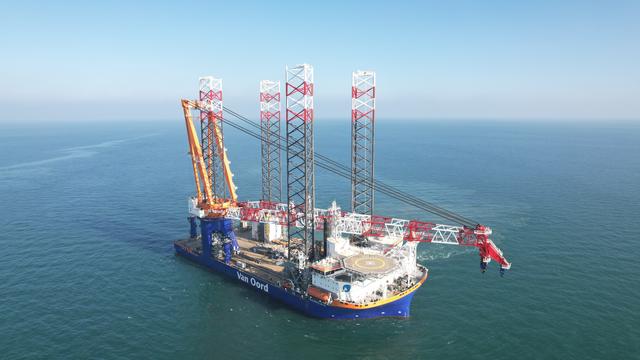
Group 1: Marine Economy Development - The central government emphasizes the development of the marine economy, leading to accelerated investments in high-end marine equipment by Chinese manufacturing companies [2] - In 2024, China's marine economy is projected to reach 10.5 trillion yuan, accounting for 7.8% of GDP, with marine manufacturing contributing 3.2 trillion yuan [2] - Experts indicate that technological breakthroughs in high-end marine equipment support high-quality development of the marine economy and the construction of a marine power [2] Group 2: Offshore Wind Power Potential - The "Qihang" floating offshore wind turbine, developed by CRRC, has a capacity of 20 megawatts, with a rotor diameter of 260 meters, and is designed for a lifespan of 25 years [3] - Each rotation of the turbine can meet the electricity needs of a household for 2-4 days, saving approximately 25,000 tons of coal and reducing CO2 emissions by about 62,000 tons annually [3] - China's offshore wind power installed capacity has grown from less than 5 million kilowatts in 2018 to 41.27 million kilowatts in 2024, maintaining the world's leading position for four consecutive years [3][4] Group 3: Marine Engineering Equipment Industry - The marine engineering equipment manufacturing industry in China is expected to achieve an added value of 1,032 billion yuan in 2024, with a growth rate of 9.1% [6] - CIMC, a leading high-end marine engineering equipment manufacturer, focuses on FPSO and FLNG equipment, which are considered high-end due to their technical complexity [6][7] - The global market for marine engineering equipment is projected to see significant growth, with China maintaining the largest share of orders, accounting for 42.6% of the global total in 2024 [9] Group 4: Global Market Expansion - CIMC delivered the world's largest offshore wind installation vessel to Van Oord in January, showcasing China's manufacturing capabilities in the global market [8] - In 2024, China is expected to secure 106 marine engineering equipment orders, totaling approximately 11.6 billion USD, leading the global market [9] - CRRC has been expanding its overseas market presence in wind power manufacturing, collaborating with top global wind power developers [10]



Golar LNG (GLNG) - 2025 Q1 - Earnings Call Transcript
2025-05-27 13:02
Financial Data and Key Metrics Changes - The company reported total operating revenues of $63 million for Q1 2025, with FLNG tariffs reaching $73 million during the quarter [36] - Total EBITDA for Q1 was $41 million, driven largely by lower Brent and TTF prices, with a twelve-month EBITDA of $218 million [37] - The net income for the quarter was $13 million, consistent with the previous quarter, including $32 million of non-cash items [38] - The company declared a dividend of $0.25 per share, equating to approximately $105 million annually [38] Business Line Data and Key Metrics Changes - The Hilli FLNG maintained a 100% operational uptime and has delivered 132 cargoes since 2018, producing over 9.2 million tonnes of LNG [5][6] - The Gimi FLNG is in the final stage of commissioning, with a contractual EBITDA of $151 million based on 90% capacity utilization [7] - The Mark II FLNG conversion is progressing well, with a projected delivery by the end of 2027 [9] Market Data and Key Metrics Changes - The company has a market cap of approximately $4 billion and total net debt of under $100 million, with a net debt to EBITDA ratio of around 2.8x [5] - The LNG market is expected to grow significantly, with the U.S. being the largest producer, holding a 23% market share [21] Company Strategy and Development Direction - Golar LNG aims to transform into a market-leading infrastructure company with a focus on FLNG services, supported by a backlog of over $17 billion in EBITDA [11][72] - The company is targeting opportunities with competitive wellhead gas to secure attractive base tariffs with commodity upside participation [30] - The strategic focus includes risk mitigation in Argentina through regulatory frameworks and long-term contracts [19][20] Management's Comments on Operating Environment and Future Outlook - Management expressed confidence in the company's growth potential, citing a strong backlog and favorable market conditions for LNG [60][67] - The board is open to exploring strategic alternatives if the share price does not reflect the company's value over time [90][94] Other Important Information - The company has fully exited LNG shipping with the sale of Golar Arctic and its equity stake in Avenir LNG [4] - The company is in discussions for potential new FLNG units and is ramping up shipyard activity to safeguard construction timelines [30][79] Q&A Session Summary Question: Could you touch on the overall commercial strategy for offtake on the Argentina projects? - The strategy involves a mix of Brent, JKM, and TTF linked volumes, with some left for spot sales, targeting high-paying countries near Argentina [76] Question: Is there any additional upside on the Argentina contracts for excess production? - The contracts are for full capacity, with no additional upside for excess production, similar to the Gimi contract [78] Question: When do you start thinking about ordering long lead items for another new build? - For conversions, the timeline is approximately three years, while new builds take about four years [79] Question: What is the JV's breakeven price for the commodity exposure? - The breakeven is assumed to start at $7.5, with upside from $8, and Golar is liable for 10% of the required investments for infrastructure [81][82] Question: Is the company considering strategic alternatives if the share price remains low? - The board is focused on creating value for shareholders and will consider options if the share price does not reflect the company's value over time [90][94] Question: Can you clarify any remaining CapEx associated with Gimi? - No material payments are expected in the second quarter, with revenues from Gimi to start contributing to the P&L upon commencement of operations [95]
