
Fandango

Search documents
Versant Media Group (NasdaqGS:VSNT) FY Conference Transcript
2026-03-10 16:42
Versant Media Group FY Conference Summary Company Overview - **Company**: Versant Media Group (NasdaqGS:VSNT) - **Date of Conference**: March 10, 2026 - **Key Speaker**: Anand Kini, Chief Operating Officer and Chief Financial Officer Core Business and Market Position - Versant is positioned as a leading media company with strong brands in four dynamic markets: personal finance and business news, political news and opinion, golf, and genre entertainment and sports [3][4] - Approximately 60% of the audience is engaged with live news and sports, which is attractive to marketers and advertisers [3] - The company aims to evolve its revenue mix from 81% pay TV and 19% non-pay TV to 33% non-pay TV in the next 3-5 years, eventually reaching a 50/50 split [5][27] Growth Strategy - Versant is expanding its platforms business, which includes GolfNow (tee time reservations) and Fandango (movie ticketing), generating about $850 million in revenue [4] - New services are being introduced, such as direct-to-consumer (D2C) offerings for CNBC and MSNBC, and an ad-supported video on demand (AVOD) service for Fandango [5][12] - The company is leveraging existing audience strength and technology to grow these new services cost-effectively [13][38] Financial Performance and Projections - Revenue and EBITDA are projected to decline moderately in 2026, with a focus on maintaining strong profitability and cash flow generation of over $1 billion [21][25] - The majority of pay TV subscriber contracts are stable, with only 16% up for renewal in 2026, providing good visibility for revenue [21][51] - The advertising market is healthy, and platforms revenue is expected to grow in the high single digits [24][27] Key Opportunities and Risks - All four verticals (business news, politics, golf, and entertainment) are viewed as attractive for near-term value creation [8][9] - The company is focusing on enhancing its digital presence, particularly for CNBC and MSNBC, to capture more retail investor engagement [9][10] - Cost management is crucial, with 70% of the cost base being addressable in the short term, allowing flexibility to mitigate revenue pressures [69] Capital Allocation and M&A Strategy - Versant has a healthy balance sheet with a net leverage target of 1.5, allowing for concurrent investments in growth, shareholder returns, and maintaining financial health [81][83] - The company is focused on smaller, strategic M&A opportunities that align with its growth objectives, rather than large-scale transformative deals [84][86] Competitive Landscape - Versant acknowledges competition in the AVOD space but believes its established brand, distribution footprint, and consumer data provide a competitive edge [46][48] - The company is not pursuing NFL or NBA rights but is open to opportunistic acquisitions in other sports that align with its distribution strategy [76][79] Conclusion - Versant Media Group is strategically positioned to evolve its business model and revenue mix while maintaining profitability and shareholder value. The focus on digital initiatives and cost management, along with a disciplined approach to capital allocation, will be key to navigating the competitive media landscape.
Versant Media Group (NasdaqGS:VSNT) 2026 Conference Transcript
2026-03-05 17:32
Summary of Versant Media Group Conference Call Company Overview - **Company**: Versant Media Group (NasdaqGS:VSNT) - **Background**: Spun off from Comcast in early January 2026, focusing on unlocking value from well-known brands like CNBC, Golf Channel, and others [3][4] Key Insights Business Strategy and Learnings - **Independence and Brand Exposure**: The separation from Comcast has allowed Versant to expose its iconic brands and invest in them more effectively [3][4] - **Acquisitions and Investments**: Closed 2 small acquisitions and announced 3 organic investments, highlighting a nimble approach to growth [4] - **Strong Balance Sheet**: Emphasized the importance of a strong balance sheet with low leverage, enabling investments and shareholder returns [3][4] Core Verticals and Growth Areas 1. **CNBC**: - Focus on business news and personal finance, with plans to enhance direct-to-consumer products using AI for stock recommendations [13][14] 2. **MS NOW**: - Aiming to develop a digital video strategy to capitalize on its engaged audience, which has doubled in primetime viewership over the last decade [14][15] 3. **Golf**: - Significant growth potential with GolfNow, having booked 40 million tee times last year, and plans for international expansion [15][16] 4. **Entertainment and Sports**: - Strong sports portfolio including the Premier League and NASCAR, with plans to leverage Fandango for AVOD growth [17][18] Revenue Mix and Future Outlook - **Transition from Paid TV**: Aiming to reduce dependence on paid TV from 81% in 2025 to 30%-33% over the next 3-5 years, targeting a balanced revenue mix [17][19] - **Live Programming**: Live content remains crucial, with ratings holding steady or growing, particularly in sports and news [24][25] - **Mitigating Linear Decline**: Plans to offset linear revenue declines through programming mix and new revenue streams, including free TV and AVOD [28][29] M&A Strategy - **Disciplined Approach**: Focus on acquisitions that expand core verticals while maintaining a strong balance sheet [74][75] - **Shareholder Returns**: Commitment to returning money to shareholders through dividends and share buybacks [75] Advertising and Political Landscape - **Political Advertising**: Anticipating a boost in advertising revenue during election cycles, with MS NOW and CNBC positioned to benefit [71][72] Challenges and Competitive Landscape - **Sports Rights Competition**: Acknowledgment of the competitive landscape for sports rights, with a focus on acquiring properties that fit Versant's profile [41][42] - **General Entertainment**: Less emphasis on scripted content, focusing instead on unscripted and true crime genres, which have proven durable [47][48] AI and Content Production - **Leveraging AI**: Plans to utilize AI to enhance content production efficiency while respecting industry standards [51] Conclusion Versant Media Group is strategically positioned to leverage its iconic brands and strong balance sheet to drive growth across its core verticals. The company is focused on transitioning its revenue mix, enhancing its digital presence, and maintaining a disciplined approach to acquisitions while capitalizing on the political advertising landscape.
Versant posts smaller-than-expected revenue decline, unveils $1 billion buyback
Yahoo Finance· 2026-03-03 12:10
Company Overview - Versant Media reported a smaller-than-expected decline in quarterly revenue and announced a $1 billion share buyback, marking its first results since being spun out of Comcast [1] - The company’s shares increased by 5.6% in premarket trading following the announcement [1] Financial Performance - In the fourth quarter, Versant's revenue fell nearly 7% to $1.61 billion, which was better than analysts' estimates of $1.57 billion [4] - The revenue for 2025 decreased by 5.3% to $6.69 billion [4] Industry Context - Versant's legacy linear cable business is performing better than expected despite a decline in traditional TV viewership due to the rise of on-demand streaming services [2] - The company has seen its shares drop approximately 20% since its market debut in January, reflecting investor concerns about the challenges faced by its cable-heavy portfolio [2] - Comcast has reduced its exposure to the declining linear networks by spinning off most of its assets into Versant, which includes brands like USA Network, Golf Channel, and digital platforms such as Fandango and Rotten Tomatoes [3]
Versant debut earnings report shows continued pay TV pressure, digital growth
CNBC· 2026-03-03 12:01
Core Insights - Versant Media Group, a spinout from Comcast, reported a full-year revenue of approximately $6.69 billion for 2025, reflecting a 5% decline from the previous year [1][2] - The company aims to transition its revenue model, targeting 50% of revenue from digital and other non-pay TV sources by 2026 [5][6] Financial Performance - Linear distribution revenue decreased by 5.4% to $4.1 billion, while advertising revenue fell nearly 9% to $1.58 billion [2] - Net income attributable to Versant was reported at $930 million, with standalone adjusted earnings before interest, taxes, depreciation, and amortization (EBITDA) at $2.18 billion [2] Shareholder Returns - The board declared a quarterly dividend of $0.375 per share, equating to an annualized dividend of $1.50 per share, and authorized a $1 billion share repurchase program [3] - Versant's management emphasized plans to return value to shareholders due to its low debt and high-margin business [3] Business Structure and Strategy - Versant operates a portfolio of pay TV networks and digital properties, including CNBC, USA Network, and Rotten Tomatoes [4] - The company reported that non-pay TV revenue constituted 19% of total revenue in 2025, with platforms revenue reaching approximately $826 million, marking the only revenue segment to grow year over year [6] Market Context - The traditional TV business continues to face challenges as viewers shift to streaming alternatives, with over 80% of Versant's revenue still reliant on pay TV [5] - Versant's executives have indicated that 2026 will be a pivotal year for transitioning its business model [5]


Versant is about to test Wall Street’s appetite for cable TV in its first earnings report as a public company
CNBC· 2026-03-02 14:34
Core Viewpoint - Versant Media Group is set to release its first earnings report as a public company, providing insights into its pay-TV network portfolio amid market pressures on cable TV [1][3]. Company Overview - Versant Media Group, a spinoff from Comcast, includes networks such as CNBC, USA Network, and digital properties like Fandango and Rotten Tomatoes, and debuted on Nasdaq in January [2]. - The company generated $7.1 billion in revenue in 2024, a decline from $7.4 billion in 2023 and $7.8 billion in 2022, with a current market capitalization of approximately $4.8 billion [4]. Industry Context - The pay-TV sector is under pressure as customers shift to streaming alternatives, with Versant deriving over 80% of its revenue from pay-TV distribution [6]. - Despite the challenges, there are signs of stabilization in the traditional TV bundle market, as some distributors reported customer gains [10][11]. Business Model and Strategy - Versant is transitioning its business model, aiming for a future where 50% of revenue comes from pay-TV and the other 50% from digital and ad-supported businesses [12]. - The company plans to invest in direct-to-consumer products and expand its ad-supported TV offerings, while also considering mergers and acquisitions, though not focused on linear TV networks [13]. Financial Health and Market Position - Versant's sports and news-heavy content strategy is viewed positively, with analysts noting its light debt load and existing carriage agreements with major distributors that provide stability [7][8]. - Analysts have expressed a neutral outlook on Versant due to the secular challenges in the linear networks business, despite recognizing the company's strong free cash flow and sports-heavy portfolio [15].

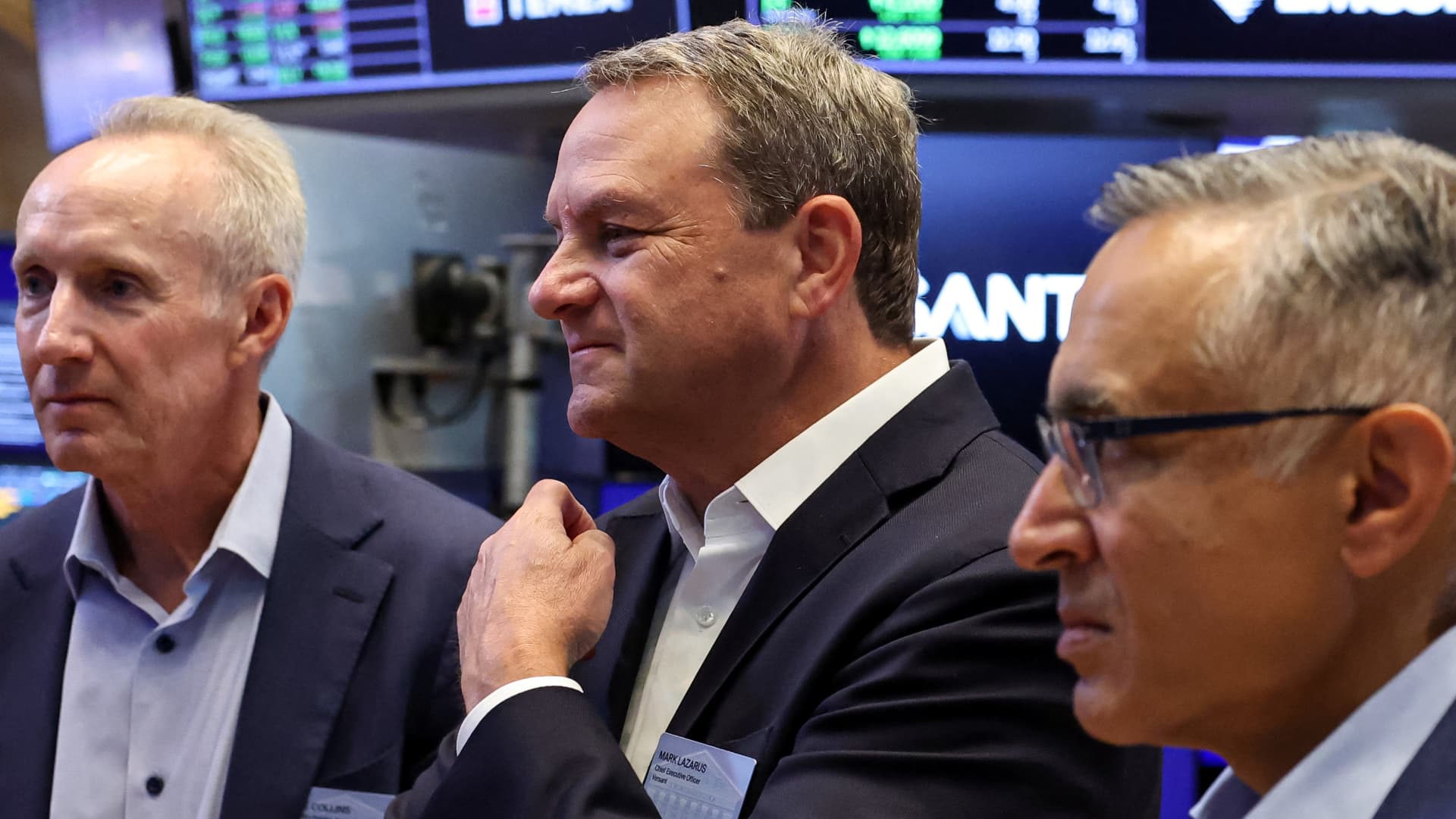
Versant is about to test Wall Street's appetite for cable TV in its first earnings report as a public company
CNBC· 2026-03-02 14:34
Core Viewpoint - Versant Media Group is set to release its first earnings report as a public company, providing insights into its pay-TV network portfolio amid market pressures on cable TV [1][3]. Company Overview - Versant Media Group is a spinoff from Comcast, comprising networks such as CNBC, USA Network, and digital properties like Fandango and Rotten Tomatoes, and debuted on Nasdaq in January [2]. - The company generated $7.1 billion in revenue in 2024, a decline from $7.4 billion in 2023 and $7.8 billion in 2022, with a current market capitalization of approximately $4.8 billion [4]. Industry Context - The pay-TV sector is under pressure as customers shift to streaming alternatives, with Versant deriving over 80% of its revenue from pay-TV distribution [6]. - Despite the challenges, there are signs of stabilization in the traditional TV bundle market, as Charter reported its first quarterly gain in cable customers since 2020 [10][11]. Financial Performance - Versant's stock has decreased by about 25% since its debut, reflecting investor concerns about the cable TV market [4]. - The company is in the midst of a business model transition, aiming for a future where 50% of revenue comes from pay-TV and the other 50% from digital and ad-supported businesses [12][11]. Strategic Initiatives - Versant plans to invest in direct-to-consumer products and expand its ad-supported TV offerings, while also considering mergers and acquisitions, though not focused on acquiring more linear TV networks [13][12]. - The company has secured long-term distribution agreements, providing stability as it navigates upcoming negotiations [8][7]. Analyst Sentiment - Analysts express a mix of optimism and caution regarding Versant, highlighting its strong cash flow and sports-heavy portfolio, but remain wary of the broader challenges facing linear networks [15].

Versant Stock Slides in Its First Day of Trading. Here's What You Need to Know About the Comcast Spin-Off.
Investopedia· 2026-01-05 21:55
Core Insights - Versant (VSNT) shares experienced a significant decline on their first day of trading on the Nasdaq, closing at $40.57 after opening just above $45 and dropping to nearly $39 [1][7] - Comcast announced plans to spin off its cable TV channels, including CNBC and USA Network, into a new entity named Versant, which also encompasses digital brands like Fandango and Rotten Tomatoes [2] Company Performance - Versant projected an estimated revenue of $6.6 billion for 2025, a decrease from $7.1 billion in 2024, according to a regulatory filing [5] - The company claims its viewing hours are comparable to leading streaming services, with news and sports content constituting approximately 60% of its portfolio [5] Industry Context - The cable TV market is facing challenges as subscriber numbers have been declining for years, with a shift towards streaming services [6] - Other media companies, such as Warner Bros. Discovery, are also pursuing spin-offs of their TV networks, indicating a broader trend in the industry [6]


Versant stock price sinks on Nasdaq trading debut as Comcast spinoff tests investor appetite for legacy cable TV
Fastcompany· 2026-01-05 18:48
Group 1: Company Overview - Versant Media Group has begun trading on the Nasdaq under the ticker symbol VSNT, completing its spinoff from Comcast Corporation [1] - Versant includes a bundle of cable television networks and digital businesses, such as MS NOW, CNBC, USA Network, Golf Channel, Oxygen, E!, and SYFY, along with online platforms like Fandango and Rotten Tomatoes [1][2] Group 2: Market Performance - On its first trading day, Versant shares opened at $46.65 but fell more than 12% shortly after the market opened, trading under $41 as of the latest update [3] - The shares were initially offered at $55 per share as "when-issued" stocks on December 15 [3] Group 3: Industry Context - The spinoff occurs during a period of declining cable television subscriptions, which are at a multiyear low, with traditional cable subscriptions peaking in 2012 at over 101 million American households, and last year seeing penetration levels of less than half that [4] - Despite the decline, there was a notable increase in subscribers during the third quarter of 2025, with pay TV operators adding over 300,000 subscribers, marking the first net gain in eight years [5] Group 4: Future Outlook - Mark Lazarus, CEO of Versant, expressed optimism about the company's future, highlighting its scale, strategy, and leadership as key factors for growth [5] - Versant's stock performance will be closely monitored by media investors, particularly in light of Warner Bros. Discovery's recent acquisition by Netflix and the potential spinoff of its cable networks [6]

Comcast spinoff Versant — home to rebranded MSNBC— plummets in market debut: ‘Tough to get investors excited'
New York Post· 2026-01-05 17:48
Core Viewpoint - Versant Media Group's shares fell over 13% in their market debut, reflecting investor skepticism towards traditional TV businesses amid the rise of streaming services [1][5][7] Group 1: Company Overview - Versant Media Group includes channels like USA Network, CNBC, and MS NOW (formerly MSNBC), along with other brands such as Oxygen, E!, SYFY, and Golf Channel [3][4] - The company generates approximately $7 billion in annual revenue, according to Comcast [7] Group 2: Market Dynamics - The spinoff from Comcast is a strategic move to adapt to changing market dynamics, as streaming services increasingly pressure traditional cable TV viewership [1][3] - Comcast aims to focus on its streaming, film, and TV assets while divesting its declining cable networks division [3][8] Group 3: Financial Position - Versant Media Group is reported to have a strong balance sheet and substantial cash flow, which positions it to create long-term shareholder value [8]

Versant stock crashes on debut: Why VSNT is sliding after Comcast spinoff?
The Economic Times· 2026-01-05 16:19
Core Viewpoint - Versant's stock experienced a significant decline of over 14% on its first day of trading, reflecting investor skepticism towards traditional cable television businesses amid the ongoing shift to streaming [1][11]. Company Overview - Versant was spun off from Comcast and began trading on the Nasdaq under the ticker symbol "VSNT" [1][12]. - The spinoff was part of Comcast's strategy to respond to changing market dynamics, allowing it to focus more on streaming and other media assets [3][14]. Financial Performance - Versant now manages a substantial portion of NBCUniversal's cable network portfolio, which includes channels like CNBC, USA Network, and digital brands such as Fandango and Rotten Tomatoes, generating approximately $7 billion in annual revenue [6][13]. Market Reaction - The initial market reaction to Versant's debut was negative, with shares dropping from an opening price of about $45.17 to around $41.80 shortly after trading began [1][11]. - In contrast, Comcast's shares rose by about 1% to 1.3%, indicating investor approval of the separation [1][11]. Executive Outlook - Despite the initial stock decline, Versant's executives expressed optimism about the company's future, emphasizing its financial strength and readiness as a standalone entity [8][9][14]. - CEO Mark Lazarus highlighted the significance of becoming an independent media company, while CFO Anand Kini noted the strong balance sheet and cash flow that position Versant for long-term value creation [8][9][14].
