
Finova大模型金融应用评测基准

Search documents
告别“黑箱竞技”,首个面向信贷场景的多模态评测基准发布
Guo Ji Jin Rong Bao· 2026-01-16 08:52
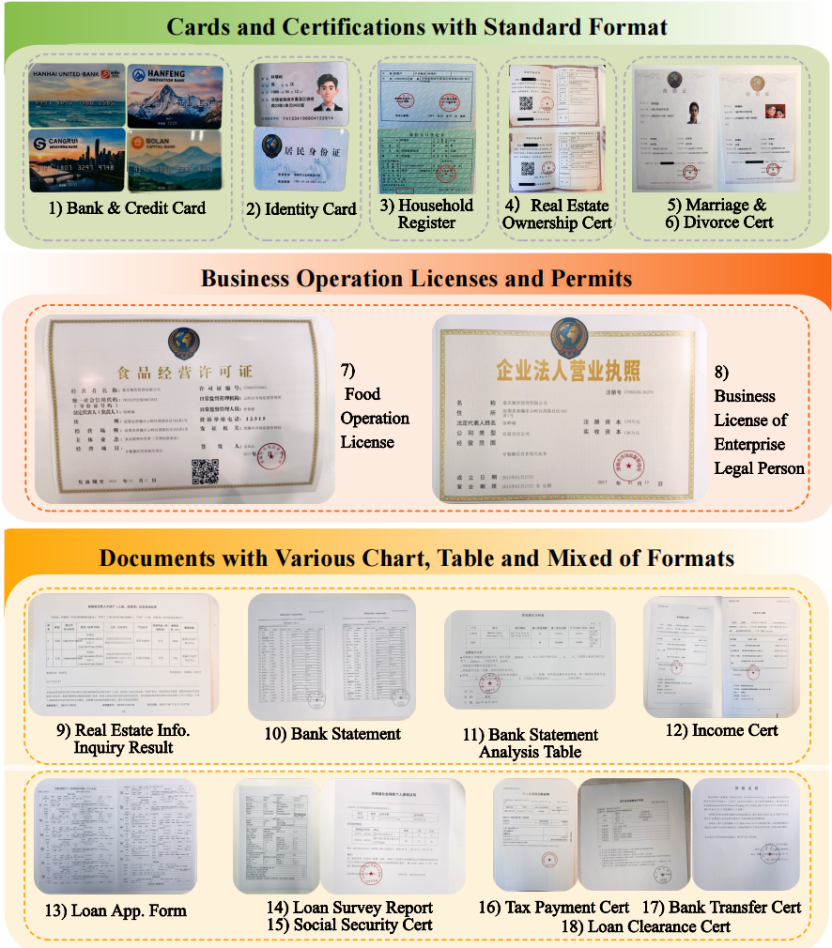
Core Insights - The rise of AI large models in the credit sector has faced significant challenges, particularly in adapting to specialized scenarios and compliance issues [1][9] - A new multi-modal evaluation benchmark, FCMBench-V1.0, has been developed to address these challenges by providing a practical assessment framework tailored to real credit business scenarios [1][8] Group 1: Challenges in Credit AI - AI large models often focus on general capabilities, failing to identify hidden liabilities and suspicious transactions from extensive bank statements [1] - Compliance issues arise due to the sensitive nature of training data, which includes user privacy and corporate secrets, making data sharing difficult [1] - Real-world scenarios present unique challenges, such as document quality issues and network delays during remote assessments, which are not accounted for in laboratory settings [1] Group 2: FCMBench-V1.0 Overview - FCMBench-V1.0 includes a highly consistent evaluation framework with 18 core credit document types, comprising 4,043 compliant images and 8,446 test samples, covering the entire credit review process [8] - The evaluation framework features a three-dimensional assessment system focusing on perception, reasoning, and robustness, which tests the core capabilities required for credit AI models [8] - The data collection for the benchmark ensures compliance while maintaining diversity, using realistic credit materials with all sensitive information fictionalized [9] Group 3: Industry Responses - Major tech companies are addressing the limitations of general models in the credit field by developing specialized evaluation benchmarks and models [9] - Ant Group has launched the Finova model evaluation benchmark, which assesses intelligent agents' capabilities in complex reasoning and compliance across various financial scenarios [9] - JD Technology is enhancing the structured recognition and cross-validation of multi-modal documents, focusing on financial semantics [9]

鑫闻界丨“迫在眉睫”的AI金融大进程中,谁在重构“超越图谱”?
Qi Lu Wan Bao· 2025-07-29 12:50
Core Insights - Embracing AI is not optional for the financial industry, as it is becoming a key lever for transformation and growth in the sector [1][5] - The market for AI applications in finance is rapidly expanding, with significant discussions around its impact on financial institutions and ecosystems [1][5] Group 1: AI Integration in Finance - The integration of AI in finance is seen as essential for enhancing the capabilities of the financial system [5] - The 2025 WAIC highlighted the importance of AI in financial applications, showcasing various forums and exhibitions focused on AI and finance [1][2] - Ant Group's CEO emphasized the need for practical AI solutions that address real-world problems rather than theoretical concepts [2] Group 2: Development of Financial AI Models - Ant Group has launched the Finova model evaluation benchmark to assess AI capabilities in finance, promoting industry-wide improvements [2][3] - The introduction of the Agentar-Fin-R1 model aims to create a reliable and controllable AI core for financial applications [2][3] - A comprehensive financial task classification system has been developed, covering various financial sectors and enhancing model performance [3] Group 3: Real-World Applications and Collaborations - The collaboration between major banks and Alibaba marks a significant shift in the adoption of AI technologies in core banking projects [5][6] - Alibaba's AI technologies have shown substantial improvements in operational efficiency, such as a 30% adoption rate for intelligent code generation [5][6] - The focus on AI in financial risk management, particularly in merchant approval processes, highlights the deepening integration of AI in banking operations [6]


午评:沪指冲高回落跌0.17% 煤炭、钢铁等资源股集体调整
Zhong Guo Jin Rong Xin Xi Wang· 2025-07-28 04:14
Market Overview - A-shares experienced a mixed performance on July 28, with the Shanghai Composite Index and Shenzhen Component Index slightly declining, while the ChiNext Index saw a small increase [1] - Key sectors showing strength included PCB and other computing hardware stocks, with notable gains from companies like Xingsen Technology and Junya Technology, both hitting the daily limit [1] - Financial stocks also showed volatility, with New China Life Insurance reaching a historical high [1] - Conversely, resource stocks such as coal and steel faced corrections, with Shanxi Coking Coal and Liugang Group dropping over 5% [1] Sector Performance - Leading sectors included components, insurance, military equipment, PEEK materials, PCB, and carbon fiber, while sectors like coal mining, precious metals, and port shipping saw declines [2] Institutional Insights - Industrial rotation is observed, focusing on "low valuation cycle recovery" and "technology growth industries," with potential opportunities in coal and construction sectors [3] - The AR glasses market is expected to accelerate due to AI model integration, with Micro LED technology poised to benefit significantly [3] - Shanghai is advancing high-level autonomous driving applications, with major companies like Pony.ai and Baidu receiving operational licenses, indicating a growing automotive intelligence industry [3] Taxation Insights - The top 10% income earners contribute approximately 90% of individual income tax, highlighting the progressive nature of the tax system [4] - Recent tax revenue trends are closely linked to PPI fluctuations, with significant impacts on tax income due to price changes [5] Technological Developments - Ant Group launched a financial reasoning model, Agentar-Fin-R1, which surpasses existing models in key financial evaluations [6][7]