GLD ETF

Search documents
GLD ETF analysis: What next for gold as the rally gains steam?
Invezz· 2026-01-21 00:53
Core Viewpoint - Gold price has reached a new all-time high of $4,725, breaking a week-long range-bound trading pattern [1] Group 1 - The bullion's price movement indicates a significant upward trend in the gold market [1] - The recent record high reflects increased investor interest and potential shifts in market dynamics [1]


EXCLUSIVE: 'Big Short' Star Danny Moses Predicts Gold Monster Rally — Prices 'Will Double From Here'
Benzinga· 2026-01-08 19:16
Core Viewpoint - Gold is transitioning from a hedge asset to a leading investment, with expectations that prices will double in the coming years due to macroeconomic factors and increased demand from central banks and investors [1][2][5] Group 1: Market Dynamics - Gold and silver have outperformed most asset classes, indicating a shift in their roles within investment portfolios [2] - The demand for silver is significantly outpacing supply, driven by industrial uses in solar, electric vehicles, and AI data centers [3] - Central banks are major purchasers of physical gold, using it as a hedge against economic uncertainties, a trend expected to continue [4] Group 2: Investment Sentiment - Investor demand for gold through ETFs is on the rise, contributing to ongoing market dislocations [4] - While volatility is anticipated in the short term, the long-term outlook for gold remains positive as it becomes more integrated into various investment strategies [4] - The call for gold prices to double is based on a broader analysis of currencies, central banks, and overall market confidence [5]

GLO: The Yield Is Nice, But I Still Have Concerns
Seeking Alpha· 2025-12-15 12:16
Core Viewpoint - The focus is on generating a 7%+ income yield through investments in energy stocks while minimizing principal loss risk [1]. Group 1: Investment Strategy - The investment strategy involves a portfolio of energy stocks, targeting both traditional and renewable energy sectors since 2010 [1]. - The leader of the investing group emphasizes generating income through energy stocks and closed-end funds (CEFs) while managing risk through options [1]. Group 2: Research and Analysis - The company provides in-depth research and analysis on both domestic and international energy companies, offering insights that are not widely available to the public [1]. - The focus is on international companies of all sizes that possess a competitive advantage and offer strong dividend yields [1].

How to Trade Gold Seasonality: A Profitable Strategy Based On 20 Years Of Historical Data
Benzinga· 2025-12-11 16:09
Core Insights - The article discusses the concept of seasonality in financial markets, particularly focusing on gold futures and how specific time windows throughout the year are linked to recurring market behaviors [1][2]. Seasonal Analysis - Seasonality is more pronounced in the commodities market, with gold futures being a significant market, second only to equities [2]. - The analysis utilizes a proprietary software called Bias Finder to identify recurring patterns in historical data, focusing on long-term movements in gold futures from 2003 to the present [3][4]. Seasonal Windows - The year can be divided into four distinct seasonal phases for gold: 1. **Seasonal Window 1 (January – April)**: Historically the most bullish period, especially in January and February [11]. 2. **Seasonal Window 2 (April – July)**: Predominantly bearish trend from mid-April through early July [11]. 3. **Seasonal Window 3 (July – September)**: Another period of price growth continuing into September [11]. 4. **Seasonal Window 4 (September – December)**: Characterized by a lack of clear direction and broad trading range fluctuations [11]. Backtesting and Performance - A backtest for the years 2024-2025 shows that all four seasonal windows remain confirmed, despite a strong bullish bias in recent years [10]. - The overall performance of a trading strategy based on these seasonal insights has yielded a cumulative net profit exceeding $231,000 from 2003 to the present, with an average trade value of around $3,400 [15][16]. Performance Summary - The performance breakdown for seasonal windows indicates: - **Seasonal Window 1**: Net profit of $120,770 with 77.27% of trades profitable [19]. - **Seasonal Window 2**: Net profit of $8,610 with 47.83% of trades profitable [19]. - **Seasonal Window 3**: Net profit of $101,710 with 65.22% of trades profitable [19]. - **Complete Strategy**: Total net profit of $231,090 with 63.24% of trades profitable [20]. Comparison with Buy & Hold Strategy - The seasonal strategy, while not matching the absolute profit of a buy & hold approach, offers a more favorable risk profile, especially in real-money trading scenarios [25][26]. - The buy & hold strategy yields a net profit of $75,704.08 but incurs a significant drawdown of over $20,000, whereas the seasonal strategy with reinvestment achieves a profit of $41,374.02 with a drawdown of $8,658.80 [27]. Conclusion - The analysis concludes that trading based on gold seasonality can be profitable, even with simple rules, but emphasizes the need for ongoing evaluation as market behaviors evolve over time [30][31].

GLD ETF analysis: Gold price moderate momentum to define short-term path
Invezz· 2025-11-27 00:01
Core Insights - The US labor market shows signs of resilience, which has limited gains in gold prices despite ongoing uncertainties that continue to support the precious metal [1] Group 1 - The resilience in the US labor market is impacting gold price movements, indicating a complex relationship between economic indicators and commodity prices [1] - Persistent uncertainties in the market are providing steady support for gold, suggesting that while labor data may influence prices, underlying risks remain [1]
Expecting new all-time highs before the end of the year, says 3Fourteen's Warren Pies
Youtube· 2025-11-25 21:31
Market Sentiment and Performance - The market sentiment has shown signs of capitulation, with extreme pessimism registered in sentiment models, particularly indicated by a spike in inverse ETF volume, which is often associated with near-term market bottoms [2][3] - The S&P 500 index experienced a pullback of over 5%, while the median stock was down more than 16% from its 52-week high, suggesting a deeper correction than the index reflects [4] - The Russell 2000 index has gained 10.7% year-to-date, indicating a positive trend, although it is sensitive to interest rate movements [8][9] Economic Outlook - There is an expectation for new all-time highs in equities, with a strong end-of-year performance anticipated due to seasonal factors and improved earnings forecasts [1][5][6] - The current economic environment is seen as conducive for gold investments, with predictions of a strong year ahead for gold driven by potential changes in the Federal Reserve's leadership and policy direction [10][12] Investment Strategy - The Russell 2000 is viewed as a rates bet, requiring a favorable trajectory for interest rates and robust economic growth for continued performance [9] - Despite the positive outlook for equities, caution is advised regarding where to allocate investments, with gold being highlighted as a strong hedge in the current market environment [10][11]

Gold's GLD ETF inflows soar despite short-term pullback
Invezz· 2025-11-22 20:10
Core Viewpoint - Gold price remains stable within a narrow range as bullish momentum is insufficient to challenge the support-turned-resistance level of $4,200, influenced by a stronger US dollar and expectations of a hawkish Federal Reserve [1] Group 1 - The current gold price is unable to break through the $4,200 level, indicating a lack of bullish momentum in the market [1] - A stronger US dollar is contributing to the pressure on gold prices, making it more expensive for holders of other currencies [1] - Market expectations of a hawkish Federal Reserve are impacting investor sentiment towards gold, as higher interest rates typically reduce the appeal of non-yielding assets like gold [1]

Ray Dalio Says 'Gold Is Hotter Than AI' — Who Needs Tech When You've Got Bullion?
Benzinga· 2025-10-15 20:12
Core Insights - Ray Dalio suggests that gold may become the hottest asset of 2025, surpassing AI stocks as a preferred investment choice due to shifting global dynamics and increasing risks associated with debt assets [1][5][6] Gold Performance - Gold has reached a record high of $4,000 per ounce, marking a 121% increase since the end of 2022 and over 50% growth in 2023, making it the best-performing asset class of 2025 [2] - The SPDR Gold Trust (GLD) has returned over 50% to investors year-to-date, while AI stocks, tracked by the Global X Artificial Intelligence & Technology ETF (AIQ), have only returned just over 30% [4] Market Sentiment and Trends - Global gold ETFs have seen a significant increase, reaching $472 billion in assets under management in September, reflecting a 23% quarter-over-quarter growth [4] - Steady inflows into gold ETFs like GLD and iShares Gold Trust (IAU) indicate that Dalio's bullish outlook is resonating with investors seeking protection against market volatility [5] Investment Strategy Shift - Dalio emphasizes a fundamental shift from speculative, growth-focused assets to traditional stores of wealth like gold, which has no counterparty risk and performs well during monetary tightening and geopolitical tensions [6][7] - The current macroeconomic environment, characterized by high inflation and fears of currency debasement, is driving the rally in gold prices [6] New Narrative for Gold - Gold is evolving from being perceived as a "boring" hedge to a contrarian alternative to the AI-driven market, appealing to both portfolio managers and retail investors looking for tangible assets [7][8]
Options Corner: GLD
Youtube· 2025-10-10 13:20
Core Insights - Gold has emerged as a leading asset, up almost 50% year-to-date, outperforming other commodities and financial instruments like Bitcoin and S&P futures [2][11] - The correlation between gold and the S&P 500 futures has shown interesting dynamics, with recent trends indicating a divergence in their movements [4][3] Gold Market Analysis - Gold's price action reflects broader economic concerns, including potential government shutdowns and economic instability [3] - A significant support level for gold is around 3965, with resistance noted at approximately 4020 and 4081 [6][5] - The RSI indicates a strong position for gold, despite being overbought, suggesting bullish momentum could continue [7][9] Trading Strategy - The GLD ETF, which tracks gold prices, is being utilized as a proxy for trading gold futures, allowing for lower capital outlay [11] - A proposed trade involves buying a 365 strike call and selling a 390 strike call, creating a bullish vertical spread with a potential maximum profit of $1,600 [14][13] - The break-even point for this trade is set at approximately 374, which is only about 1.7% above the current share price, indicating a favorable risk-reward setup [14][15]

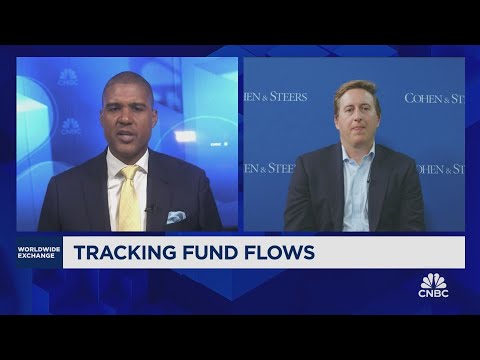
Worldwide Exchange: ETF Flows Week of September 1
CNBC Television· 2025-09-05 12:46
ETF Market Overview - ETF 市场持续增长,预计将再次迎来万亿美元的流入年份 [2][3] - ETF 作为投资工具越来越受欢迎,财富分配渠道对 ETF 的接受度更高 [3][4] - 投资者寻求相对价值、多元化和投资组合优势 [6] Investor Sentiment & Flows - 投资者涌入黄金 ETF (GLD),因金价创历史新高 [5] - 投资者对 Vanguard Total International ETF (VXUS) 和 Russell 1000 ETF (IWB) 表现出兴趣 [5] - 投资者正在寻找估值更具吸引力的其他市场和地区 [7] Investment Strategy & Recommendations - Cohen & Steers 认为全球经济良好,但投资者可能低估了通胀加速的风险 [9] - Cohen & Steers 建议配置能够应对通胀环境的资产,例如实物资产 [9] - Cohen & Steers 推出 Natural Resources Active ETF (CSNR),专注于能源、农业、金属和矿业领域的股票 [9][12] - Natural Resources Active ETF (CSNR) 在经济表现强劲和通胀意外上涨时表现良好,具有很高的通胀 Beta [13] - Natural Resources 板块的估值相对于更广泛的股票市场而言非常便宜 [14]