GPU等半导体芯片

Search documents
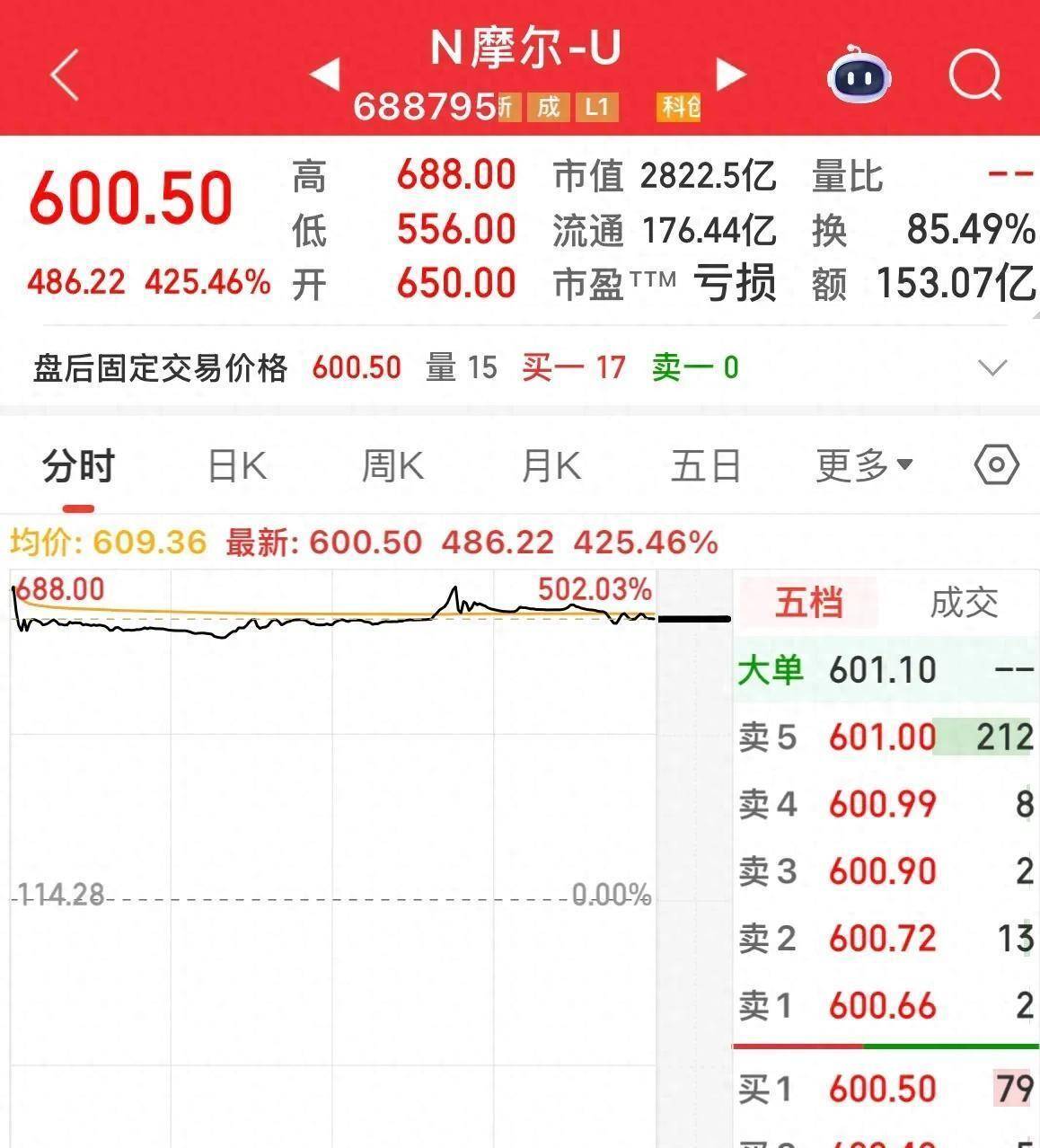
两只今日上市的新股,一只大涨425%,一只破发28%,为何截然不同
Sou Hu Cai Jing· 2025-12-05 16:37
Core Viewpoint - The stark contrast in the stock market performance of two companies, "Moore Threads" in A-shares and "Meet Small Noodles" in Hong Kong, highlights the differences in market mechanisms and investor behavior between the two exchanges [1][5]. Group 1: Company Performance - Moore Threads, a chip company, listed on A-shares with an opening price of 650 CNY, representing a 473% increase from its issue price of 114.28 CNY, allowing investors to gain approximately 268,000 CNY for a single lot [2][5]. - In contrast, Meet Small Noodles, a restaurant chain, listed on the Hong Kong exchange at an issue price of 7.02 HKD, but opened with a 24.23% drop, closing at 5.08 HKD, a 27.81% decline from the issue price [3][12]. Group 2: Market Mechanisms - The A-share market operates under a unique issuance system that often leads to new stocks being undervalued at issuance, creating a significant price gap that investors seek to exploit upon listing [5][7]. - The Hong Kong market employs a market-oriented pricing mechanism where the issue price reflects institutional investors' assessments, leading to less volatility and a more rational pricing environment [11][12]. Group 3: Investor Behavior - A-share investors are predominantly retail, often driven by excitement for new technology and high-growth sectors, which can lead to inflated stock prices on debut [7][16]. - In contrast, Hong Kong's market is dominated by institutional investors who focus on fundamental metrics and are less likely to engage in speculative trading, resulting in a more cautious approach to new listings [12][16]. Group 4: Financial Metrics - Moore Threads reported significant losses, with an average loss of approximately 1.75 billion CNY from 2022 to 2024, yet this did not deter investor enthusiasm due to the perceived potential in the semiconductor sector [8][9]. - Meet Small Noodles had a revenue of 703 million HKD and a net profit of 41.83 million HKD for the first three quarters of 2025, but faced skepticism regarding its valuation and growth potential, leading to its poor market performance [12][14].