GenMimic

Search documents
腾讯研究院AI速递 20251208
腾讯研究院· 2025-12-07 16:01
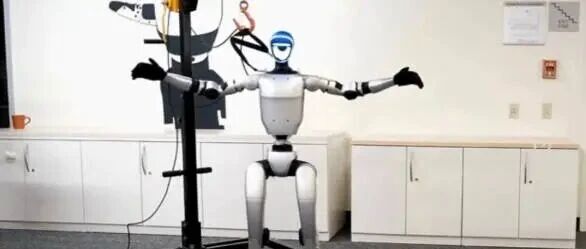
Group 1: Generative AI Developments - NVIDIA has released CUDA Toolkit 13.1, marking the largest update in 20 years, featuring a tile-based programming model and enhancements for tensor core performance [1] - Google introduced the Titans architecture and MIRAS framework, combining RNN rapid response with Transformer capabilities, seen as a significant advancement post-Transformer [2] - Google launched Gemini 3's deep thinking mode, showcasing superior reasoning abilities in complex tasks, indicating a shift from text generation to problem-solving [3] Group 2: Robotics and AI Research - Researchers from Berkeley and NYU proposed the GenMimic method, enabling robots to replicate human actions by watching AI-generated videos, marking Yann LeCun's first paper post-Meta [4] - The GenMimic strategy has been validated on the Yuzhu G1 robot, utilizing a new dataset of 428 generated videos [4] Group 3: Meta's Strategic Shift - Internal memos reveal Meta's shift from a "metaverse-first" approach to prioritizing AI hardware, with significant budget cuts to the Reality Labs division [5][6] - Meta is developing the ultra-thin MR headset Phoenix, now delayed to 2027, while focusing on immersive gaming experiences with Quest 4 [5] Group 4: Apple Leadership Changes - Apple faces significant leadership changes, with key figures like Johny Srouji considering departure, raising concerns about AI talent retention [7] - The company has lost several high-profile executives to competitors, indicating a trend of talent migration within the tech industry [7] Group 5: AI Application Insights - A report by OpenRouter and a16z reveals that open-source model traffic has surged to 30%, with Chinese open-source models increasing from 1.2% to nearly 30% [8] - The report highlights that programming and role-playing applications dominate AI usage, with a notable rise in paid usage in Asia [8] Group 6: Future of AI Search - a16z discusses the evolution of AI search, emphasizing the need for a native AI architecture to enhance content extraction and real-time relevance [9] - Many companies are opting to outsource AI search capabilities rather than developing in-house solutions, indicating a shift in strategy [9] Group 7: Competitive Landscape in AI - Hinton predicts that Google, with its Gemini 3 and proprietary chips, is poised to surpass OpenAI, noting the unexpected duration of this competitive shift [10] - Data shows that Gemini's user engagement is increasing significantly, contrasting with the stagnation of ChatGPT's user growth [10][11] Group 8: AI in Professional Settings - Anthropic's Claude-driven interview tool surveyed 1,250 professionals, revealing mixed feelings about AI's impact on work efficiency and job security [12] - The survey indicates a significant portion of creative professionals experience economic anxiety related to AI, while scientists express concerns about trust and reliability [12]



Yann LeCun离开Meta后首篇论文?使用了宇树机器人做研究
机器之心· 2025-12-06 04:08
Core Insights - The article discusses a groundbreaking research paper that introduces a method called GenMimic, enabling humanoid robots to perform actions generated from AI video models without prior examples [1][3][4]. Research Contributions - The research presents a universal framework for humanoid robots to execute actions generated by video models [4]. - GenMimic employs a new reinforcement learning strategy that utilizes symmetric regularization and selectively weighted 3D keypoint rewards for training, allowing generalization to noisy synthetic videos [4]. - The team created a synthetic human action dataset named GenMimicBench, which serves as a scalable benchmark for evaluating zero-shot generalization and policy robustness [4][8]. GenMimicBench Dataset - GenMimicBench consists of 428 generated videos created using advanced video generation models Wan2.1 and Cosmos-Predict2 [9][11]. - The dataset includes a wide range of subjects, environments, and action types, from simple gestures to complex interactions with objects [11][13]. - It is designed to stress-test the robustness of humanoid robot control strategies under varying visual and action distributions [13]. Methodology Overview - The proposed method involves a two-stage process for executing humanoid robot actions from generated videos [15][17]. - The first stage focuses on reconstructing the humanoid robot's 4D model from the input RGB video, while the second stage translates this model into executable actions [17][18]. - The strategy emphasizes robustness to variations and noise in the input data by using 3D keypoints instead of joint angles [19][20]. Experimental Results - The team conducted extensive experiments on both the GenMimicBench dataset and a real-world 23-DoF humanoid robot, demonstrating significant improvements over strong baseline models [29][30]. - In simulations, GenMimic achieved a success rate (SR) of 29.78% and outperformed existing models in various metrics [31]. - Real-world experiments showed that the strategy successfully replicated a wide range of upper-body actions, although challenges remained with lower-body movements [34][35].