Google DeepMind Genie 3

Search documents
《机器人年鉴》第 2 卷:如何训练你的机器人;地缘政治;稀土;萨根的预言-The Robot Almanac-Vol. 2 How to Train Your Robot; Geopolitics; Rare Earths; Sagan’s Prophecy
2025-12-15 02:51
Summary of Key Points from the Document Industry Overview - The document focuses on the robotics industry, particularly the development and training of robots using advanced AI technologies and simulation methods. It discusses the implications of robotics on various sectors, including manufacturing, logistics, and everyday life. Core Insights and Arguments 1. **Training Methods for Robots** - Three primary methods for training robots are identified: teleoperation, simulation, and video learning. Each method has its pros and cons, with simulation being highlighted as the most scalable and efficient approach [143][148][153]. 2. **Importance of Simulation** - Simulation is deemed critical for robotics, allowing for safer and more scalable training processes. It enables robots to learn from synthetic data, which can be generated in vast quantities [158][159]. 3. **Role of Video Games in Robotics** - Video games are recognized as valuable tools for creating simulations that can aid in robot training. Companies like Epic Games and Unity are mentioned as key players in this space [161][165]. 4. **Data Collection for Training** - The document emphasizes the necessity of collecting extensive real-world data to train robots effectively. This includes vision data from various sources, which is crucial for developing robust AI models [201][218]. 5. **Geopolitical Considerations** - The document touches on the geopolitical implications of robotics and AI, suggesting that advancements in these fields could reshape global power dynamics and economic structures [127][127]. 6. **Foundation Models in Robotics** - Foundation models, particularly those based on Vision-Language-Action (VLA) architecture, are discussed as essential for enabling robots to perform complex tasks. These models require extensive training on diverse datasets [66][95]. Additional Important Content 1. **Moravec's Paradox** - The document references Moravec's Paradox, which states that tasks that are easy for humans (like grasping objects) are difficult for AI, while tasks that are hard for humans (like complex calculations) are easier for AI [127][130]. 2. **Potential for Distributed Computing** - The potential for robotics to enable a shift towards distributed computing is explored, suggesting that robots could help re-architect global compute infrastructure by offloading processing tasks from centralized data centers [181][184]. 3. **Companies Involved in Robotics** - Several companies are mentioned as key players in the robotics field, including Tesla, NVIDIA, Boston Dynamics, and Amazon Robotics. Their roles in advancing robotic technologies and applications are highlighted [180][191]. 4. **Future Data Collection Trends** - The document predicts a future where data collection for training robots will become increasingly ubiquitous, with many cameras constantly gathering data to improve AI models [204][209]. 5. **Challenges in Robot Training** - Challenges such as the need for extensive real-world data collection and the difficulties in simulating complex physical interactions are acknowledged as significant hurdles in the development of effective robotic systems [135][136]. This summary encapsulates the key points and insights from the document, providing a comprehensive overview of the current state and future directions of the robotics industry.

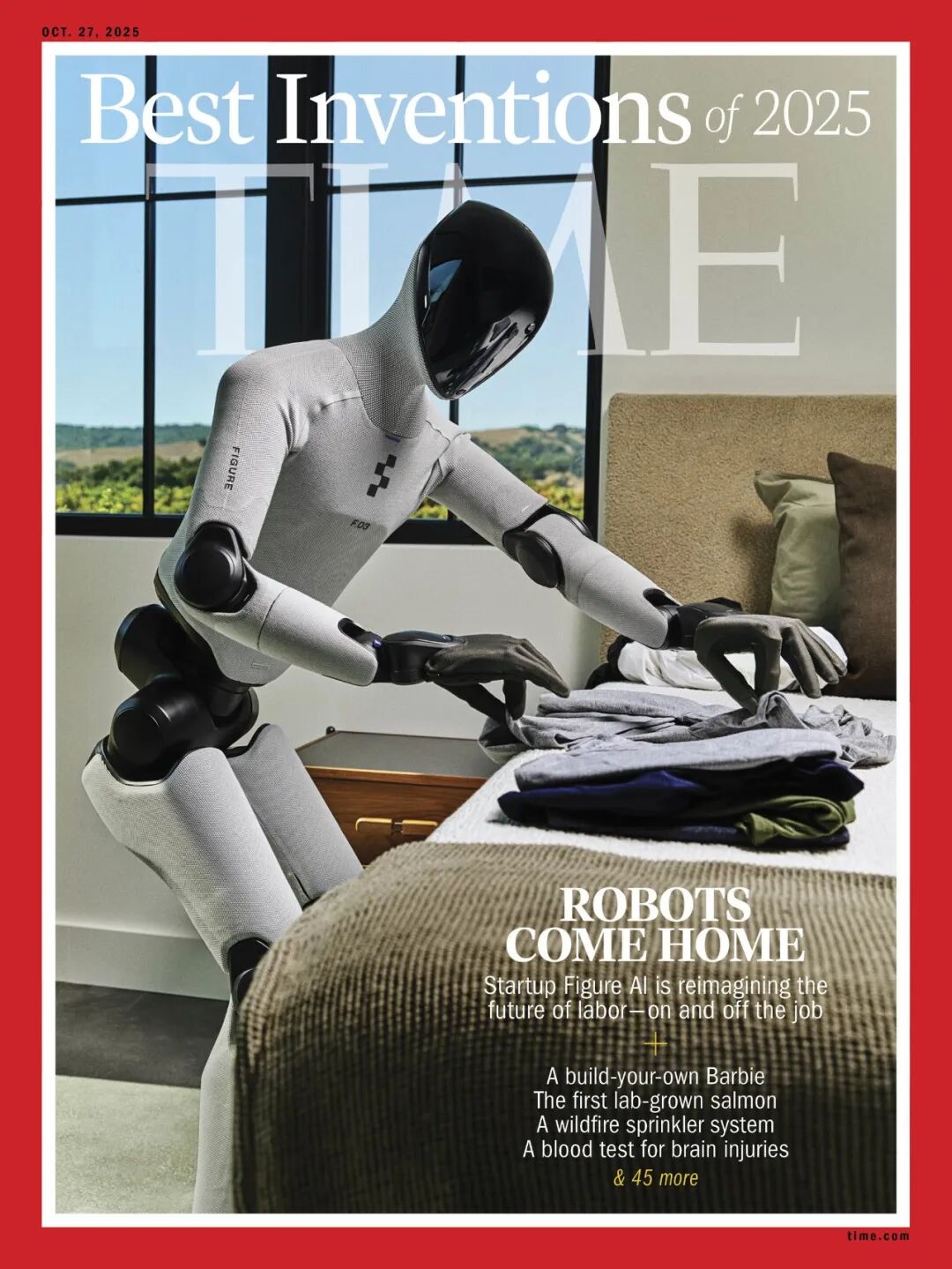
《时代》公布 2025 年度最佳发明:OpenAI 零入选,国产霸榜
3 6 Ke· 2025-10-10 11:51
Core Insights - The article discusses the "Best Inventions of 2025" list published by TIME, highlighting 300 notable innovations, including AI models, household robots, and real-time translation devices [1][3][5]. Group 1: AI Innovations - DeepSeek R1, an open-source language model, has significantly reduced training costs to $6 million, making AI more accessible compared to competitors like OpenAI [8][10]. - Claude Sonnet 4, released by Anthropic, has gained substantial market share among developers, reportedly capturing more than double the market share of OpenAI [12]. - The article emphasizes the pervasive integration of AI in daily life, transforming various sectors such as healthcare, agriculture, and entertainment [4][6]. Group 2: Robotics and Automation - Figure 03, a household robot capable of performing simple tasks like dishwashing, is set to be released for home use next year [44]. - The Unitree R1 humanoid robot, weighing 24.5 kg, features advanced AI capabilities for complex movements [46]. - Nvidia's DGX Spark, a desktop AI supercomputer, offers petaflops-level AI performance, democratizing access to AI computing power [19]. Group 3: Health and Education Technologies - Outcomes4Me, an AI-based app, helps patients understand cancer care pathways and clinical trial options, with over 400,000 users [36][37]. - Squirrel AI, a Chinese adaptive learning platform, has personalized education for over 24 million students and is expanding into the U.S. market [35]. - The article notes that over 46 inventions in the healthcare category were recognized, indicating a strong focus on medical innovations [35]. Group 4: Consumer Products and Tools - Cursor, a coding tool that automates software development tasks, is used by over 50,000 companies, including many Fortune 500 firms [23]. - Squarespace's AI-driven website builder, Blueprint AI, assists users in creating unique web designs through guided questions [26]. - Adobe's Enhance Speech tool has improved over 100 million audio files, showcasing the growing importance of AI in content creation [29]. Group 5: Miscellaneous Innovations - The Lotus Ring, a universal remote control ring, allows users to control home appliances with a simple gesture [50]. - Infinite Machine's Olto electric vehicle combines features of scooters and e-bikes, priced at $3,495 [54]. - The article mentions various other categories, including beauty, environmental, travel, and food innovations, reflecting a wide range of advancements [69].