
Grocery

Search documents
Mad Money’s Latest Recap: Jim Cramer’s Strategy for Market Sell-Offs and 16 Stocks Mentioned
Insider Monkey· 2026-03-31 17:45
Core Viewpoint - Jim Cramer emphasizes the importance of not hastily selling high-quality stocks during market sell-offs, attributing current market declines more to fear than to actual business performance [1][2]. Group 1: Market Conditions - The market is experiencing a downturn for various reasons, many of which are negative, leading to a situation where investors are selling strong stocks when they should be holding or buying more [2]. - Cramer highlights that the ongoing geopolitical tensions, particularly regarding Iran, contribute to a pessimistic market sentiment, despite the potential of strong companies [3]. Group 2: Stock Recommendations - Cramer suggests that stocks like CrowdStrike and Meta should be considered for purchase rather than sale during this market environment, as they are being unfairly affected by broader market fears [4]. - NVIDIA Corporation (NASDAQ: NVDA) is noted to have declined over 20% from its highs last October, with a current price-to-earnings ratio of less than 15 times next year's earnings estimates, indicating potential value despite the market's negative sentiment [8]. - Walmart Inc. (NASDAQ: WMT) is viewed positively by Cramer, who believes it is a solid investment in the current environment, especially as it has shown resilience with an 8% year-to-date increase [10][11].



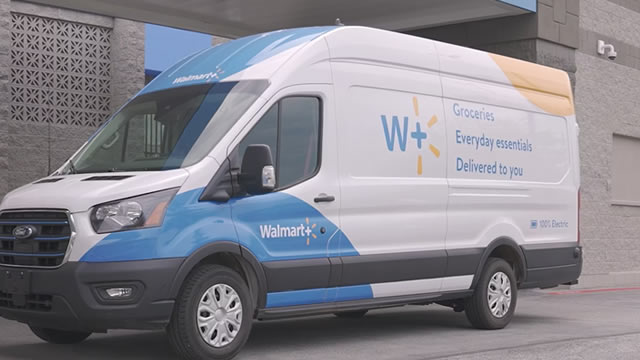
Walmart's Grocery Growth Strong: Is Value Retail Winning Big?
ZACKS· 2026-03-30 14:10
Core Insights - Walmart Inc.'s grocery business is crucial for attracting shoppers and driving sales, significantly contributing to the company's overall momentum in the U.S. market during the fourth quarter of fiscal 2026 [1] Group 1: Sales Performance - Walmart U.S. comparable sales increased by 4.6% in the quarter, with transactions up by 2.6% and average ticket size increasing by 2% [2] - Grocery sales were a major contributor to this performance, particularly in pantry and fresh food categories, with strong unit volume growth and market share gains [2] Group 2: Pricing Strategy - Walmart focused on rollbacks and everyday low prices in grocery to maintain relevance in a challenging spending environment, with grocery inflation at a modest 0.6%, which is 70 basis points lower than the previous quarter [3] - The deflation in eggs and dairy contributed to this pricing strategy, allowing Walmart to reinforce its value message [3] Group 3: Customer Demographics - Walmart gained market share across various income groups, particularly from households earning over $100,000, while still appealing to budget-conscious shoppers [4] - The grocery segment is vital for maintaining relevance among lower-income customers who are more cautious with their spending [4] Group 4: Market Comparison - Walmart's shares have increased by 40% over the past year, outperforming the industry growth of 38.1%, while competitors Costco and Target saw gains of 4% and 14.8%, respectively [5] Group 5: Valuation Metrics - Walmart's forward 12-month price-to-earnings ratio is 41.71, higher than the industry average of 38.11, and trades at a premium compared to Target's 14.77 but at a discount to Costco's 45.82 [8] Group 6: Future Projections - The Zacks Consensus Estimate projects Walmart's current fiscal-year sales and earnings per share to grow by 4.7% and 9.5% year-over-year, respectively [10]

Rothschild Cuts Mondelez (MDLZ) to Neutral, Cites Volume Weakness and Rising Competition
Yahoo Finance· 2026-03-27 01:03
Core Viewpoint - Mondelez International, Inc. (NASDAQ:MDLZ) is facing significant near-term challenges, leading to a downgrade by Rothschild & Co Redburn, while Morgan Stanley maintains a more optimistic outlook based on expected earnings recovery from cocoa normalization [2][3]. Group 1: Analyst Ratings and Price Targets - Rothschild & Co Redburn downgraded Mondelez to Neutral from Buy, lowering the price target from $71 to $55, citing numerous near-term threats including softer volumes and intense competition [2]. - Morgan Stanley raised its price recommendation on Mondelez to $70 from $66, maintaining an Overweight rating, arguing that the market is overly focused on pricing rollback risks [3]. Group 2: Company Challenges - Mondelez is currently dealing with challenges such as weaker growth in emerging markets, a slow U.S. biscuit category, and increased competition in the European chocolate market [2]. - The company may need to reinvest in pricing strategies and advertising to address these issues, which could limit the benefits from easing cocoa prices [2]. Group 3: Company Overview - Mondelez operates primarily in the snack sector, focusing on chocolate, biscuits, and baked snacks, along with other categories like gum, candy, cheese, grocery, and powdered beverages [4].

Mondelez (MDLZ) Named Top Pick by Morgan Stanley as Cocoa Pressures Ease
Yahoo Finance· 2026-03-18 05:03
Group 1 - Mondelez International, Inc. is recognized as one of the 14 Quality Stocks with the Highest Dividends [1] - Morgan Stanley raised its price target for Mondelez to $70 from $66, maintaining an Overweight rating, citing potential earnings recovery as cocoa costs normalize [2] - The company's 2026 guidance reflects caution due to cocoa price volatility and weaker performance in the US biscuit category, necessitating a flexible approach [3] Group 2 - Mondelez's COO and CFO indicated that pricing for chocolate is expected to remain stable in volume for 2026, with profitability improving in the latter part of the year [4] - The company is focused on strengthening its consumer position and enhancing market execution, leading to increased investment across its brands [3] - Mondelez operates primarily in the snack sector, with core products including chocolate, biscuits, and baked snacks, along with other categories like gum, candy, and powdered beverages [5]
I’m a Retiree: Here’s How I Spend My $2,785 Monthly Income
Yahoo Finance· 2026-03-15 12:36
Core Insights - The article highlights the importance of sound financial habits in enabling early retirement, as demonstrated by Lucas Smith's experience [1] Housing - Smith has a small mortgage payment of $500 per month on his primary home and contributes an additional $200 per month towards a co-owned property [4] Utilities - Monthly utility expenses are relatively low, with electric bills ranging from $70 to $100, and an additional $250 for cellphone, internet, and TV services [5] Transportation - Retirement has reduced Smith's gas expenses by nearly $40 per week, but he still has a $500 monthly car loan payment [6] Groceries - Smith's grocery expenses remain consistent at approximately $400 per month, similar to his spending before retirement [7] Investment Property Expenses - Smith incurs about $400 per month in annual property tax and homeowners association fees, funded through a dedicated savings account [8] Travel and Entertainment - Smith prefers leisure time at home and is cautious about budgeting for future travel, having not prioritized entertainment during his working years [9] Healthcare - A notable challenge for Smith is the lack of health insurance coverage since retiring, as he is currently exploring options after losing employer-provided insurance [11]
The Quiet Retail Compounder Investors Keep Buying on Every Dip
Yahoo Finance· 2026-03-10 19:32
Core Viewpoint - Casey's General Stores (NASDAQ: CASY) is positioned as a strong long-term retail holding, demonstrating a consistent buy-the-dip strategy with internal growth funding, market consolidation, and robust cash flow generation, leading to a steady increase in share price [1] Financial Performance - The latest earnings report indicated modest revenue growth of 0.5%, which fell short of consensus estimates, but was supported by strong margin expansion, resulting in significant earnings gains [2][3] - Inside sales increased by 4% on a comparable store basis, driven by a 3.3% rise in grocery sales and a 4.7% increase in prepared foods, while gasoline sales rose by 0.4% with a fuel margin increase of 11.2% [4] - EBITDA increased by 27.5%, net income rose by 49.3%, and GAAP earnings grew by 50%, all significantly outpacing top-line growth [4] Management Guidance and Market Position - Management raised profit guidance due to strong margin performance, indicating confidence in continued margin strength through the end of the year, despite a softer revenue outlook for 2026 [4] - The company maintains a strong cash flow position, allowing for dividends and share buybacks, which offsets concerns regarding weaker-than-expected business traffic [5] - Analyst and institutional sentiment remains bullish, suggesting that the recent stock pullback may present a buying opportunity for long-term investors [2]

Walmart and three retailers most at risk from rising gasoline prices
Invezz· 2026-03-09 18:11
Core Viewpoint - Rising gasoline prices, driven by the escalating US-Iran war, pose significant risks to major US retailers, particularly Walmart and Dollar General, as they cater to lower-income demographics who are more sensitive to fuel costs [1][1]. Group 1: Impact on Walmart - Walmart's average shopper income is approximately $66,000, making its customer base particularly vulnerable to rising gasoline prices, which can reduce discretionary spending [1]. - Increased fuel costs not only raise logistics and supply chain expenses but also diminish the extra cash customers typically allocate for higher-margin products, potentially leading to a decline in general merchandise sales [1]. Group 2: Impact on Dollar General - Dollar General serves an average household income of about $60,000, the lowest among major retailers, making it highly sensitive to energy price fluctuations [1]. - A $1 increase in oil prices typically results in a 70 basis points decline in consumer spending, which has already contributed to a more than 5% decline in Dollar General shares within a week [1]. Group 3: Broader Retail Sector Effects - The automotive aftermarket, including companies like Advance Auto Parts and O'Reilly Automotive, is also affected by rising fuel costs, as consumers may defer non-essential repairs due to financial constraints [1]. - As fuel prices remain high, discretionary spending on car maintenance and upgrades is likely to be cut, leading to a "break-fix only" cycle where consumers only seek repairs when absolutely necessary [1].



BJ’s Wholesale Club (BJ) - 2026 Q4 - Earnings Call Transcript
2026-03-05 14:32
Financial Data and Key Metrics Changes - Net sales for Q4 were approximately $5.4 billion, an increase of 5.5% year-over-year [18] - Total comparable club sales, including gasoline, rose 1.6%, while merchandise comparable sales increased by 2.6% [18] - Adjusted EPS for Q4 was $0.96, reflecting a 3.2% increase year-over-year, with full fiscal year adjusted EPS reaching $4.40 [22][24] Business Line Data and Key Metrics Changes - Grocery, perishables, and sundries business saw comparable sales growth of 2.3%, driven by strong performance in non-alcoholic beverages, candy, and snacks [19] - General merchandise and services division comp increased by 4.3%, supported by strength in consumer electronics and apparel [19] - Membership fee income rose by 10.9% to approximately $129.8 million, aided by healthy acquisition and retention trends [20] Market Data and Key Metrics Changes - The company opened 14 new clubs in fiscal 2025, the highest number in a single year, contributing to membership growth of over 500,000 members [4][5] - Digital sales penetration reached 16%, with digitally enabled sales growing by 31% [11][12] - The company ended the year with over 8 million members, achieving a 90% tenured renewal rate [10] Company Strategy and Development Direction - The company aims to continue expanding its footprint with plans to open 25-30 new clubs over 2025 and 2026, reflecting confidence in its business model [16][24] - Investments in digital capabilities and supply chain improvements are prioritized to enhance member experience and operational efficiency [12][24] - The focus remains on delivering value, convenience, and quality to members, particularly in a cautious consumer environment [4][13] Management's Comments on Operating Environment and Future Outlook - Management expressed confidence in navigating a dynamic environment marked by cautious consumer behavior and macroeconomic volatility [4] - The company anticipates comparable sales growth of 2%-3% for fiscal 2026, with adjusted EPS guidance of $4.40-$4.60 [23][24] - Management highlighted the importance of maintaining a strong pricing position to deliver value to members [13][25] Other Important Information - The company achieved record full-year earnings per share, reflecting disciplined execution across the business [5] - Inventory levels increased by 3.1% year-over-year, with in-stock levels improving significantly [22] - The company repurchased approximately 1.3 million shares for $117.7 million during the quarter, indicating confidence in long-term business strength [23] Q&A Session Summary Question: Merchandise margins down 50 basis points - Management noted that the primary contributor to margin performance was the mix of business, particularly a shift towards lower-margin general merchandise categories [32][34] Question: Growth potential in Texas and nationwide - Management expressed optimism about growth in Texas, citing strong engagement and membership sign-ups ahead of new club openings [40][41] Question: Impact of Winter Storm Fern on sales - Management indicated that Winter Storm Fern had a slight positive impact on the quarter, with a significant buildup in sales prior to the storm [47][48] Question: Membership fee income increase - Management confirmed that part of the membership fee income growth was due to a fee increase, alongside strong acquisition and retention trends [58][59] Question: Digital growth and fulfillment capabilities - Management stated that the company is well-positioned to handle increased digital fulfillment, with ongoing investments to support growth [66][67] Question: Guidance on merchandise margins for 2026 - Management did not provide specific guidance on merchandise margins but indicated that they would continue to manage pricing investments to enhance long-term value [74][75]

BJ’s Wholesale Club (BJ) - 2026 Q4 - Earnings Call Transcript
2026-03-05 14:32
Financial Data and Key Metrics Changes - Net sales for the fourth quarter were approximately $5.4 billion, an increase of 5.5% over last year [18] - Total comparable club sales, including gasoline, rose 1.6%, with fuel prices continuing to run down mid-single digits year-over-year [18] - Adjusted EBITDA for the quarter increased 1% to $266.5 million, supported by steady cost discipline [21] - Fourth quarter Adjusted EPS of $0.96 increased 3.2% year-over-year, with full fiscal year Adjusted EPS reaching $4.40 [22] Business Line Data and Key Metrics Changes - Merchandise comparable sales increased 2.6%, with perishables, grocery, and sundries growing comps by 2.3% [8][19] - General merchandise and services division comp increased 4.3%, driven by strength in consumer electronics and apparel [9][19] - Membership fee income rose 10.9% to roughly $129.8 million, supported by healthy acquisition and retention trends [20] Market Data and Key Metrics Changes - The company grew its membership base by more than 500,000 members, the largest annual increase in recent years [4] - The company ended the year with over 8 million members, a new high for the company [10] - Digital sales penetration reached 16%, with digitally enabled sales growing by 31% [11][12] Company Strategy and Development Direction - The company plans to open 25 to 30 new clubs over 2025 and 2026, reflecting confidence in the relevance of its model [16] - Investments are being made in digital capabilities, supply chain, and real estate to support long-term growth [22][24] - The company aims to maintain a strong pricing position, delivering savings up to 25% better than traditional grocery [13][14] Management's Comments on Operating Environment and Future Outlook - Management expressed confidence in navigating a dynamic environment marked by cautious consumer behavior and macroeconomic volatility [4] - The company anticipates comparable sales growth, excluding gas, to be in the range of 2%-3% for fiscal 2026 [23] - Management acknowledged the potential impact of tariffs and macroeconomic uncertainty on future results [25] Other Important Information - The company achieved a 90% tenured renewal rate for the fourth consecutive year, indicating strong member loyalty [10] - The company has a robust pipeline for new club openings, with plans to enter the Dallas-Fort Worth area soon [16][40] - The company is focused on enhancing member experience through AI and digital innovations [12][13] Q&A Session Summary Question: Merchandise margins down 50 basis points - Management indicated that the largest contributor to margin performance was the mix of business, particularly towards general merchandise, which has lower margins [32][34] Question: Growth potential in new markets - Management expressed confidence in the growth potential in new markets, citing successful engagement and membership sign-ups in recent openings [37][40] Question: Impact of Winter Storm Fern on sales - Management noted that Winter Storm Fern had a slight positive impact on the quarter, with a significant buildup in sales prior to the storm [47][48] Question: Membership fee income increase - Management confirmed that part of the membership fee income growth was due to a fee increase, but emphasized ongoing strong member acquisition and retention [58][59] Question: Digital growth and fulfillment capabilities - Management stated that the company is relatively unconstrained in fulfilling digital orders and continues to invest in digital capabilities to support growth [65][66]
BJ’s Wholesale Club (BJ) - 2026 Q4 - Earnings Call Transcript
2026-03-05 14:30
Financial Data and Key Metrics Changes - Net sales for the fourth quarter were approximately $5.4 billion, an increase of 5.5% over last year [17] - Total comparable club sales, including gasoline, rose 1.6%, with merchandise comparable sales increasing by 2.6% [17][18] - Adjusted EPS for the fourth quarter was $0.96, an increase of 3.2% year-over-year, while full fiscal year Adjusted EPS reached $4.40 [20][22] Business Line Data and Key Metrics Changes - Merchandise comparable sales in perishables, grocery, and sundries grew by 2.3%, driven by solid unit growth [6][18] - General merchandise and services division comp increased by 4.3%, driven by strength in consumer electronics and apparel [18] - Membership fee income rose 10.9% to approximately $129.8 million, supported by healthy acquisition and retention trends [18] Market Data and Key Metrics Changes - The company grew its membership base by over 500,000 members, reaching over 8 million members, a new high [9][10] - Digital sales penetration reached 16%, with digitally enabled sales growing by 31% [10][11] - The company opened 14 new clubs, the most in a single year, expanding into new markets [4][14] Company Strategy and Development Direction - The company aims to continue expanding its footprint with a commitment to open 25 to 30 new clubs over 2025 and 2026 [15][22] - Investments are being made in digital capabilities, supply chain, and real estate to support long-term growth [21][23] - The focus remains on delivering value to members, with a pricing strategy that maintains a competitive edge [12][13] Management's Comments on Operating Environment and Future Outlook - Management expressed confidence in navigating a dynamic environment marked by cautious consumer behavior and macroeconomic volatility [3][16] - The company anticipates comparable sales growth, excluding gas, to be in the range of 2%-3% for fiscal 2026 [22] - Management highlighted the importance of strong membership as the engine for traffic, share gains, and long-term profitable growth [10][27] Other Important Information - The company achieved a 90% tenured renewal rate for the fourth consecutive year, indicating strong member loyalty [9] - The company plans to further invest in its supply chain network and is excited about the upcoming automated distribution center in Ohio [23] Q&A Session Questions and Answers Question: Merchandise margins down 50 basis points - The decline was primarily due to a mix shift towards lower-margin general merchandise, particularly consumer electronics, and investments in value during the quarter [30][33] Question: Growth potential in new markets - The company is optimistic about its growth potential, with successful openings in new states and strong early engagement in the Dallas-Fort Worth area [35][39] Question: Underlying membership trends and MFI increase - Membership fee income growth included contributions from a fee increase, with continued focus on optimizing member acquisition and retention [58][60] Question: Digital growth and fulfillment capabilities - The company is confident in its ability to support digital growth, with ongoing investments in technology and fulfillment capabilities [65][67] Question: Inventory management and discretionary items - The company plans to manage inventory conservatively, particularly in discretionary categories, while ensuring sufficient stock levels [99]