HUAWEI XHUD

Search documents
华为乾崑车载光,如何重构智能汽车的下一代交互?
36氪· 2025-12-20 15:36
Core Viewpoint - The concept of "vehicle light" is evolving from a mere illumination tool to a visual interface for intelligent status, decision-making, and user experience differentiation in smart vehicles [1][4][19]. Group 1: Market Trends and Growth - The penetration rates for smart HUDs and smart headlights are projected to grow significantly, with smart HUD penetration increasing by 70% and smart headlights by 127% year-on-year by October 2025 [1]. - The market for vehicle light is not driven by a single technological breakthrough but by a closed loop of technology, user needs, and industry transformation [4][20]. Group 2: Technological Innovations - Key applications in the vehicle light sector include augmented reality heads-up displays (AR-HUD) and smart headlight modules, which are already widely used in smart vehicle models [4]. - Huawei's approach to AR-HUD focuses on addressing long-standing user pain points by enhancing hardware capabilities and ensuring high resolution and usability in dynamic scenarios [5][10]. Group 3: User Experience and Market Acceptance - The transition of AR-HUD from a novelty to a necessity is expected to accelerate, with projections indicating that by 2026, AR-HUD will penetrate vehicles priced below 250,000 [9]. - The integration of user-customizable features, such as welcome lights, transforms previously aesthetic functions into high-frequency user experiences [9]. Group 4: Future Directions and Innovations - The next phase of vehicle light technology aims to create new experiential forms, moving from "how well it works" to "how it can be used" [14][16]. - Future developments include a new generation of integrated vehicle light solutions, such as dual-function smart HUDs and multi-functional light modules, expected to be showcased in 2026 [14][19]. Group 5: Industry Collaboration and Standards - Huawei's strategy involves open collaboration with industry partners to convert complex vehicle light technologies into deliverable products, enhancing overall delivery efficiency [12][20]. - The establishment of standards and norms in the vehicle light industry is crucial for its maturation, with ongoing efforts to create a comprehensive evaluation system for AR-HUD and smart headlights [21][22].


小鹏华为联手!这项新技术即将一统江湖?
电动车公社· 2025-06-07 16:49
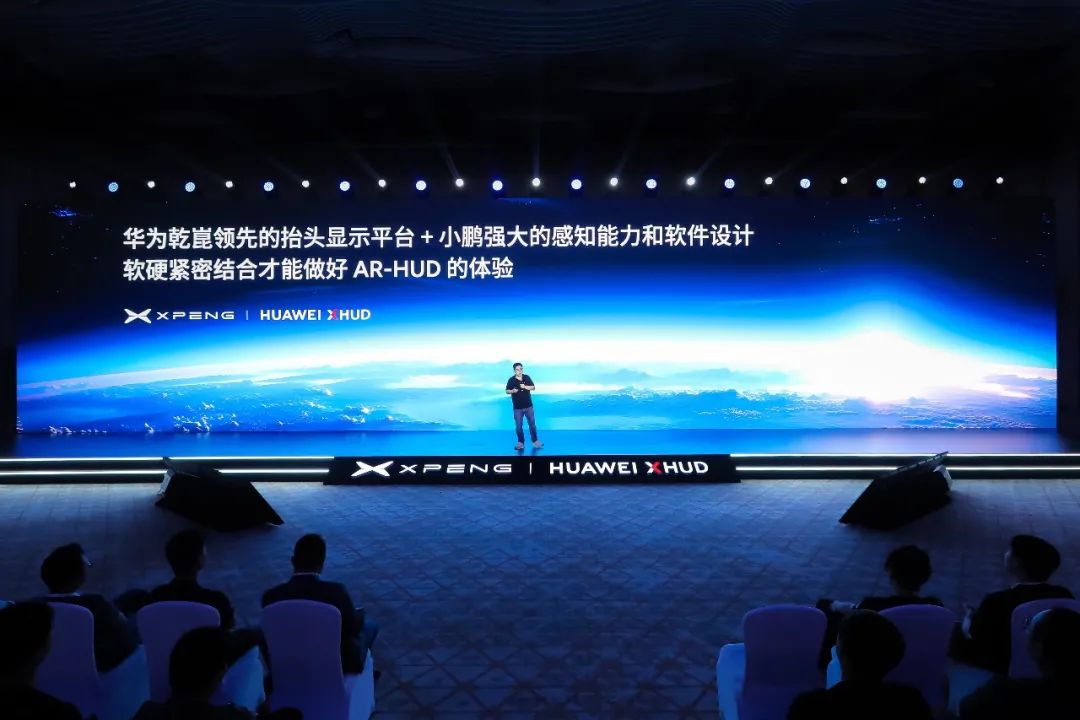
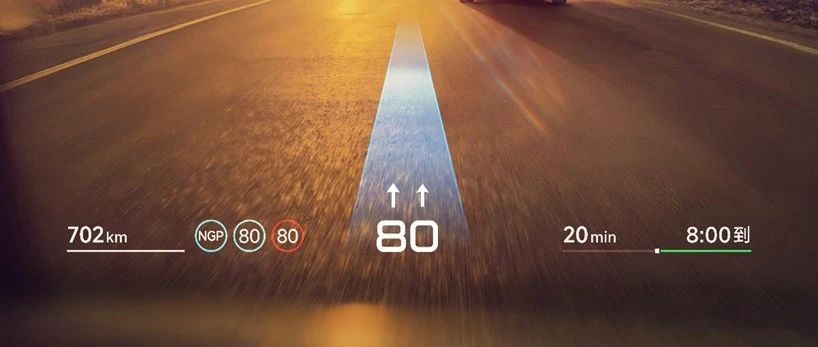
Core Viewpoint - Xiaopeng Motors is collaborating with Huawei to innovate in the HUD (Head-Up Display) technology, aiming to enhance the driving experience and safety through advanced AR-HUD features [5][21][63]. Group 1: Collaboration Details - Xiaopeng Motors announced a partnership with Huawei to develop the "Chasing Light Panorama" HUD, which will debut in the Xiaopeng G7 [5][21]. - The collaboration involves Xiaopeng focusing on software while Huawei handles hardware, addressing existing limitations in current HUD technologies [7][21]. - The new HUD technology is based on Huawei's XHUD hardware, which has already received positive feedback in other models [22][24]. Group 2: HUD Technology Overview - HUD technology projects information onto the windshield, allowing drivers to keep their eyes on the road, thus improving safety [10][9]. - The current market penetration of HUDs is low, with only 16% market share as of 2024, indicating significant room for growth [20]. - Existing HUDs face challenges such as low resolution and brightness, which can lead to visual fatigue for drivers [18][17]. Group 3: Innovations in HUD - The "Chasing Light Panorama" HUD offers enhanced features such as AR light carpets, mini-map navigation, and warning indicators, providing a more immersive driving experience [29][32]. - The technology integrates with Xiaopeng's XNGP navigation data and advanced driving assistance systems, enhancing user confidence [28][32]. - Compared to traditional HUDs, the new system aims to reduce visual clutter and improve clarity, making it more user-friendly [34][41]. Group 4: Competitive Landscape - Other companies, such as Xiaomi, are exploring alternative display technologies like the "Sky Screen," which aims to provide information without the drawbacks of traditional HUDs [35][41]. - Various manufacturers are experimenting with different HMI (Human-Machine Interface) designs, indicating a trend towards more integrated and user-friendly vehicle interfaces [53][64]. - The evolution of HMI design reflects the industry's shift towards enhancing driver safety and experience through innovative technologies [62][63].

华为,重磅!
Zhong Guo Ji Jin Bao· 2025-06-05 10:14
Core Viewpoint - Huawei and Xpeng Motors have jointly launched the "Chasing Light Panorama" AR-HUD system to address existing issues in AR-HUD technology such as visibility, dizziness, and obstruction [1][3]. Group 1: Product Development - The "Chasing Light Panorama" AR-HUD is the world's first HUD solution integrated with AI driving technology, debuting in the Xpeng G7 model [3]. - Huawei's HUAWEI XHUD has already been adopted in mass-produced models like SAIC's Feifan R7 and AITO's Wenjie M9, with over 20 additional models in development [3][6]. - The AR-HUD market in China is expected to grow significantly, with its share of HUD shipments projected to rise from less than 4% in January 2022 to nearly 25% by 2024 [5]. Group 2: Technological Advancements - The transition from traditional HUD to AR-HUD is driven by the rapid adoption of smart connected vehicles and advanced driver-assistance systems (ADAS) [4]. - HUAWEI XHUD visualizes the "perception-decision-execution" process of intelligent driving, enhancing driver awareness and safety [6]. - Key technologies for HUAWEI XHUD include proprietary spatial algorithms and low-latency real-time rendering algorithms, enabling accurate information display based on real-world data [6][9]. Group 3: Strategic Vision - Huawei's smart vehicle optical business, established in 2019, aims to leverage its extensive experience in optical communication to enhance automotive applications [8][9]. - The company is exploring future HUD technologies, including holographic optical elements (HOE) and two-dimensional beam expansion waveguides, to achieve larger fields of view and smaller device sizes [10][12]. - Huawei has made significant progress in overcoming key technical challenges related to HOE materials and large-area exposure, with prototype development underway [11].