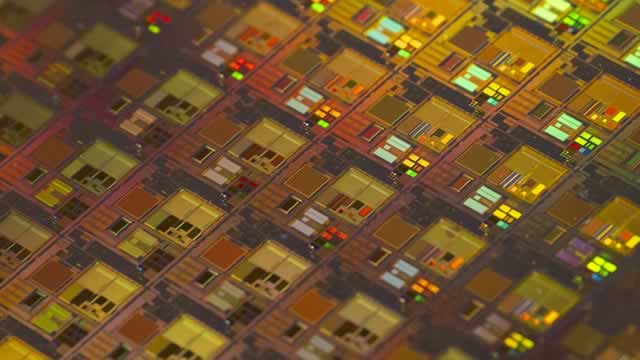
Hopper (H100)

Search documents
Nvidia and Palantir Have Sent Shockwaves Through Wall Street With This Can't-Miss $9.6 Billion Warning
The Motley Fool· 2026-03-10 08:06
Core Insights - The evolution of artificial intelligence (AI) has been a major catalyst for the stock market, with a projected global addressable market of up to $15.7 trillion by 2030 [1] Company Performance - Nvidia and Palantir Technologies have been significant beneficiaries of the AI boom, with Nvidia adding over $4.1 trillion in market cap since the start of 2023, while Palantir's shares have surged by nearly 2,300% [2] - Nvidia holds a virtual monopoly in enterprise data centers with its graphics processing units (GPUs), leading to exceptional demand and a gross margin around 75% due to limited supply [4][5] - Palantir's software-as-a-service platforms, Gotham and Foundry, face little scalable competition, with Gotham being utilized by the U.S. government for military and intelligence purposes, and Foundry enhancing operational efficiency for businesses [7] Financial Metrics - Palantir's market cap stands at $374 billion, with a gross margin of 82.37% [6][7] - Nvidia's market cap is approximately $4.4 trillion, with a gross margin of 71.07% [13] Insider Activity - Over the past two years, insiders at Nvidia and Palantir have sold a combined total of approximately $9.65 billion more than they have purchased, indicating potential concerns about the companies' stock valuations [12] - Notably, Palantir Director Peter Thiel executed a nearly $290 million share sale, marking the largest insider sale in the company's history [12] - The lack of insider buying at both companies suggests that those closest to the firms do not view their stocks as undervalued, raising questions for retail investors [14]



This Figure Will Determine if Nvidia's Fourth Quarter and Fiscal 2027 Outlook Are a Success or Failure -- and It's Not Sales or Profits
The Motley Fool· 2026-02-25 09:06
Core Viewpoint - Nvidia's upcoming fiscal fourth-quarter results and guidance for fiscal 2027 are highly anticipated, with a focus on its pricing power and gross margin performance [1][9]. Group 1: Nvidia's Market Position - Nvidia has established itself as a leader in the AI revolution, with its GPUs dominating enterprise data centers, leading to a share price increase of approximately 1,200% since the beginning of 2023 [2]. - The company has consistently exceeded Wall Street's sales and profit forecasts, indicating strong market performance [2]. Group 2: Gross Margin Importance - Gross margin is a critical metric for assessing Nvidia's fourth-quarter performance and fiscal 2027 outlook, with expectations for it to remain high [4][9]. - Nvidia's gross margin has risen from the low-to-mid 60% range to an estimated 74.8% for the fiscal fourth quarter, reflecting strong pricing power [8]. Group 3: Factors Supporting Pricing Power - Two main factors contribute to Nvidia's pricing power: superior GPU capabilities compared to competitors and a significant demand-supply imbalance in the GPU market [5][6]. - The Hopper (H100), Blackwell, and Blackwell Ultra GPUs are seen as premium products, allowing Nvidia to command higher prices [5]. Group 4: Competitive Pressures - If Nvidia's gross margin guidance for fiscal 2027 falls to the low 70% range or below, it may indicate competitive pressures from rivals like AMD, which offer cheaper and more readily available GPUs [11]. - Other major tech companies are developing their own GPUs or AI solutions, which could impact Nvidia's market share and pricing power in the future [12]. Group 5: Strategic Partnerships - Nvidia's recent expansion of a multiyear GPU agreement with Meta Platforms may alleviate some competitive concerns, but the potential easing of GPU scarcity could negatively affect its pricing power [13].

Prediction: Nvidia Will Have a Difficult Time Living Up to Investors' Lofty Expectations on Feb. 25
Yahoo Finance· 2026-02-16 12:26
Core Insights - Artificial intelligence (AI) has emerged as a transformative trend on Wall Street, expected to generate trillions of dollars in global economic value [1] - Nvidia exemplifies the AI evolution, having added nearly $4.2 trillion in market capitalization since the end of 2022, making it the most valuable company on Wall Street [2] Company Performance - Nvidia's operating results are highly anticipated, with the company set to report its fiscal 2026 fourth-quarter results on February 25, 2026 [5] - Analysts expect Nvidia to report approximately $65.6 billion in sales, a 67% increase from the previous year, and earnings per share (EPS) of $1.52 [7] - Nvidia has consistently surpassed consensus EPS estimates by 3% to 8% in the last four quarters, indicating a strong likelihood of meeting or exceeding expectations again [7] Market Demand - There is an insatiable demand for Nvidia's AI graphics processing units (GPUs), which are essential for AI-driven decision-making and large language model training [8] - Nvidia's GPUs, including the Hopper (H100), Blackwell, and Blackwell Ultra, currently have no competitors that can match their compute capabilities, making them the preferred choice for businesses [8] Competitive Position - CEO Jensen Huang is heavily investing in research and development to maintain Nvidia's compute superiority, with plans to introduce an advanced GPU each year [9] - The upcoming Vera Rubin chip, powered by the new Vera processor, is set to debut later this year, further solidifying Nvidia's market position [9] - External competitors are struggling to keep pace with Nvidia's previous-generation chips, indicating that Nvidia is unlikely to face significant competition in the near future [9]
3 Trillion-Dollar Stocks That Can Soar Up to 90% in 2026, According to Select Wall Street Analysts
The Motley Fool· 2026-02-12 09:06
Core Insights - Wall Street analysts predict significant upside potential for three trillion-dollar stocks, with expected price increases ranging from 69% to 90% in 2026 [1][5]. Group 1: Nvidia - Nvidia is projected to have an implied upside of 90%, with a target price of $352 per share based on analyst Mark Lipacis's assessment [6][9]. - The company dominates the AI-accelerated data center market with its GPUs, holding a near monopoly [7]. - Nvidia's competitive edge is bolstered by its annual rollout of advanced GPUs, making it difficult for competitors to match its capabilities [9][10]. Group 2: Meta Platforms - Meta Platforms has an implied upside of 73%, with a high price target of $1,144 per share from analyst Barton Crockett [13][15]. - The company boasts 3.58 billion daily active users across its platforms, making it a prime choice for advertisers [14]. - Meta's strong cash flow, generating $115.8 billion from operations last year, allows for significant investment in AI without compromising its advertising business [16][17]. Group 3: Microsoft - Microsoft is expected to have an implied upside of 69%, with a target price of $678 per share from analyst Sachin Mittal [18][20]. - The company's Azure platform is the second-largest cloud infrastructure service, with a growth rate of 38% attributed to its AI solutions [19]. - Microsoft has substantial cash reserves, approximately $89.5 billion, enabling it to invest in growth initiatives while maintaining dividend payments [22].



Unpopular Opinion: Jensen Huang Is Making Nvidia Its Own Worst Enemy
Yahoo Finance· 2026-02-09 09:26
Core Insights - The rise of artificial intelligence (AI) is seen as the next technological leap comparable to the internet revolution in the mid-1990s [1] Company Overview - Nvidia has significantly increased its market value by $3.9 trillion since the start of 2023, making it one of the most valuable public companies [2] - The company holds a dominant position in the AI hardware market, with its graphics processing units (GPUs) accounting for 90% or more of those deployed in AI-accelerated data centers [3] Competitive Advantages - Nvidia's GPUs are recognized for their superior compute capabilities, leading to exceptional pricing power and a gross margin in the mid-70% range [4] - The company is committed to innovation, with plans to release an advanced GPU annually, including the upcoming Vera Rubin chip [5] - The CUDA software platform enhances customer loyalty by maximizing the potential of Nvidia's GPUs, particularly in building and training large language models [6]
5 Tangible Risks That Can Upend Nvidia's Parabolic Climb in 2026
The Motley Fool· 2026-01-20 09:06
Core Insights - The rise of artificial intelligence (AI) has significantly impacted Nvidia, with its market cap increasing by over $4.1 trillion since the beginning of 2023, making it a leader in the AI revolution [2] - Nvidia's GPUs are the preferred choice for AI-accelerated data centers, and the company is expected to maintain its competitive edge with annual releases of advanced chips [3] Group 1: Risks to Nvidia's Growth - The potential for an AI bubble to burst poses a significant risk to Nvidia, as historical trends show that rapid technological adoption can lead to market corrections [5][8] - Internal competition from Nvidia's top customers developing their own AI solutions could undermine Nvidia's pricing power and gross margins [10][12] - Regulatory challenges in China, including export restrictions and tariffs, threaten Nvidia's sales in a key market, although there is potential for revenue if regulatory issues are resolved [13][15][16] Group 2: Innovation and Market Valuation Concerns - CEO Jensen Huang's aggressive innovation strategy, while successful, risks rapid depreciation of older GPU models, which could affect future sales and upgrade cycles [17][19][20] - Nvidia's price-to-sales (P/S) ratio has reached levels historically associated with market bubbles, raising concerns about sustainability in a potentially overvalued stock market [22][24]
Billionaire Stanley Druckenmiller of Duquesne Dumped His Fund's Stake in Nvidia and Has Latched Onto a New Favorite Trillion-Dollar AI Stock
The Motley Fool· 2026-01-16 11:06
Core Insights - The rise of artificial intelligence (AI) is seen as a transformative technological leap, comparable to the internet revolution [2][3] - Billionaire investor Stanley Druckenmiller has divested his entire stake in Nvidia, a leading AI hardware company, and shifted his focus to Taiwan Semiconductor Manufacturing Company (TSMC) [4][12] Company Insights - Nvidia has a dominant position in the AI hardware market, with its GPUs accounting for over 90% of those deployed in enterprise data centers [5] - Despite its competitive advantages, Druckenmiller sold his Nvidia stake, possibly due to profit-taking and concerns about overhyped AI expectations [7][9] - TSMC has been a consistent investment for Druckenmiller, with purchases made in four of the last five quarters, driven by the demand for AI GPUs [12][13] - TSMC's growth is not solely dependent on AI, as it also manufactures CPUs and chips for various applications, providing a diversified revenue stream [15] Market Insights - Analysts estimate that AI could contribute $15.7 trillion to the global economy by 2030, indicating a significant market opportunity [3] - TSMC's stock has seen substantial growth, with a market cap exceeding $1 trillion, supported by the increasing demand for AI-related chips [12][13] - The forward price-to-earnings ratio for TSMC is currently at 25, reflecting a valuation that, while not as attractive as before, still presents a value proposition [16]


Will the Bubble Burst on Artificial Intelligence (AI) Stocks Nvidia and Palantir in 2026? History Weighs in and Offers a Big Clue.
The Motley Fool· 2025-12-17 08:06
Core Insights - The article discusses the potential risks associated with the current AI market, particularly focusing on Nvidia and Palantir as leading companies in this sector [1][3][24] Company Analysis: Nvidia - Nvidia has become a dominant player in the AI space, recently surpassing a market cap of $5 trillion and holding over 90% market share in GPUs deployed in enterprise data centers [2][6] - The company is focused on innovation, with plans to release a new advanced AI chip annually, which may help maintain its competitive edge [7] - Nvidia's CUDA platform enhances customer loyalty by maximizing the potential of its GPUs, particularly in training large language models [9] Company Analysis: Palantir - Palantir's software platforms, Gotham and Foundry, have no direct competitors, providing a unique value proposition that drives sales and profit growth [10][11] - Gotham is utilized by the U.S. government for military planning and data analysis, while Foundry helps businesses streamline operations [10] - Palantir's strong operating cash flow and double-digit sales growth are supported by its competitive advantages in the market [11] Market Trends and Historical Context - The article draws parallels between the current AI boom and past technology bubbles, suggesting that overestimation of technology adoption rates could lead to a bubble-bursting event [13][14] - Historical data indicates that leading companies often experience unsustainable price-to-sales (P/S) ratios, with Nvidia and Palantir currently at P/S ratios of 23 and 120, respectively [19][21] - The article warns that while Nvidia's P/S ratio is below the unsustainable threshold of 30, Palantir's high ratio cannot be justified, indicating potential risks for both companies in the future [21][22]

"Blackwell Sales Are Off the Charts" for Nvidia -- and Worryingly, so Is Its Customer Concentration
Yahoo Finance· 2025-11-27 12:06
Core Insights - The emergence of artificial intelligence (AI) is seen as a transformative technology for businesses, with Nvidia positioned as a key player in this revolution [2][8] - Nvidia has consistently exceeded Wall Street's sales and profit expectations, driven by high demand for its graphics processing units (GPUs) used in AI-accelerated data centers [5][6] - The company reported $57 billion in sales for the quarter ending October 26, reflecting a 62% year-over-year revenue growth, with Nvidia estimated to supply over 90% of GPUs in high-compute data centers [7][8] Company Performance - Nvidia's GPUs, particularly the Hopper, Blackwell, and Blackwell Ultra models, are experiencing significant demand, leading to backlogged orders [5][6] - The company enjoys a strong pricing power, with high-end GPUs priced between $30,000 and $40,000, contributing to a gross margin exceeding 73% [9] - CEO Jensen Huang highlighted the exponential growth in compute demand for AI training and inference, indicating a robust market position for Nvidia [6][7] Market Position - Nvidia holds a first-mover advantage in the AI hardware space, with no close competitors in terms of compute capability for its latest GPU offerings [8] - The company's dominance in the AI GPU market is underscored by its substantial revenue concentration, which poses potential risks [8]
Billionaire David Tepper of Appaloosa Increased His Nvidia Stake by 533% and Completely Sold Out of a Hypergrowth Artificial Intelligence (AI) Stock
The Motley Fool· 2025-11-26 08:06
Core Insights - The article discusses the investment strategies of billionaire David Tepper, particularly his significant increase in Nvidia shares while divesting from Oracle, highlighting the evolving landscape of AI investments [1][4][12]. Group 1: Nvidia Investment - David Tepper has increased his position in Nvidia from 300,000 shares to 1.9 million shares, representing a 533% increase in just six months [6][5]. - Tepper's previous selling of Nvidia shares between June 30, 2023, and March 31, 2025, saw his stake drop from 10.2 million shares to 300,000 shares [5]. - Nvidia's strong demand for its GPUs, particularly the Hopper (H100) and Blackwell series, has contributed to its high gross margin of over 70% [8][9]. Group 2: Oracle Divestment - Tepper sold his entire stake in Oracle, which peaked at 2.3 million shares, with significant sales occurring over six quarters [12][13]. - The rationale behind selling Oracle shares appears to be profit-taking, as the stock price surged to nearly $345, giving it a valuation close to $1 trillion [14]. - Despite Oracle's impressive remaining performance obligation (RPO) growth of 359% year-over-year to $455 billion, concerns about missed earnings estimates and potential AI investment risks may have influenced Tepper's decision [15][17][19].