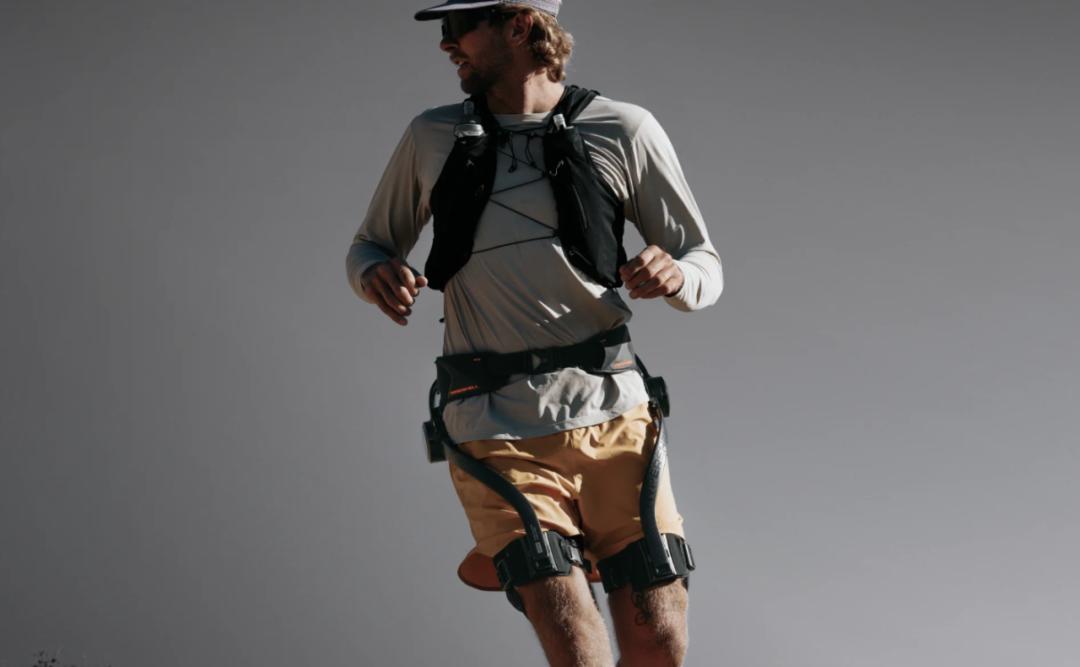
Hypershell X 系列

Search documents
外骨骼机器人「卷土重来」:面向消费级玩家,四大技术难点仍需攻克
3 6 Ke· 2026-01-23 03:28
Core Insights - The exoskeleton robot industry is experiencing a resurgence, driven by advancements in robotics and AI technology, with a focus on consumer-grade applications and outdoor activities [4][5][7] - Companies like Hypershell, ULS, DNSYS, and ChengTian are emerging as key players in the Chinese exoskeleton market, showcasing their products at major events like CES 2026 [3][4] - Hypershell has positioned itself as a leader in the consumer exoskeleton segment, achieving significant milestones in funding and product delivery [11][13] Industry Overview - Exoskeletons are wearable devices designed to enhance human movement capabilities, with applications primarily in medical rehabilitation and industrial settings [4][5] - The market for consumer-grade exoskeletons is still niche but is gaining traction, particularly among individuals seeking rehabilitation and enhanced mobility [8][11] Technological Developments - Hypershell has introduced innovative products, such as the Hypershell X Ultra, which features advanced AI algorithms and improved battery life, achieving a weight of 1.8 kg and a range of 30 km per battery [13][16] - The industry faces several technical challenges, including the need for better user experience, improved battery life, and the transition from passive to active assistance in exoskeleton functionality [24][26] Market Dynamics - The consumer exoskeleton market is characterized by a lack of standardized regulations, which poses challenges for widespread adoption and market growth [7][8] - Companies are exploring diverse applications for exoskeletons, including outdoor sports, urban commuting, and emergency services, to broaden their market appeal [16][19] Competitive Landscape - Key players in the market include Hypershell, ULS, DNSYS, and ChengTian, each focusing on different aspects of exoskeleton technology, from rehabilitation to outdoor sports [17][21] - The competition is intensifying as new startups enter the market, aiming to innovate and capture consumer interest [5][19]


融资5亿,陆奇看好的90后:又连融两轮
3 6 Ke· 2025-12-01 00:20
Core Insights - Hypershell, a Chinese exoskeleton robotics company, has successfully completed Pre-B and B funding rounds, raising a total of $70 million (approximately 495 million RMB) with a post-investment valuation nearing $400 million [1][6] - The company focuses on consumer-grade exoskeletons designed to enhance physical capabilities, making them accessible for outdoor enthusiasts and professionals in various fields such as industrial handling and rehabilitation [1][9] - Hypershell is the first company globally to mass-produce and sell consumer-grade exoskeletons, targeting ordinary consumers rather than military or medical markets [1][11] Company Overview - Founded by Sun Kuan in 2021, Hypershell aims to create affordable and portable exoskeletons for everyday users, addressing the growing need for enhanced mobility in an increasingly sedentary society [2][3][4] - The initial team comprised experts from robotics, ergonomics, and AI, focusing on balancing weight, cost, and assistive performance in their product development [4][5] Product Development - The team developed the Omega architecture, featuring a single motor drive system, which significantly reduced the weight of the exoskeleton from the industry standard of over 10 kg to just 1.8 kg [5][6] - By utilizing self-developed core components, the overall cost of the exoskeleton was reduced to one-tenth of traditional models, paving the way for a target price point around $1,000 [6][9] - The first product, Hypershell Go, was launched in 2023, successfully raising $1.23 million through crowdfunding on Kickstarter, with 40% of backers from the U.S. [6][7] Market Potential - The global exoskeleton market is projected to reach $5.8 billion by 2028, with a compound annual growth rate (CAGR) of approximately 47.7% from 2025 to 2028; the Chinese market is expected to reach around 4.2 billion RMB by 2025, maintaining a growth rate of about 50% [10] - Despite rapid growth, the industry remains in its early stages, with low penetration rates, particularly in China, where the market has evolved from a few billion RMB to a more substantial scale [10][11] Competitive Landscape - The exoskeleton market features a mix of traditional manufacturers focused on medical and industrial applications and emerging startups targeting consumer-grade wearable technology [10][11] - Hypershell distinguishes itself by designing products specifically for ordinary consumers from the outset, focusing on comfort, weight, affordability, and ease of use [11] Technological Trends - Advancements in materials, sensors, and battery technology are driving the evolution of exoskeletons from specialized equipment to consumer products, with applications expanding into everyday activities [9][12] - Key technological developments include lighter and more efficient drive systems, improved human motion recognition algorithms, modular structures, safety systems, and specialized algorithms for specific activities [12][13][14]