
外骨骼机器人

Search documents
“相城智造”闪耀CES!迈宝智能轻量化外骨骼机器人引发全球关注
Yang Zi Wan Bao Wang· 2026-02-13 11:53
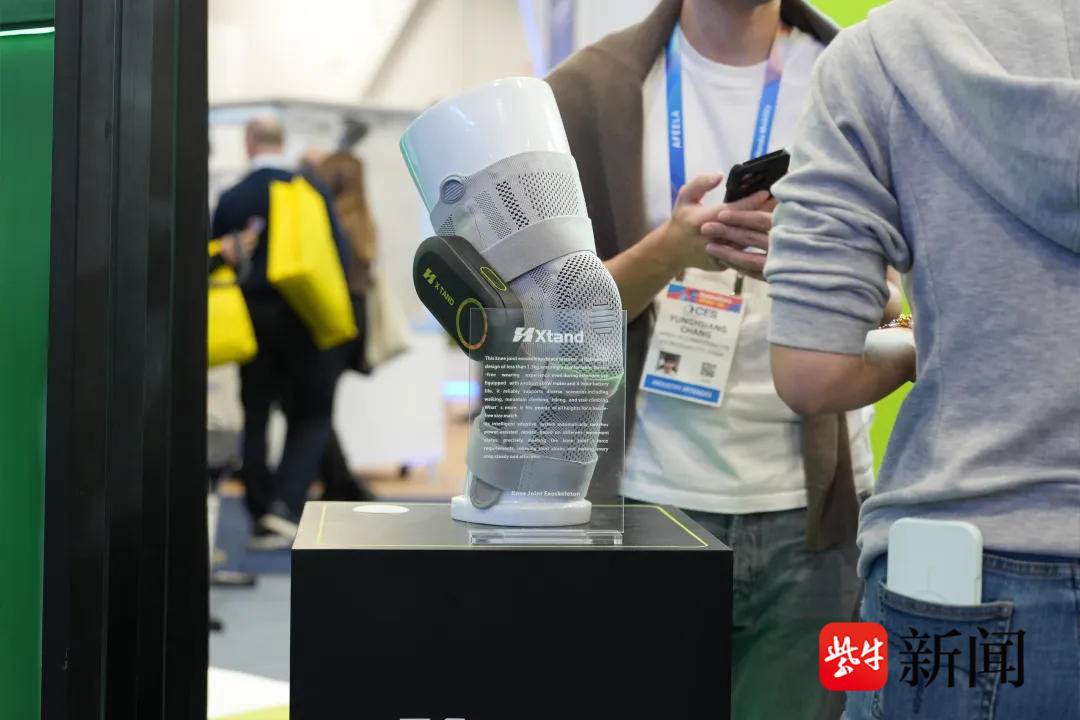
Group 1 - The core focus of the news is the launch of two innovative products by Maibao Intelligent at the CES 2026, namely the XTAND lightweight knee exoskeleton robot and the Pro version smart patellar belt, which have garnered significant attention at the event [2] - The XTAND exoskeleton weighs approximately 1.3 kilograms, features a 500-watt motor, and adaptive algorithms, supporting various activities such as walking and climbing stairs with a battery life of up to 4 hours [2] - The Pro version smart patellar belt utilizes AI dynamic pressure technology to provide precise protection in different sports scenarios, moving beyond traditional fixed pressure protective gear [2] Group 2 - Maibao Intelligent focuses on wearable robotic equipment, integrating research, production, and sales, and aims to advance the technology of wearable assistive exoskeleton robots [2] - The company has developed various robotic equipment, including active waist assist exoskeletons, which provide support for walking, carrying, and lower limb load assistance, and has been applied in military, emergency rescue, and industrial logistics sectors [4] - The company emphasizes human-machine interaction in its product development, aiming for AI to better recognize the user's movement intentions and provide appropriate assistance based on their gait and speed [4] Group 3 - The design of Maibao Intelligent's products is supported by a collaboration with the China Industrial Design Association, which aims to enhance product innovation and brand development through design empowerment [5] - The design team has focused on optimizing the product's appearance, functional structure, and user experience, resulting in a more compact and visually appealing exoskeleton that adheres to ergonomic principles [5][7] - Suzhou's Xiangcheng District is actively promoting industrial design, with initiatives to attract high-quality enterprises and talent, enhancing the overall competitiveness and innovation capacity of the industrial design sector [7]


财政部等部委明确:杜绝“玻璃门”排斥这类主体
Xin Lang Cai Jing· 2026-02-02 14:56
Core Viewpoint - The joint measures issued by multiple government departments aim to cultivate the elderly care service industry and promote the silver economy, ensuring fair competition and market vitality in the sector [1][3]. Group 1: Brand Development - Support for the establishment of distinctive branding for chain elderly care service providers to enhance brand recognition [4]. - Encouragement for elderly care service providers to implement trademark strategies and protect their brands [4]. - Promotion of quality elderly care brands through various initiatives to create leading enterprises in the sector [4]. Group 2: Market Supply and Demand - Optimization of elderly care services and products to meet community needs, including home care services and specialized medical assistance [6]. - Development of platforms for supply and demand matching in the elderly care market, enhancing resource utilization and facilitating connections among stakeholders [6]. Group 3: Technological Empowerment - Encouragement for technological advancements in elderly care, including the use of AI, big data, and robotics to enhance service delivery [7]. - Support for the application and testing of smart elderly care products within service institutions to improve user experience [7]. Group 4: Development Environment Optimization - Creation of a fair competitive environment by prohibiting restrictive clauses in government procurement processes for elderly care services [8]. - Establishment of standards and certification systems for elderly care products and services to ensure quality and safety [8]. Group 5: Support Measures - Improvement of government services for elderly care providers, including streamlined licensing processes and access to information on policies and resources [11]. - Provision of land and operational support for elderly care facilities, prioritizing areas based on local aging population needs [11].
外骨骼机器人「卷土重来」:面向消费级玩家,四大技术难点仍需攻克
3 6 Ke· 2026-01-23 03:28
Core Insights - The exoskeleton robot industry is experiencing a resurgence, driven by advancements in robotics and AI technology, with a focus on consumer-grade applications and outdoor activities [4][5][7] - Companies like Hypershell, ULS, DNSYS, and ChengTian are emerging as key players in the Chinese exoskeleton market, showcasing their products at major events like CES 2026 [3][4] - Hypershell has positioned itself as a leader in the consumer exoskeleton segment, achieving significant milestones in funding and product delivery [11][13] Industry Overview - Exoskeletons are wearable devices designed to enhance human movement capabilities, with applications primarily in medical rehabilitation and industrial settings [4][5] - The market for consumer-grade exoskeletons is still niche but is gaining traction, particularly among individuals seeking rehabilitation and enhanced mobility [8][11] Technological Developments - Hypershell has introduced innovative products, such as the Hypershell X Ultra, which features advanced AI algorithms and improved battery life, achieving a weight of 1.8 kg and a range of 30 km per battery [13][16] - The industry faces several technical challenges, including the need for better user experience, improved battery life, and the transition from passive to active assistance in exoskeleton functionality [24][26] Market Dynamics - The consumer exoskeleton market is characterized by a lack of standardized regulations, which poses challenges for widespread adoption and market growth [7][8] - Companies are exploring diverse applications for exoskeletons, including outdoor sports, urban commuting, and emergency services, to broaden their market appeal [16][19] Competitive Landscape - Key players in the market include Hypershell, ULS, DNSYS, and ChengTian, each focusing on different aspects of exoskeleton technology, from rehabilitation to outdoor sports [17][21] - The competition is intensifying as new startups enter the market, aiming to innovate and capture consumer interest [5][19]

振江股份(603507):首次覆盖:十张图表解读公司投资价值
Shanghai Aijian Securities· 2026-01-21 07:10
Investment Rating - The report provides an initial coverage with a "Buy" rating for the company [7]. Core Insights - The company is expected to see significant growth in net profit from 171 million in 2025 to 478 million in 2027, with corresponding PE ratios of 30, 16, and 11 times [7]. - The company is actively expanding into assembly, casting, and exoskeleton robotics, which are anticipated to contribute to new revenue streams [7]. - The company maintains stable relationships with major clients like Siemens Gamesa and Enercon, which are expected to drive growth in traditional wind power business [7]. - The report highlights the potential for increased profitability due to rising single-unit power and value in wind energy [7]. Financial Data and Profit Forecast - Total revenue projections are 3,842 million for 2023, increasing to 9,355 million by 2027, with a notable growth rate of 75.4% in 2026 [6][28]. - The gross profit margin is expected to fluctuate, with a forecast of 20.3% in 2023, dropping to 18.2% by 2026 and remaining stable thereafter [6][29]. - The return on equity (ROE) is projected to rise from 7.6% in 2023 to 13.9% in 2027, indicating improved profitability [6][29]. Industry and Company Situation - The company primarily focuses on wind and photovoltaic products, with a significant portion of revenue expected to come from overseas markets, projected to exceed 75% by 2024 [9][14]. - The report notes that the global wind power installed capacity is rapidly increasing, which is beneficial for the wind equipment and components industry [7]. - The company is positioned as a key supplier for Siemens Gamesa, which holds a significant market share in offshore wind power installations [17][22]. Unique Perspectives - Contrary to market views that suggest intense competition in the wind power sector limits profitability, the report argues that the company's collaborations with major European firms will sustain growth and improve margins [7]. - The exoskeleton robotics market is expected to grow significantly, with the company poised to begin mass production in 2026, potentially becoming a new profit driver [7][21]. Key Assumptions - Revenue growth rates for the wind power business are assumed to be 20%, 19%, and 18% for 2025-2027, with gross margins of 24.3%, 25.0%, and 25.2% respectively [7][24]. - The casting and assembly businesses are projected to contribute revenues starting from 0 million in 2025 to 30 million by 2027, with corresponding gross margins improving over time [7][24].

中信建投:集采规则进一步优化,看好器械板块中长期投资机会
Ge Long Hui· 2026-01-16 00:00
Group 1 - The core viewpoint of the article highlights that the medical device sector is experiencing a performance turning point due to the optimization of procurement policies, continuous improvement in equipment bidding data, and a gradual decrease in channel inventory [1] - The high-value consumables segment is expected to see valuation and performance recovery under the backdrop of ongoing optimization of procurement policies [1] - There is optimism regarding the international expansion of domestic medical device companies, which are anticipated to undergo valuation reshaping due to their long-term growth potential in international markets [1] Group 2 - The article emphasizes investment opportunities in technological innovation within the medical device sector, particularly in areas such as AI in healthcare, brain-computer interfaces, surgical robots, and exoskeleton robots, which are expected to attract investor attention [1]

中信建投:集采规则进一步优化 看好器械板块中长期投资机会
智通财经网· 2026-01-15 23:55
Core Viewpoint - The medical device sector is experiencing a performance turning point due to optimized procurement policies, improved bidding data, and decreasing channel inventory, particularly in the high-value consumables segment, which is expected to see valuation and performance recovery [1][7]. Group 1: Procurement Policy Updates - The sixth batch of national high-value medical consumables procurement was opened on January 13, with 12 types of consumables included, resulting in 440 products from 202 companies being selected out of 496 bids from 227 companies [2][3]. - The procurement process aims to ensure clinical continuity and quality by grouping products based on demand and supply capabilities, allowing for more competitive pricing strategies [4][6]. - Special product functionalities are considered in the procurement process, allowing for differentiated pricing based on clinical value and innovation [5]. Group 2: Market Outlook - The high-value consumables segment is expected to see a performance turning point by 2026, particularly in areas like electrophysiology, peripheral intervention, urology, and cardiovascular intervention, as the effects of procurement policies take hold [7]. - There is optimism regarding the international expansion of domestic medical device companies, with expectations that international business will surpass domestic growth, leading to valuation re-evaluation for companies with significant overseas operations [1][7]. - Investment opportunities in technological innovation within the medical device sector are anticipated, with emerging areas such as AI healthcare, brain-computer interfaces, surgical robots, and exoskeleton robots likely to attract investor attention [1][7].
光伏出口退税将取消,谷歌为苹果AI提供支持 | 财经日日评
吴晓波频道· 2026-01-14 00:29
Group 1: Photovoltaic Industry - The export tax rebate for photovoltaic products will be fully canceled starting April 1, 2026, increasing export costs for companies [2] - The export tax rebate for photovoltaic silicon wafers, batteries, and modules was previously reduced from 13% to 9% in December 2024, indicating a trend of declining export tax rates [2] - The Chinese photovoltaic industry has seen a decrease in export prices since 2024, leading to a "volume increase, price decrease" situation, with some companies passing on rebate amounts to foreign buyers, resulting in profit loss [2][3] - The cancellation of export tax rebates aims to promote rational competition in the photovoltaic industry and curb excessive price declines [3] Group 2: Elderly Care Robotics - Eight departments, including the Ministry of Civil Affairs, have issued measures to encourage the development of the elderly care robotics industry, promoting technological integration across various sectors [4] - The initiative aims to provide comprehensive intelligent support for the elderly, leveraging technologies such as embodied intelligence and new materials [4][5] - The market for elderly care technology products and services is expected to expand rapidly, although current technology maturity remains insufficient [5] Group 3: Real Estate Market in Tianjin - Tianjin will tighten control over new housing prices, limiting price changes to within 10% of the registered price for new sales permits [6] - The city has previously implemented price control measures to stabilize housing prices, with over 20 cities having introduced similar "price drop limits" [6][7] - The new management approach aims to control both price increases and decreases, although enforcing price decreases may face challenges [6] Group 4: AI and Technology Collaborations - Google and Apple have entered a strategic partnership, with Google's Gemini model being used to support Apple's AI developments, including Siri [8] - Apple is expected to pay approximately $1 billion annually to Google for technology licensing, indicating a significant investment in AI capabilities [8] - Nvidia and Eli Lilly have announced a $1 billion collaboration to establish a research lab focused on AI applications in the pharmaceutical industry, highlighting the growing intersection of AI and healthcare [10][11] Group 5: ByteDance's Stock Options - ByteDance's stock option price has increased from $44 in 2019 to $226.07 in January 2024, representing a rise of over 4 times [14] - The company is reportedly raising its valuation to between $350 billion and $370 billion as it continues to enhance employee compensation and stock option incentives [14][15] - ByteDance's strong financial performance and aggressive AI application strategy position it as a leading player in the tech industry, despite facing increasing policy risks in overseas markets [15]





上市公司竞相“抢风口” 谁能驶入银发经济蓝海
Shang Hai Zheng Quan Bao· 2026-01-14 00:12
Group 1 - The government is promoting the integration of technology in elderly care services, emphasizing the use of big data, cloud computing, artificial intelligence, and other advanced technologies for health monitoring and personalized services [1] - There is a strong growth in the silver economy, particularly in industries catering to both disabled and semi-disabled individuals, as well as active elderly consumers, driven by advancements in AI, robotics, and IoT [2] - Companies are focusing on rehabilitation and elderly care services, with significant investments planned in smart elderly care projects to capitalize on the silver economy [3] Group 2 - The development of smart and digital products for the elderly is a primary focus, with companies creating multi-layered, scenario-based smart elderly care products and services [4] - Companies are launching various rehabilitation robots and smart solutions for elderly care, with ongoing pilot tests in real-life scenarios [5] - Cross-industry collaborations are emerging, with companies in education and real estate exploring opportunities in the silver economy to enhance their service offerings [6]

八部门发文促进银发经济发展 这些赛道迎来风口
Mei Ri Jing Ji Xin Wen· 2026-01-13 16:17
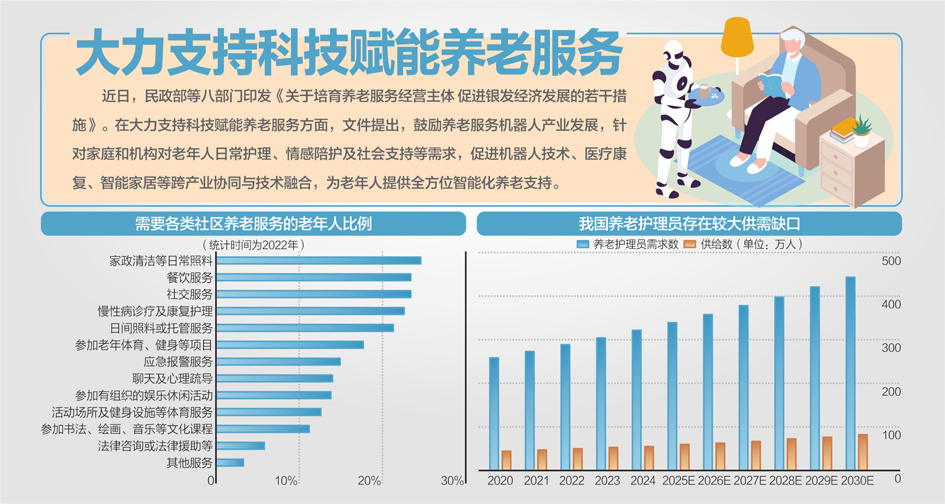
Core Viewpoint - The Ministry of Civil Affairs and eight other departments have jointly issued measures to stimulate the vitality of various elderly care service providers, create a favorable investment environment, and promote the development of the silver economy to better meet the diverse needs of the elderly [1][3] Group 1: Policy Measures - The measures aim to optimize the supply of elderly care services and age-friendly products, encouraging community-based operations and integration of resources to enhance service delivery [4] - The initiative supports the development of home care services for the elderly, including professional medical accompaniment and mobile bathing services [4] - There is a focus on promoting smart rehabilitation aids and age-appropriate food and clothing products, enhancing the living environment for the elderly [4] Group 2: Market Dynamics - By the end of 2025, there will be 41,700 elderly care institutions in China, with 722,000 employees, reflecting a 12.2% year-on-year increase, and 52.2% of these institutions will be privately owned [5] - Social forces are becoming the main contributors to the diversified supply of elderly care services, indicating a shift in the service landscape [5] Group 3: Technological Support - The measures encourage technological advancements in elderly care, integrating big data, AI, and other technologies for health monitoring and personalized services [6] - There is a push for the development of elderly care robots and smart home technologies to meet the daily care and emotional support needs of the elderly [6] - The market is expected to see new opportunities driven by the integration of technology in elderly care, with a focus on smart home products and AI solutions [7]
八部门发文鼓励养老服务机器人产业发展,有望成为应对老龄化的战略性支撑
Xuan Gu Bao· 2026-01-13 14:46
Industry Overview - The Ministry of Civil Affairs and eight other departments have introduced measures to cultivate the elderly care service industry and promote the silver economy, emphasizing the encouragement of elderly care technology research and product development [1] - The aging population in China, with over 310 million people aged 60 and above, and the shortage of caregiving personnel are driving the initial phase of large-scale application of elderly care robots [1] - The elderly care robot industry is expected to transition from "function realization" to "experience optimization" due to advancements in AI, 5G, cloud computing, and core components, with a projected market size exceeding 66 billion yuan by 2030 [2] Company Insights - Ousheng Electric has been deeply involved in the elderly care robot sector for many years, achieving a high level of market recognition and meeting conditions for large-scale production with its fifth-generation ICARE-BOT wearable intelligent nursing system [3] - The ICARE-BOT features advanced intelligent recognition, automatic care, and health monitoring technologies, and has obtained multiple international certifications, allowing for global market access [3] - Yueshen Health's joint venture, Shanghai Yueshen Jinyi Robot Technology Co., Ltd., focuses on the development, production, and sales of robots for medical rehabilitation and elderly care, with products already in practical use in cognitive, neurological, and orthopedic rehabilitation [3]
