IDC(互联网数据中心)业务

Search documents
上海一公司退市半个多月后,突然就有钱还了?最新回应
Mei Ri Jing Ji Xin Wen· 2025-11-09 08:22
Core Points - Shanghai Longyu Data Co., Ltd. (formerly Longyu Co., now "Longyu 3", 603003.SH) officially delisted on July 3, 2025, due to the major shareholder's inability to repay 868 million yuan [1] - After delisting, the major shareholder, Shanghai Longyu Holdings Co., Ltd. (holding 31.13%), unexpectedly repaid 337 million yuan within 20 days, raising questions about the timing and logic of the repayments [2] - Longyu 3 acquired Shanghai Yunman Yisuan Information Technology Co., Ltd. during the delisting period, which has raised concerns about potential financial misconduct involving the use of company funds to repay debts [3] Financial Situation - As of December 31, 2024, Yunman Yisuan reported total assets of approximately 357 million yuan and total liabilities of about 321 million yuan, with accounts payable around 273 million yuan [3] - Longyu's financial reports for 2023 and 2024 received "unable to express an opinion" audit reports, indicating significant financial issues [4] - The last financial report before delisting showed cash reserves of approximately 703 million yuan [10] Shareholder Concerns - Minority shareholders expressed frustration over the major shareholder's refusal to repay the occupied funds before delisting, questioning the rationale behind the decision to allow the company to lose its listing status [8][10] - The company faced lawsuits from minority shareholders demanding repayment of the occupied funds totaling 895 million yuan [5][6] Acquisition and Corporate Governance - The acquisition of Yunman Yisuan was not publicly disclosed until after the delisting, raising suspicions about the timing and intent behind the transaction [12][14] - The new vice president of Longyu, Liu Jianeng, has close ties to Yunman Yisuan, which has led to concerns about the legitimacy of the acquisition and potential conflicts of interest [19][20] Legal and Regulatory Implications - The major shareholder and related parties faced penalties for financial misconduct and fund occupation, which contributed to the company's delisting [6] - Financial experts have raised alarms about the potential legal risks associated with the alleged use of public company funds to settle debts owed by the major shareholder [20]



中国电信Q3净利润同比增长3.6%,营收同比微降0.91% | 财报见闻
Hua Er Jie Jian Wen· 2025-10-21 10:51
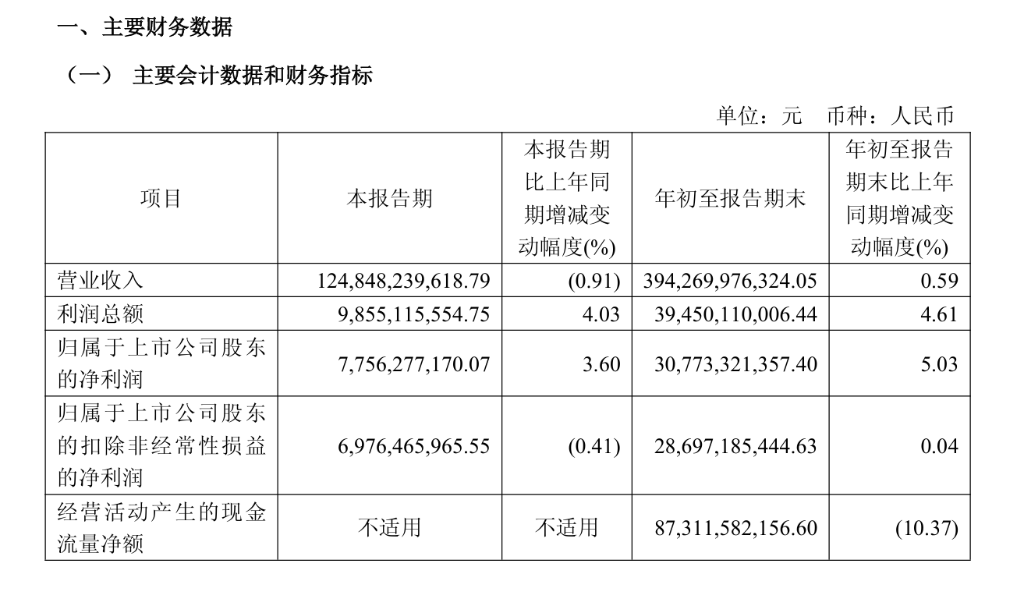
Core Insights - The core viewpoint of the articles indicates that China Telecom's revenue has slightly decreased while net profit has increased, driven mainly by non-operating items, and highlights the contrasting performance between emerging and traditional businesses [1][3][4]. Financial Performance - In Q3 2025, China Telecom reported a revenue of 1248.48 billion RMB, a year-on-year decrease of 0.91% [1][2]. - The net profit attributable to shareholders increased by 3.60% to 77.56 billion RMB, primarily driven by non-operating projects [1][2]. - For the first three quarters of 2025, total revenue reached 394.27 billion RMB, a growth of 0.59% year-on-year, while net profit was 307.73 billion RMB, up 5.03% [2]. User Growth - The company added 12.67 million mobile users and 3.05 million broadband users in the first three quarters of 2025 [1][4]. - The total number of mobile users reached 437 million, with a 5G penetration rate of 66.9% [4]. - The net increase in mobile users was lower than the previous year's 14.90 million, and broadband user growth also slowed significantly from 6.10 million to 3.05 million [4]. Emerging Business Growth - Emerging businesses are identified as the main growth driver, with significant increases in revenue from strategic new businesses [3]. - IDC business revenue reached 27.5 billion RMB, growing by 9.1%, while security business revenue was 12.6 billion RMB, up 12.4% [3]. - "Smart revenue" surged by 62.3%, IoT revenue grew by 34.2%, and quantum revenue doubled with a growth of 134.6% [3]. Cost Control and R&D Investment - The company maintained effective cost control, with operating costs rising only 0.1% to 274.8 billion RMB [6]. - Sales expenses decreased by 1.4%, optimizing the expense structure [6]. - R&D expenses increased by 4.4% to 9.1 billion RMB, focusing on key technologies related to network, cloud, AI, and quantum security [6].