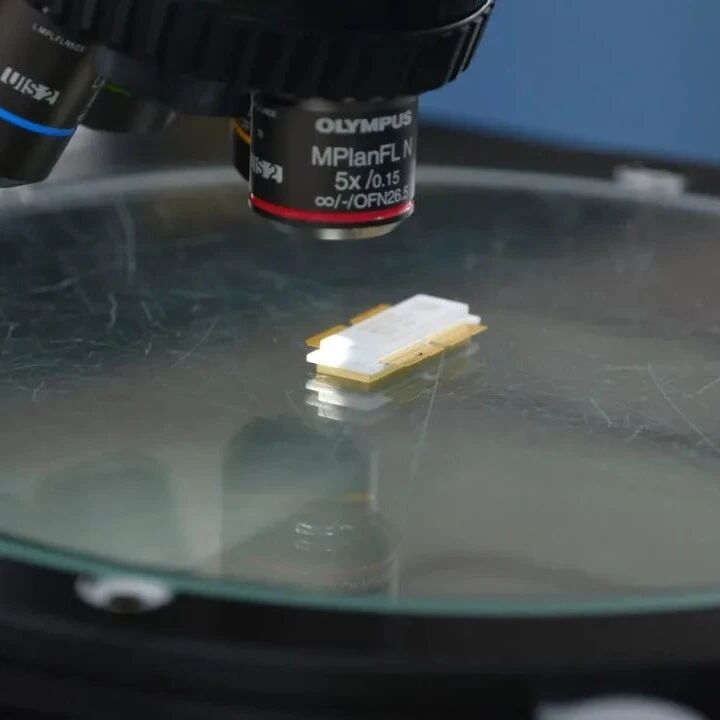
LDMOS PA

Search documents
恩智浦“退场”,射频PA市场格局重构
3 6 Ke· 2026-01-12 05:48
Core Insights - NXP's decision to exit the RF power amplifier (PA) business marks a significant shift in the market landscape and global supply chain, creating historic opportunities for domestic manufacturers with technical capabilities [1][5][21] Industry Dynamics - The RF PA industry has been a focal point of competition during the transition from 3G to 5G, with NXP's strategic moves reflecting the challenges posed by rapid technological advancements and market demands [2][3] - The shift from LDMOS to GaN-on-SiC technology has become essential for meeting the higher performance requirements of 5G applications [2][3] NXP's Strategic Shift - NXP's acquisition of Freescale in 2015 laid the foundation for its dominance in the 4G market, but the company struggled to adapt to the rapid changes in the 5G landscape, leading to its decision to close the ECHO GaN wafer fab by Q1 2027 [2][4][3] - The company faced declining revenues in its RF business due to mismatches between product offerings and market demands, compounded by internal resource allocation pressures from its automotive and industrial segments [4][5] Market Impact - NXP's exit is expected to create a market space of approximately $150-300 million annually, benefiting competitors like Sumitomo Electric and opening opportunities for domestic firms such as Huatai Electronics [5][7][19] - The withdrawal of NXP has triggered supply chain concerns among dependent manufacturers, leading to increased costs and potential supply interruptions [5][7] Domestic Opportunities - Huatai Electronics is positioned to capitalize on the market gap left by NXP, having developed a comprehensive range of alternative products that meet the needs of key applications in base stations and ISM devices [9][14] - The company emphasizes its vertical integration strategy, which enhances supply chain security and allows for rapid response to market demands [13][19] Future Outlook - The RF PA market is expected to stabilize as new growth drivers emerge, including the commercialization of new frequency bands and advancements in 5G-A technology [17][20] - Huatai Electronics aims to capture market share from NXP's exit while competing with leading global PA manufacturers, focusing on high-value, high-reliability products [20][21]


恩智浦“退场”,射频PA市场格局重构
半导体行业观察· 2026-01-12 01:31
Core Viewpoint - The exit of NXP from the RF power amplifier (PA) business marks a significant shift in the market landscape, providing a historic opportunity for domestic manufacturers with technological capabilities [1][5][21]. Group 1: NXP's Strategic Shift - NXP's decision to close its ECHO GaN wafer fab and exit the 5G RF PA business reflects a broader restructuring of the global supply chain and market dynamics [1][5]. - The company initially gained a strong position in the PA market by acquiring Freescale in 2015, capitalizing on the 4G boom with LDMOS technology [3][4]. - However, the transition to 5G brought challenges, including a significant drop in expected market demand and a lag in technological response, leading to a decline in NXP's RF business revenue [4][5]. Group 2: Market Impact and Supply Chain Reactions - NXP's exit is expected to create a market gap of approximately $150-300 million annually, benefiting competitors like Sumitomo Electric and opening opportunities for domestic firms [10][21]. - The "last time buy" mechanism initiated by NXP has led to increased costs and supply chain pressures for dependent manufacturers, particularly affecting smaller clients [7][9]. - The exit has prompted immediate evaluations for alternative suppliers among manufacturers using NXP chips, with a focus on finding reliable replacements [9][10]. Group 3: Opportunities for Domestic Manufacturers - Domestic firms, particularly Huatai Electronics, are positioned to capitalize on the market vacuum left by NXP, having established themselves as key players in the RF PA supply chain [10][12]. - Huatai Electronics has developed a comprehensive range of replacement products for critical models previously supplied by NXP, ensuring minimal disruption for clients [12][15]. - The company emphasizes vertical integration in its supply chain, enhancing its ability to respond to market fluctuations and ensuring supply chain security [15][16]. Group 4: Future Market Dynamics - The exit of NXP signals a new competitive landscape in the global RF PA market, with a focus on high integration, reliability, and value-added products [21][24]. - Huatai Electronics aims to capture market share from NXP's exit while competing with leading global PA manufacturers, targeting high-frequency and high-power applications [24][23]. - The ongoing technological advancements and emerging applications in 5G and beyond present new growth opportunities for the RF PA market, despite the current slowdown in market growth [21][24].