MLU 芯片

Search documents
2025年中国智能芯片行业市场洞察报告
Sou Hu Cai Jing· 2025-11-21 16:15
Core Insights - The report highlights the rapid growth and potential of the Chinese smart chip industry, driven by advancements in artificial intelligence, IoT, and 5G technology, with a projected market size exceeding 600 billion yuan by 2030 [1][2][3] Industry Overview and Background Analysis - Smart chips are defined as highly integrated circuits capable of perception, computation, and decision-making, integrating AI algorithms and big data analysis to respond to complex environments [8][9] - The smart chip industry in China has evolved from reliance on imports to developing domestic capabilities, with significant government support and technological breakthroughs in recent years [19][23][24] Market Size and Growth Trends - The Chinese smart chip market has experienced a compound annual growth rate (CAGR) of over 20% from 2018 to 2022, driven by demand in consumer electronics, smartphones, and IoT applications [33][35] - The AI chip segment is the largest, accounting for over 40% of the market, with rapid growth in autonomous driving and edge computing chips [36][41] Technological Development and Innovation Trends - Key technologies in smart chips include Neural Processing Units (NPUs) optimized for AI tasks, edge computing for real-time data processing, and innovations in high-performance computing architectures [51][54][57] - The report emphasizes the importance of hardware-software co-design and the integration of advanced semiconductor processes to enhance performance and reduce power consumption [52][58]





商汤 寒武纪,宣布合作
Xin Lang Cai Jing· 2025-10-17 03:29
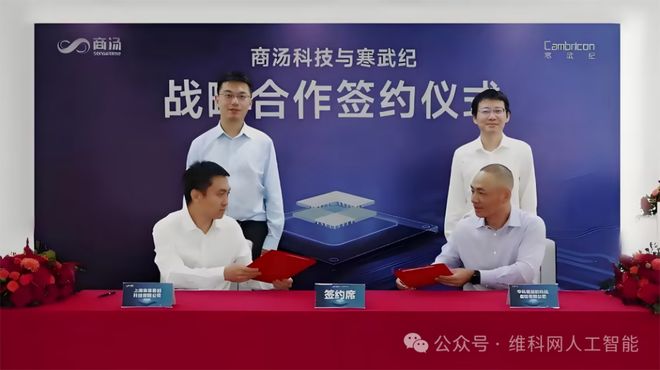
Group 1 - SenseTime (00020.HK) and Cambricon (688256.SH) signed a long-term strategic cooperation agreement in Beijing, aiming for the domestic production of the entire AI infrastructure chain [1] - The cooperation arises from multiple real demands, including policy requirements for domestic production rates in sectors like finance, telecommunications, and government, limiting foreign brands like NVIDIA [3] - Market shifts have led clients who previously relied on NVIDIA's A100 to accept domestic alternatives due to chip shortages, price limits, and embargoes [3] Group 2 - SenseTime possesses the "Riri Xin" large model but lacks its own computing power, while Cambricon has MLU chips but lacks core application scenarios, indicating strong complementary needs [4] - The cooperation will advance in three areas: chip adaptation with Cambricon's latest cloud inference card quickly adapting to SenseTime's large model for "zero migration," integrated devices combining "chip + server + model" for specific enterprise needs, and international expansion targeting Southeast Asia and the Middle East with bundled "chip + algorithm" solutions [4] - This collaboration poses challenges for system integrators relying on "NVIDIA + open-source models," as the weight of domestic production in future tenders increases, potentially diminishing the competitiveness of companies lacking domestic chip and model reserves [4]