MOTCAP M11全身便携式动捕系统

Search documents
一套动作数据,如何成为所有人形机器人的「通用语言」?
机器人大讲堂· 2025-10-31 09:09
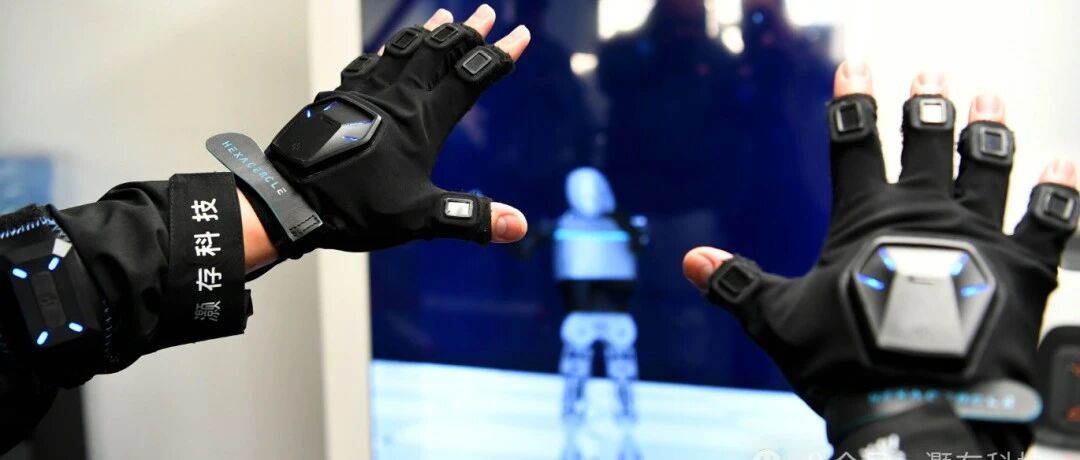
Core Viewpoint - The article discusses the challenges and opportunities in the humanoid robotics industry, particularly focusing on the need for a universal language for motion data to overcome the "data islands" created by proprietary standards among different companies [1][21][23]. Group 1: Industry Challenges - The humanoid robotics industry faces significant barriers due to fragmented standards among over a hundred dexterous hand companies, leading to data isolation that hinders large-scale implementation [1][8]. - The lack of unified hardware standards results in difficulties in adapting motion data across different brands, causing inefficiencies in development and deployment [8][10]. - The industry is also plagued by closed control protocols, requiring developers to repeatedly create data conversion interfaces for different brands, consuming valuable resources [10][12]. Group 2: Solutions Proposed by Haocun Technology - Haocun Technology aims to break down data barriers by creating a "universal" motion data system that allows the same human motion to drive different brands of dexterous hands without the need for hardware unification [4][5]. - The company has developed a full-stack technology system that converts human hand movements into standardized data, enabling "one-time collection, multi-end use" [4][5][14]. - Their approach focuses on high-precision data collection in real-world scenarios, ensuring that the data is applicable to various tasks and environments [13][16]. Group 3: Technological Innovations - Haocun Technology's system features low-latency data transmission, ensuring real-time synchronization between human actions and robotic execution, which is crucial for applications in industrial assembly and medical assistance [15][21]. - The company has introduced two core devices: the MOTCAP G6s data glove for precise hand motion capture and the MOTCAP M11 portable full-body motion capture system, which reduces the complexity and cost of data collection across multiple scenarios [16][18]. - The system supports multi-device collaboration, allowing for comprehensive data capture and integration across different robotic components, thus expanding the potential for complex task applications [15][21]. Group 4: Industry Trends and Future Outlook - The article highlights the rapid advancements made by industry pioneers like Tesla and Figure AI, which are pushing the boundaries of humanoid robotics but also contributing to the formation of new data silos [21][22][23]. - The future of humanoid robotics may rely on standardized motion data derived from human movement patterns, optimized by AI, to facilitate broader applications and scalability in the industry [23].