Mixture of Experts (MoE)

Search documents
从语言到意识的“一步之遥”,AI究竟要走多远?
腾讯研究院· 2025-06-26 07:58
Core Insights - The ultimate goal of artificial intelligence (AI) is not just to create systems that can outperform humans in specific tasks, but to develop general artificial intelligence (AGI) that reflects human intelligence and helps in self-understanding [3][10] - Current large language models (LLMs) exhibit impressive problem-solving capabilities but lack continuous learning and real-world interaction, limiting their effectiveness [6][10] - The concept of a global workspace theory (GWT) is explored as a potential framework for understanding consciousness and intelligence in both humans and AI systems [9][30] Group 1: Limitations of Current AI - LLMs are primarily language processors and do not possess capabilities such as perception, memory, or social judgment, which are essential for true intelligence [6][10] - The modular approach in AI development is being pursued to enhance intelligence, but the coordination between different modules remains a challenge [7][12] - The GWT suggests that consciousness is a collaborative process among various cognitive modules, which could inform AI design [9][10] Group 2: Advances in AI Research - Recent developments in modular AI, such as the "Mixture of Experts" model, aim to improve computational efficiency by utilizing smaller networks [7][12] - The soft attention mechanism has been introduced to allow neural networks to maintain selectivity without making absolute choices, enhancing their learning capabilities [18][19] - The integration of GWT principles into AI systems could lead to more human-like cognitive functions, potentially paving the way for AGI [15][19] Group 3: Theoretical Implications - The exploration of GWT in AI research raises questions about the nature of consciousness and whether AI can achieve a form of awareness [30][31] - The debate continues on whether consciousness is a product of biological evolution or can be replicated in machines, with various theories offering different perspectives [30][32] - The ongoing research into AGI not only aims to create intelligent machines but also provides insights into the fundamental nature of human intelligence [32][33]


一个「always」站在大模型技术C位的传奇男子
量子位· 2025-05-10 02:39
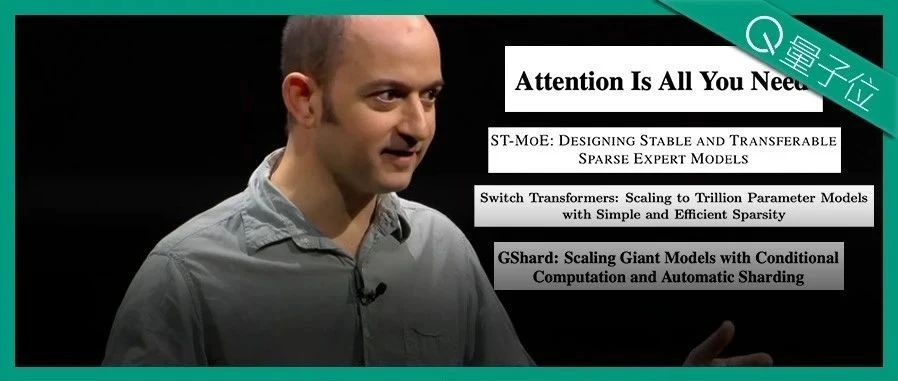
Core Viewpoint - The article highlights the significant contributions of Noam Shazeer in the AI field, particularly in the development of large language models (LLMs) and the Transformer architecture, emphasizing his role as a key figure in the evolution of AI technologies [9][10][12]. Group 1: Contributions to AI Technology - Shazeer is recognized as one of the most influential authors of the Transformer model, credited with pivotal advancements such as the introduction of the Mixture of Experts (MoE) architecture [10][18][24]. - His work on the paper "Attention Is All You Need" in 2017 is considered a foundational moment for LLMs, leading to widespread adoption and further innovations in the field [18][23]. - Shazeer has consistently anticipated technological trends, contributing to various breakthroughs, including the GShard framework for scaling models and the Switch Transformers, which achieved a parameter count of 1.6 trillion [30][33][41]. Group 2: Career and Achievements - Shazeer has a remarkable academic and professional background, having achieved a perfect score at the International Mathematical Olympiad in 1994 and later studying at Duke University [50][52]. - He joined Google as employee number 200 and made significant contributions to various projects, including Google's search spelling correction and the development of machine learning systems for ad ranking and spam detection [55][56]. - After a brief period away from Google, he co-founded Character.AI, which gained a valuation of $1 billion before being acquired by Google for $2.7 billion, leading to his return to the company [67][69]. Group 3: Impact on the Industry - Shazeer's innovations have laid the groundwork for current AI models, with many contemporary systems, including GPT-4 and others, building upon his research [41][44]. - His development of the Adafactor optimizer and Multi Query Attention (MQA) has been crucial for enhancing the efficiency of large models [43][44]. - The article concludes that Shazeer's foresight and contributions have positioned him as a defining figure in the current era of AI, with his work continuing to influence the direction of the industry [11][12][40].