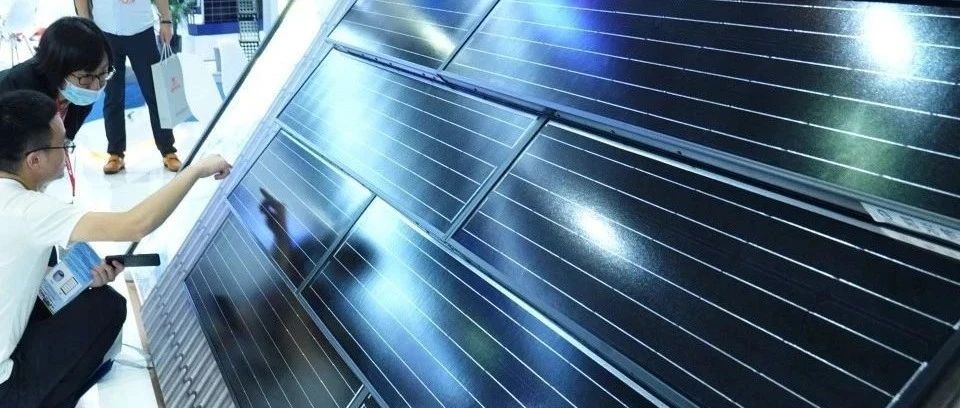
N型TOPCon

Search documents
增资不超30亿元 晶科能源子公司欲引战投还债
Bei Jing Shang Bao· 2026-01-20 16:57
Core Viewpoint - JinkoSolar is planning to raise up to 3 billion yuan through its subsidiary, JinkoSolar (Haining) Co., Ltd., to improve its financial structure and repay debts, amidst a challenging solar industry environment [1][2]. Group 1: Financial Performance and Debt Situation - As of the end of Q3 2025, JinkoSolar (Haining) has a total asset of approximately 20.54 billion yuan and a total liability of about 12.06 billion yuan, resulting in a debt-to-asset ratio of approximately 58.73% [2]. - JinkoSolar's overall revenue for the first three quarters of 2025 is around 47.99 billion yuan, a year-on-year decline of 33.14%, with a net profit attributable to shareholders of approximately -3.92 billion yuan [2][3]. - The company's debt-to-asset ratio reached 74.48% by the end of Q3 2025, indicating a high level of financial leverage [4]. Group 2: Strategic Investment and Future Plans - JinkoSolar aims to introduce strategic investors, including Xingyin Financial Asset Investment Co., Ltd. and China Orient Asset Management Co., Ltd., with a combined cash investment not exceeding 3 billion yuan, potentially acquiring up to 24.67% of the equity post-investment [1]. - The company plans to focus on its core business and leverage its technological and market advantages to steadily improve its financial situation and reduce its debt-to-asset ratio [4]. - JinkoSolar anticipates that the introduction of high-efficiency N-type TOPCon technology and the growth in energy storage revenue will contribute positively to its performance in the coming years [3].

中国光伏行业协会重申加强行业自律
第一财经· 2025-08-22 13:06
Core Viewpoint - The article discusses the ongoing "anti-involution" trend in the photovoltaic (PV) industry, highlighted by the recent centralized procurement bidding by China Huadian Corporation, which reflects changes in pricing and competition dynamics within the sector [3][5]. Group 1: Procurement Details - China Huadian Corporation's centralized procurement for PV modules spans a total scale of 20GW, divided into two segments: 18GW for segment one and 2GW for segment two [3]. - The average bidding price for segment one has risen to 0.71 yuan/W, exceeding the previously established industry self-discipline floor price of 0.692 yuan/W, with only a few bids below 0.7 yuan/W [3]. - For segment one, over 40 companies participated, with bid prices ranging from 0.6464 yuan/W to 0.7518 yuan/W, and an average of 0.7103 yuan/W, where only five bids were below 0.7 yuan/W [4]. - Segment two requires high-efficiency N-type TOPCon, HJT, and BC modules, with 26 companies bidding, and prices ranging from 0.7076 yuan/W to 0.8431 yuan/W, averaging 0.7461 yuan/W, with over 60% of bids above 0.73 yuan/W [4]. Group 2: Industry Self-Regulation Initiatives - The China Photovoltaic Industry Association (CPIA) issued an initiative to strengthen industry self-regulation, emphasizing the need for fair competition and adherence to legal frameworks to combat predatory pricing [5]. - The initiative calls for optimizing bidding rules by reducing price weight and increasing the importance of technical evaluation in the bidding process [5]. - Recent discussions among various government departments have focused on curbing low-price disorderly competition and establishing effective pricing mechanisms to prevent below-cost sales and false marketing practices [6].