NYMEX天然气期货合约

Search documents
地缘冲突与极寒天气影响 油气价格震荡上行
Shang Hai Zheng Quan Bao· 2026-01-26 19:16
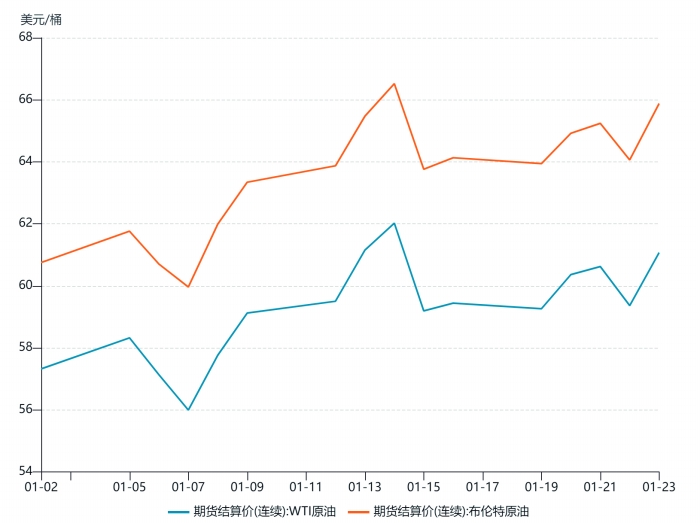
Group 1 - The oil and gas sector has seen a significant increase of 4.32% as of January 26, leading the A-share market, driven by geopolitical tensions and a surge in U.S. natural gas futures prices due to cold weather [2] - As of January 23, the price of light crude oil futures for March delivery on the New York Mercantile Exchange was $61.07 per barrel, while Brent crude oil futures for March delivery were priced at $65.88 per barrel [2] - Analysts indicate that international oil prices are influenced by geopolitical conflicts, supply-demand fundamentals, and expectations of Federal Reserve interest rate cuts, with recent tensions in Iran and Venezuela being key factors for short-term price fluctuations [3] Group 2 - The global oil market is likely to continue experiencing a supply surplus through 2026, with a low probability of a 25 basis point rate cut by the Federal Reserve at only 4.4% as of January [3] - The recent economic cycle suggests that during a Kondratiev winter phase, the oil sector should be closely monitored, as rising geopolitical uncertainties typically lead to price increases in oil following gains in gold and industrial metals [4] - Natural gas futures have rebounded significantly, with a 16.80% increase reported on January 26, reaching $6.156 per million British thermal units, attributed to extreme cold weather in the U.S. [4] Group 3 - The price changes in the energy market have quickly impacted domestic markets, with LNG pipeline gas prices rising to an average of 4200 yuan per ton, an increase of 350 yuan per ton from the previous trading day [5] - The current rebound in natural gas prices is primarily driven by weather anomalies rather than fundamental supply-demand shifts, with expectations of high volatility in U.S. natural gas futures prices in the short term [5]